

Thanks for subscribing to SatPost.
Today, we will talk about Toy Story 5 and and a legendary Pixar work lunch.
Jay-Z & Taylor Swift’s Songwriting Process
Fox Buys Roku for $22B
FIFA’s Devious New World Cup Ad Unit
…and them wild posts (including NBA Champs New York Knicks)
Toy Story 5 comes out this weekend.
Pixar spent a record $250 million to make the film. It is top-tier nostalgia-maxxing and projected to make silly money at the box office.
If Inside Out 2 pulled $1.7 billion in 2024, then Toy Story 5 may very well clear $2 billion in 2026.
The film has all the ingredients. An iPad-like toy is the villain. Tim Allen, Tom Hanks and Joan Cusack are back. Conan and Keanu also voice characters. Taylor Swift sang the main song! Even though the legend Randy Newman did “You’ve Got Friend In Me” for the first film in 1995, he isn’t nearly the wattage of star that Swift is right now (the equivalent for that time period would have been Mariah Carey or Celine Dion…and, in hindsight, “My Heart Will Go On” would work pretty well for Woody and Buzz Lightyear).
While I frequently complain about how Hollywood over-relies on IP and sequels, I’m also a massive hypocrite and will be taking my son to Toy Story 5.
I have a solid excuse this time, though.
An excuse that appeals to the creative snob in me.
Pixar brought out a hitter to get this job done: Andrew Stanton — the director of A Bug’s Life, Finding Nemo and Wall-E — is helming the 5th entry of the Toy Story franchise (polite people agree to forget that Stanton also directed the live-action flop John Carter in 2012).

Polygon asked Stanton why he decided to direct his first Pixar film since 2016’s Finding Dory and the answer convinced me that Toy Story 5 probably won’t be remake slop (bold mine):
Polygon: You've worked on a lot of Pixar movies of the years, but you've never directed a Toy Story movie until now. What was the motivation to do this one?
Stanton: There's no simple answer to this. I was asked, and it wasn't on my radar. And then, if I'm being really frank, I was like, ‘Ugh, somebody might fuck it up,’ and I would hate to see it done wrong.
That is basically my attitude for when it’s time to create a playlist for a backyard BBQ.
Can’t trust anyone else to have the correct balance of Tupac, Bruce Springsteen, Fleetwood Mac and Bieber.
Stanton taking the reins is the primary reason I shall watch Toy Story 5 in theatres and happily spend $70 at the theatre concession selling items with a juicy 6x-7x mark up.
In addition to his previous work, Stanton’s street cred includes the fact that he was present at arguably the most lucrative business lunch in Hollywood history.
A single meal produced ideas that led to 6 films and $6 billion in lifetime box office.
Stanton memorialized the lunch in a 2008 teaser trailer for Wall-E:
In the summer of 1994, there was a lunch.
Me, John Lasseter, Pete Docter, the late Joe Ranft [who passed away in 1996] all sat down [at the Hidden City Cafe in Point Richmond, California near Pixar’s head office].
Toy Story was almost complete and we thought ‘well jeez, if we’re going to make another movie, we better get started now’. So at that lunch, we knocked around a bunch of ideas that eventually became A Bug’s Life, Monsters Inc., Finding Nemo.
The last one we talked about that day was the story of a robot named Wall-E.
The four attendees of that lunch became known as Pixar’s “Brain Trust” and were the creative engine behind Hollywood’s preeminent computer animation hit machine.
This group would pick apart every frame and story beat for any film in development over the next two decades (a favourite saying of the Brain Trust remains as true as ever: “No amount of technology can turn a bad story into a good story.”)
Steve Jobs — who acquired Pixar from George Lucas in 1985 — famously made Pixar’s headquarters an open structure with an atrium area where everyone had to pass through. Why? He wanted to maximize the amount of interaction between employees from different divisions (Jobs told his biographer Walter Isaacson that the key to creativity was serendipity).
The aforementioned Wall-E trailer has this image of the Hidden City Cafe table during that fateful lunch (the cafe has since closed but sounds like the joint had a mean split pea soup and fusilli sausage pasta).

I’m guessing this is a re-creation of the cafe table, because only Asian moms would hold onto a lightly-used restaurant placemat for 13 years. But their chat and these doodles sure sound like “creativity from serendipity”.
At the time of the lunch, there was zero certainty that they would make any of these films.
Lasseter was helming the first Toy Story and it wouldn’t hit theatres for another 15 months.
The lore of Toy Story’s release is peak Steve Jobs and worth noodling on.
In the late-1980s, Pixar was still focussed on hardware and developed a relationship with Disney by selling them computers for animation.
Pixar also had creative chops in those early days. Lasseter won an Academy Award for Best Animated Short Film in 1989 and eventually pitched Disney the idea for a full computer-generated film. A buddy flick. Disney agreed to a deal in 1991.
The This Day In Pixar blog has a good play-by-play on the economics of that agreement:
The [Disney deal] was for the development of 3 full-length computer animated feature films and would last through the end of the decade. Pixar would develop and produce the films while Disney was responsible for marketing and distributing them.
The agreement called for Disney to reimburse Pixar for almost all production and development costs of the film. In return, when the film was released, Disney would initially receive the majority of all revenue to recover the amounts paid to Pixar, plus its marketing and distribution costs.
Once production and marketing costs had been reimbursed, Disney would continue to receive the bulk of any additional revenue from the distribution of the film and associated merchandise such as toys and home videos, while Pixar would be eligible to receive approximately 10% - 15% of the remaining profits. Finally, Disney owned the rights to the characters developed under the agreement, plus controlled the development of any sequels.
Pixar dealt with a ton of technical and creative difficulties to finish Toy Story.
It took 110+ people over 4 years to complete 81 minutes of computer animation. For comparison, Jurassic Park in 1993 became highest-grossed film ever and its breakthrough CGI only totalled 6 minutes.
The process included:
117 Sun SPARC workstations
800,000 hour machine-hours
A film with 1,560 shots including 114,000 frames and each frame took an average of 3 hours to render (via Pixar’s cutting-edge RenderMan software)
Pixar’s struggle was very real and it could only produce a max of 30 seconds of film per day (now, idiots like me can create 30-second video of Harry Potter involved in very questionable activity with a quick 8-word prompt).
It was so expensive to render each frame that the Pixar team really had to nail the plot points. Lasseter & Co. spent 3 full years storyboarding and re-storyboarding.
The film’s budget expanded from $17 million to $30 million and Jobs couldn’t front much more money (especially as he was also floating his money-losing startup NeXT Computers).
This was all made worse by the fact that Jobs had a poor relationship with Disney’s CEO Michael Eisner.
By 1995, Jobs knew he had something special though. He wanted to renegotiate the Disney deal and made a very ballsy decision to get max leverage against Eisner: he would take Pixar public a week after the release of Toy Story.
Pixar co-founder Ed Catmull recently went on David Senra’s podcast and explained the rationale behind Jobs’ play:
I thought [the IPO idea] was crazy.
The logic that Steve gave at the time was..we knew Toy Story was…going to be a big deal.
After that film, we had to deliver two more [computer-animated] films. But at the end of delivering the next two films, we would have an experience that nobody else did.
We could get those other two out with all the experience behind us and we would have created Michael Eisner’s worst nightmare: a competitor.
And [Steve said], “Michael cannot let that happen. Michael will want to renegotiate the deal…If we renegotiate, then we have to come in as equal partners.”
This means we need money, which we don’t have at the time. So, we have to go public to do it.
It was very compelling and it also turns out to have been exactly what happened.
Toy Story came out on November 22, 1995.
Pixar went public on November 29, 1995.
Indeed, the film had a smash opening and would bring in a worldwide box office of $244m (it was the 2nd top-performing film of the year, just behind Se7en and beating out Apollo 13 and Val Kilmer’s nipple suit in Batman Forever).
The IPO raised over $130 million valuing Pixar at ~$1.5 billion. Jobs owned 80% of the company and this was the deal that put him in the tres comma club (surprisingly, his main wealth wasn’t from Apple…even when he returned as CEO in 1997).
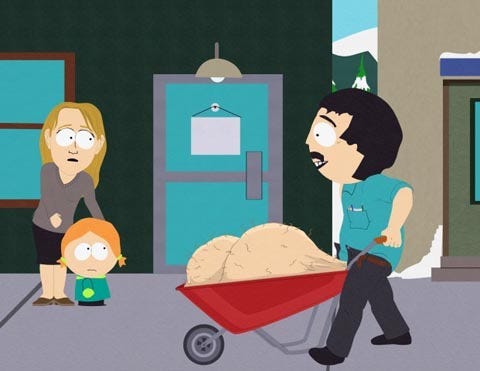
Jobs legit went 10D chess and it worked.
Disney agreed to a new deal, per This Day In Pixar:
The [3-film] agreement was in place until February 24, 1997, when Disney and Pixar announced a new 10 year, 5 film Co-Production Agreement, starting with A Bug's Life.
This new agreement split all costs and profits equally between Disney and Pixar, after Disney received a small distribution fee. The agreement covered revenue from the theatrical and international releases plus home video and merchandise sales.
In addition, the films would be equally branded as Disney-Pixar and co-owned by both Disney and Pixar, while Disney would have exclusive rights to market and distribute the films. Disney would become an investor in Pixar, purchasing 1 million shares with the option of buying up to 5% of Pixar.
As for ownership of the films and characters, the Co-Production Agreement called for Disney and Pixar to mutually agree to any derivative works, but if an agreement couldn't be reached, Disney had the final say. Pixar had no rights to use or distribute any characters or elements from any of the films without first receiving a license from Disney.
Following the success of Toy Story, Jobs also made another key move to secure Pixar’s future and gave Lasseter the final say on all major future story decisions. The final creative greenlight was a power that Hollywood financiers usually reserve for themselves but Jobs understood the source of Pixar’s competitive advantage.
In the following years, Pixar checked off films they ideated during that 1994 lunch at Hidden City Cafe:
1998: A Bug’s Life ($363 million box office, directed by John Lasseter and Andrew Stanton)
2001: Monsters Inc. ($529 million, Pete Docter)
2003: Finding Nemo ($871 million, Andrew Stanton)
Cars (2004) and The Incredibles (2006) were the other two films that finished Pixar’s new 5-film agreement with Disney.
Despite the success, Jobs continued to have a tense relationship with Disney’s Michael Eisner. But Jobs also knew that Pixar didn’t have Disney’s film marketing and distribution chops.
Jobs long believed that the only “brands” in the film industry were Disney and Steven Spielberg. He wanted Pixar to become a brand and a relationship with Disney was the best way to make it happen.
The relationship started to change under Bob Iger. Iger became Disney’s CEO in 2005 and had a come-to-Jesus moment about Pixar while visiting Hong Kong Disney.
Iger was watching the theme park’s parade and saw that the most popular characters were all Pixar characters.
Catmull said Jobs felt Iger was someone they could partner with…especially after Iger admitted Pixar actually had a lot of leverage:
[Jobs and Iger] formed a very close bond.
Steve said: “That is why I love Bob Iger. He just blurted it out… He just put his cards out on the table and said, ‘We’re screwed.’ I immediately liked the guy because that’s how I work too.”
Bob Iger realized he couldn’t let Pixar get away.
Disney acquired Pixar for $7.4 billion in May 2006.
Jobs owned ~50% of Pixar and became Disney’s largest single shareholder after the deal with a 7% stake.
The massive pay-off was two decades in the making: Jobs had paid $5 million to George Lucas for the graphics animation company in 1985 (and invested another $50m into what would become Pixar).
In 2008, Wall-E came out and Stanton smashed it at the box office with a haul of $521 million.
Wall-E was a departure from the other films from that 1994 lunch.
Specifically, there were a lot more humans in Wall-E. Granted, they were all fat slobs getting fed various forms of dopamine from server robots. But still, a lot of them.
The Pixar team had picked the characters for the first few films based on the fact that it is cheaper to animate toys and animals than humans.
But one through-line across those films is that each story had a universally appealing-premise:
Toy Story (“Based on the belief that kids thought toys came to life when nobody was looking”)
Monsters Inc. (“That monsters were hiding in the children’s closet ready to come out and scare them”)
A Bug’s Life (“ Built on the Aesop fable, The Ant and the Grasshopper”)
Finding Nemo (“[Stanton remembered] as a child watching the fish in the tank at the dentist’s office, and wondering if the fish wanted to go home”)
Wall-E (“What if mankind had to leave Earth and somebody forgot to turn off the last robot?”)
In the decade plus after Wall-E, Pixar released two sequels based on ideas from that lunch: 1) Monsters University in 2013 ($744 million, Dan Scanlon) and 2) Finding Dory in 2016 ($1 billion, Andrew Stanton)
Add up all 6 films from that lunch and the total box office is $6B (in comparison, most of my lunches end with me wishing I got a side of kale salad instead of tater tots).
Looking through all of Pixar’s films shows the Brain Trust’s true influence:
Other films the Brain Trust has directed: Docter (Up, Inside Out, Soul, Inside Out 2), Lasetter (Toy Story, Toy Story 2, Cars, Cars 2), Stanton (Toy Story 5)
Brain Trust IP directed by other people: Lee Unkrich (Toy Story 3), Josh Cooley (Toy Story 4), Angus MacLane (Lightyear), Kelsey Mann (Inside Out 2), Brian Fee (Cars 3)
With those additions, the attendees of that 1994 lunch are responsible for 19 of Pixar’s 31 films (61% of total) and $20.2 billion of Pixar’s combined box office haul of $27.8 billion (73%; inflation-adjusted).
The 19 Brain Trust-related films are highlighted in red here:
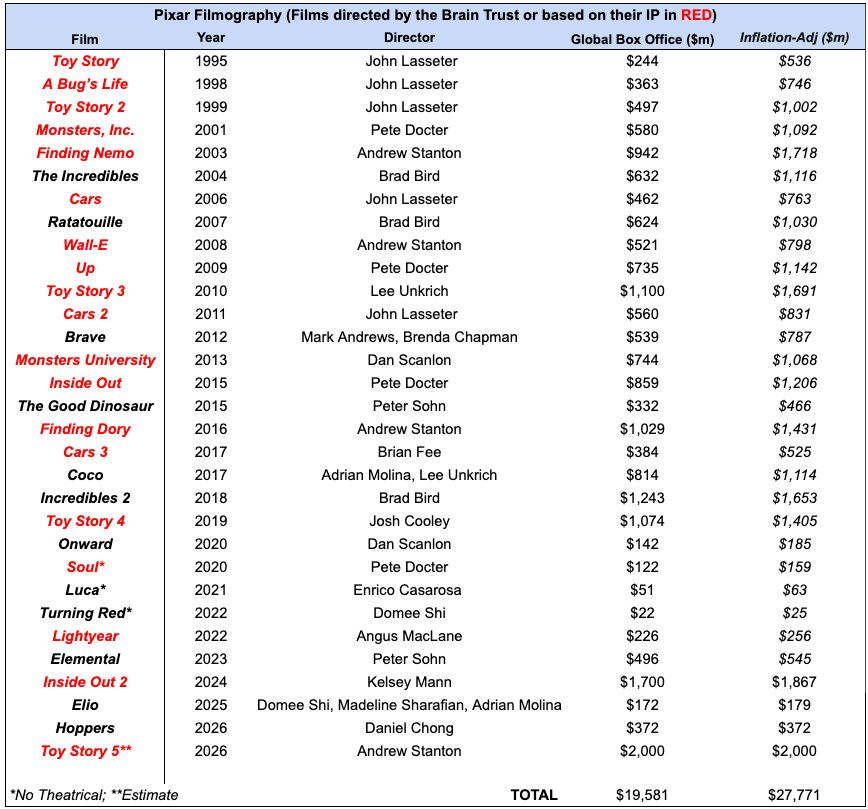
Outside of the Brain Trust, Pixar’s director with the most success based on original ideas is Brad Bird (The Incredibles, Ratatouille, The Incredibles 2).
This is another solid Steve Jobs management lesson.
Jobs personally hired Bird and gave him creative protection (Jobs really liked Bird’s 1999 animated film The Iron Giant, which was critically acclaimed but a commercial flop).
In a 2019 interview on Adam Grant’s WorkLife podcast, Bird explained Jobs’ reason for picking up outside talent:
[Jobs was] feeling like, “[Pixar] is in danger of falling into certain habits, because we have the same group that are doing things. And we’re very proud of this group, and this group is very talented. But we want to shake things up.”
And they felt like whatever I was going to do, it was going to be different.
The Incredibles — inspired by Bird’s home life — did turn out to be a significant shakeup. Jobs wanted Bird and his team to complete the project with less budget and a tighter deadline than the previous projects. Another curveball was that the 6th Pixar film was built around human-characters (not toys, monsters, bugs or fish).
As we discussed, this was a major challenge because animating human details was hugely compute intensive.
Bird & Co. pulled it off and the film was a blockbuster hit.
While Bird’s hiring is another feather in the cap of Jobs as talent manager, it was also an exception to the rule that the Brain Trust has been the ultimate key to Pixar’s success.
Pixar putting Stanton back in the saddle for Toy Story 5 is also noteworthy because the studio has been on a bit of a slump since Toy Story 4 came out in 2019 and cleared $1.3 billion.
A year prior, Lasseter was pushed out of Pixar and Disney following allegations of workplace misconduct. Ed Catmull retired shortly after. While fellow Brain Truster Pete Docter took Lasseter’s place, there was a clear creative change and the next 9 films — other than Docter’s Inside Out 2 (which did $1.7 billion) — were nowhere near the quality bar of OG Pixar.
Part of the slump had to do with COVID and theatres being shut down. Part of it was too much creative meddling from new Disney management. Part of it was that the new stories just didn’t resonate. And part of it was mean reversion because creating one of the greatest runs in film history is necessarily hard to replicate…especially without Lasseter, Jobs or Catmull around.
Even a spin-off of the trusty Toy Story IP (2022’s Lightyear) missed the mark (side note: my favourite films from this period were Soul and Hoppers).
While Toy Story 5 is a no brainer for Pixar to score a box office W, it is a questionable creative choice (similarly questionable to Disney running out of ways to milk Star Wars and Marvel over the past 6-7 years).
Quentin Tarantino has made Pixar’s treatment of Toy Story IP a bit of a hobby horse.
He thinks the first three Toy Story films rank as one of the best Hollywood trilogies ever because each film got better than the last. He told Bill Maher that Toy Story 3 “literally ended the story as perfect as you could”.
This is why the legendary Pulp Fiction and Once Upon A Time In Hollywood director named Toy Story 3 his 2nd best film of the 21st century (behind Black Hawk Down and ahead of Lost In Translation, Dunkirk and There Will Be Blood).
So many kids watched Toy Story in the late 1990s and literally grew up with Andy (Woody and Buzz Lightyear’s toy owner) by the time he leaves for college in Toy Story 3 in 2010. The end of the third film is the perfect mix of heartbreak and happiness.
You’re tearing up…not me.
Let me wrap up by talking about one other emotion: I hate commuting and going to a physical location for work. I’ve been living that WFH life for the past 12 years and will never return to an office environment.
I like hours of uninterrupted deep work. And by “uninterrupted deep work” I mean “I look at the X app for a nice dopamine hit every 15 minutes but am still able to jam words on a keyboard because no one is ‘coming by my desk’ to chat”.
Working near other people isn’t for me. But if there’s one creative story that highlights the value of physically being around other people, it’s the legendary $6 billion Pixar lunch from the mid-1990s.
And if there was one person Pixar could tap to not fuck up do right by Toy Story 5…it’s Andrew “I was at THAT lunch bro” Stanton.
Jay-Z & Taylor Swift’s Songwriting Process
Last month, the New York Times had a series on The 30 Greatest Living American Songwriters.
The process was framed as the paper consulting 250 “music insiders” and getting a ballot. But the final selection process was 6 NYT critics — none with actual industry experience — sitting in a room making this “definitive” list.
A follow-up podcast came out defending their decisions and it just made things worse.
Today, the most prominent music critic is probably Rick Beato. He spent decades in the industry as a multi-instrumentalist, songwriter, producer, and audio engineer.
His YouTube channel goes hard with 5.6m subscribers…and Beato cooked the entire exercise: “Here’s four Ivy League educated people. You’ve got two from Yale, one from Princeton, and Mr. Harvard there that are the most pretentious, cork sniffing, smug people that are all music critics with no background in music. Exactly what you would expect from a New York Times music critic.”
Any list of anything is subjective and guaranteed to enrage. But in classic NYT fashion, the critics show very little humility. Pretty salient example of ivory tower folk vs. actual industry operators (Jazz Pianist Brad Mehldau went scorched earth for them slagging Billy Joel and leaving him off the list).
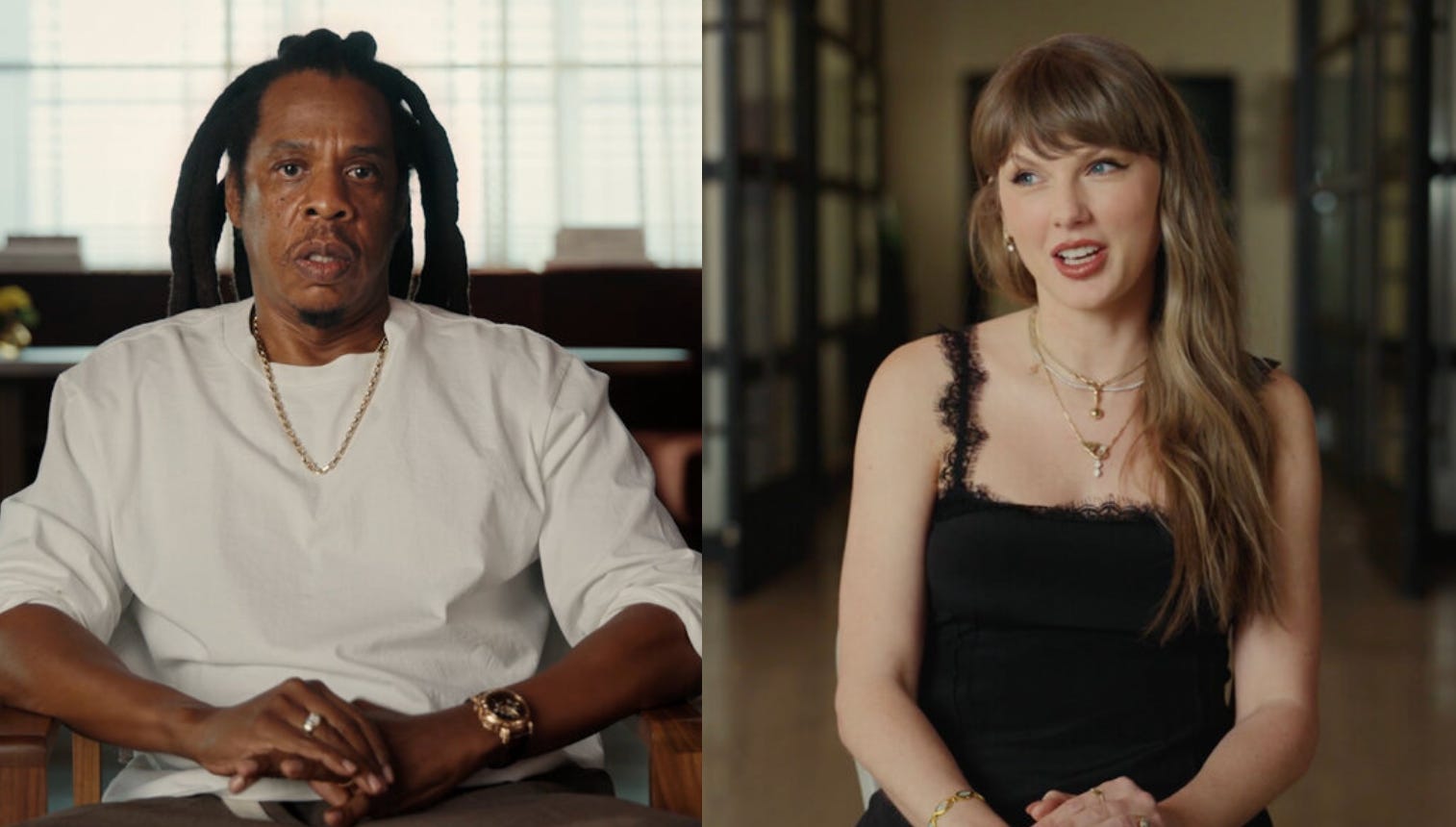
Having said that, I’m glad NYT made the list because the paper also did two interviews great interviews. Jay-Z and Taylor Swift. The best part is it’s just them talking straight to the camera. We don’t hear the interview questions.
Whatever you think of these artists, they drop some incredible insights on their craft.
First, NYT’s chat with Jay-Z…especially the part when he talks about writing “Still D.R.E.”
Absolutely insane that Jigga wrote that banger track for Dr. Dre’s “2001” album. The hype was unimaginable when the album dropped in 1999.
Dre’s first album was 1992’s “The Chronic”. Then, he had the fallout with Death Row Records. Then, the tragic Biggie and Pac beef.
I probably listened to Dre’s second album (“Forgot About Dre”, “Next Episode”, “What’s The Difference”) over 100x.
It wasn’t until the 2010s that I found out Jay-Z wrote the lyrics for the song and legit fell out of my chair.
Jay recalls loving the challenge of putting himself in Dre’s shoes:
It’s a challenge for the pen when you creating for someone else and especially people that you respect.
Dr. Dre, I grew up obviously a fan of him and Snoop…he’s leaving Death Row.
I know where he was trying to go because I’ve been there a couple times with [my song] “Kingdom Come,” and those things. [He’s] leaving this place and wants to mature. For me, it was just natural to get into his psyche. […]
I would be thinking, “I have to remind people that I’m Dr. Dre.”
That’s where “Still D.R.E.” comes from.
It’s a challenge for you as a creator. For me, that’s where I really thrive. Like when I’m challenged to, like, do a thing…That’s when I feel like I’m at my best…You take one of your arms and you tie it behind your back.”
The backstory of how Jay-Z did the song is legendary.
There was one great piano beat that Dre couldn’t write the lyrics for.
He sent the beat to Jay-Z. In less than an hour, Jay-Z wrote the song and rapped over the beat — pretending to be both Dre and Snoop (in their respective voices) — and sent it back. It was basically the exact final recording.
Dre heard it and said “That’s it. That’s it right there. This is a single.”
Snoop said many years later “He wrote Dre’s shit and my shit. And it was flawless. Jay-Z is a great writer to begin with for himself, so imagine him striking it for someone he truly loves and appreciates. He loves Dr. Dre and that’s what his pen showed you.”
***
NYT’s interview with Taylor Swift was particularly notable because of how few she actually does.
Again, the video is only her talking and it was an insight-a-minute.
The most Rick Rubin line I’ve ever seen Rick Rubin is when he was on the Joe Rogan podcast and talked about why artists should trust their gut:
“You can’t second-guess your own taste for what someone else is going to like. It won’t be good. We’re not smart enough to know what someone else will like.
To make something and say, ‘well, I don’t really like it but I think this group of people will like it’, I think [that approach] is a bad way to play the game of music or art.
Do what’s personal to you, take it as far you can go. Really push the boundaries and people will resonate with it if they are supposed to resonate with it. But you can’t get there the other way. The other way is a dead-end path.”
Swift echoes this exact sentiment in regards to one of her albums:
I learned you can’t ever really tell if other people are going to like [an album].
But oftentimes, when I love it to a certain degree, that kind of tends to match up with people. It could be that it doesn’t match up with the way people feel until six years later.
I loved the “Reputation” album [when it came out]. I was like, “You guys say what you want. I know what I did. I love it…you can come around if you want. It’s OK if you don’t.”
Then six or seven years later, people are like, “Oh, my God.”
Swift also rattles off phonetic details that she prefers:
Alliteration (two words starting with same letter)
Juxtaposition and contrasts (“the girl who has everything and nothing all at once”)
She does not like it when a word ending in one letter is the same letter starting the next word (in the song “Our Song”, she changed the lyric from “real low” to “real slow”)
Combining modern vernacular with old-world language (in “The Fate of Ophelia”, she takes the Hamlet line “Tis in my memory lock’d, / And you yourself shall keep the key of it” and turns it into “Locked inside my memory / And only you possess the key”)
My favourite part was when she talked about why she loves writing bridges to her songs. TBH, I have no idea what a bridge is supposed to be. All I know is that it’s not the chorus and happens later in a song, presumably the climax.
Here is Swift’s explainer:
The importance for me of a bridge is it just feels like we’re painting a picture. We’re setting a scene. We have this opportunity as a songwriter to tell an entire story. Or an entire movie. Or a very detailed description of one scene in a movie. Or a very nuanced dynamic between people or a complicated emotion.
And we have only so long to do this. I’ve written some really long songs in my life. But, for the most part, they’re between 3.5 to 4 minutes.
You can start painting the picture in the verse. You can get to the heart of it at the chorus. But then the bridge can be where you zoom back, you walk 20 feet back, and you see what this entire painting was supposed to be.
You’ve seen brushstrokes. You’ve seen the color tones.
But the bridge can be when you step back and you feel everything that that piece of art was supposed to make you feel. That’s just how I feel about bridges.
I came up as a songwriter in Nashville, where structure is a huge part of how you effectively tell a story, right?
You go verse - chorus - second verse - chorus - bridge - chorus.
Maybe you repeat that first verse if you want to. If you want to pull at some heartstrings. If it makes sense. Now, that’s something that I absolutely subscribe to…that structure is important. But I think that when you write enough songs — at least in my case — the intuitive part of your songwriting brain can kind of create a new structure that’s not as classically what you’ve been taught.
Jack Antonoff is a collaborator of mine and one of my best friends. We established this thing that we love to do and we call it the rant bridge.
I could point to examples like, “Out of the Woods,” “Is It Over Now?” “Cruel Summer.” And oftentimes we love these rant bridges, where it’s basically like stream of consciousness. Endless pouring-out of emotion. Intrusive thoughts, blended with metaphor with discussion with shouting.
You want this rant bridge to feel the most intense of what that feeling is…that you’re trying to, establish over the course of the song and you want it to kind of be a crescendo.
Alright, it all makes sense now why I went absolutely HAM during the Eras tour when she opened with “Cruel Summer” and hit the crowd with, “This is the very first bridge of the evening,” Taylor says, in full control of 60,000 souls. “Now, I have a question. Do any of you gorgeous people happen to know the lyrics to this bridge? Prove it!!!”
Fox Buys Roku for $22 Billion
Lachlan Murdoch made his biggest deal yet since buying out his siblings and taking control of Rupert Murdoch’s empire.
After Rupert sold his film and TV studio 21st Century Fox to Disney for $71 billion 2019 — old matey basically top-ticked the market with Disney’s stock down 10% since that mega-deal — the remaining operations are Fox Corp (cable TV and sports assets; $21 billion market cap) and NewsCorp (The Wall Street Journal, Dow Jones, HarperCollins; $15 billion).
That Fox Corp valuation is down 25% from a week ago because the market is very suss with Fox’s $22 billion acquisition of Roku, the streaming hardware company.
A huge big for Roku (which had fallen to under $10 billion a year ago).
It was incubated at Netflix in 2002 by Anthony Wood, who was the DVD delivery platform’s VP of Internet. Roku spun off from Netflix because Reed Hastings didn’t want other tech hardware providers blocking the Netflix app (and also, Roku wanted to serve other content creators).
Roku hit a peak market cap of $62 billion during the insane COVID market days of 2021 when “we spent 10 hours a day on Zoom and then did a Peloton workout and then bought an animal-themed NFT before ordering dinner on DoorDash”.
The main reason Fox Corp is getting hammered is because its a 60% cash (which includes a new $8 billion debt raise) and 40% stock (which means issues a lot stock and, unless your name rhymes with Telon Nusk, investors punish dilution).
However, there is a lot of strategic rationale for this move as explained on The Town podcast:
Fox Corp's cable business still spits off cash but is dying
Fox owns ad-based frees streaming service Tubi and it has 100 million users
Roku’s Tubi competitor Roku Channels has 140 million users
There is only 1/3rd overlap between Tubi and Roku Channels, so the new combined scale provides a strong ad offering (bolstered by Fox’s sports assets including the NFL)
Combined, Tubi and Roku Channels is 11% of all streaming viewership (behind only YouTube and Netflix)
Fox Corp basically guarantees that it remains a major ad player and destination even as cable dies off
It was an expensive (but probably necessary) play. There were other suitors for Roku including Netflix, Meta, TikTok and Comcast (which needs a post-cable lifeboat because Peacock is doo doo).
Other than the price tag, the major risk is that Roku loses its “Switzerland of Hollywood” status. Literally, the reason why it spun off from Netflix.
Fox will have to balance promoting its own content vs. staying a distribution channel for competition…but the ad money is probably juicy enough for them to keep doing so (Roku did $2.3B in ads in 2025).
No matter how the deal shakes out, it’ll probably be impossible for Lachlan to top his investment in REA Group, an Australian real estate listing and ad site that is low key one of the best DotCom-era investments.
Back in 2001, Lachlan convinced Rupert and NewsCorp to invest AU$10 million into REA, which was on the brink of bankruptcy. NewsCorp put up AU$2 million cash (AUD) and another AU$8m (AUD) in advertising credits across NewsCorp media assets. That investment was for 44% of REA at a AU$22 million valuation.
REA is currently worth $14 billion and NewsCorp now owns 62% of it. That ~$9 billion stake is worth 60% of NewsCorp’s entire market cap of $15 billion.
In the past, the REA stake was 70-80% of NewsCorp’s market cap, which basically meant investors were getting The Wall Street Journal, Dow Jones, and HarperCollins for free or at a steep discount.
If you wondering which scene of Succession this smells like, the closest comp is of Lukas Mattson’s 3rd round of negotiations with the Roys in Norway…when he says about their Fox News-like channel: “[ATN] is fine but the graph is horrible. It's not complicated. A lot of yelling. Long term, I don't think news for angry old people works. I'd fold it in. Fat pipe that shit. Make it Bloomberg Grey. Simple, cheap, huge. Ikea'd to fuck."
More World Cup Links & Memes
Last week, we talked about how FIFA is completely donging fans on ticket sales…because the event is so popular and people will pay up even while getting donged.
Fans watching on TV in North America have been on the receiving end of another type of donging: the World Cup’s mandatory 3-minute “hydration break”.
In previous tournaments, the refs would call a “hydration break” if the (somewhat erotically named) Wet Bulb Globe Temperature reached a level between 26°C (78.8°F) to 32°C (89.6°F).
The “hydration break” now happens at the 22nd mark and 67th mark no matter the temperature.
Across 104 matches, FIFA now has 624 minutes (10 hours) of new ad inventory.
The Wall Street Journal says 30-second ad spots on Fox during the “hydration breaks” are $250,000 for earlier rounds and up to $750,000 for an American match (potentially more for later rounds).
Assuming this rate averages $400,000, that is ~$500m of potential new ad revenue for FIFA that didn’t previously exist.
I get it. The viewing numbers are huge.
An estimated 200-250 million people watched Brazil vs. Morocco (the Super Bowl is 130 million-ish, but still juiciest ad rates at $8 million per 30 second spot).
But as many people have pointed out, these breaks effectively turned a game of “two halves” into a game of “four quarters”. ESPN analysis shows the breaks blow up the pace of the game and change momentum.
Honestly, the most devious ad unit invention since YouTube’s triple pre-roll back-to-back un-skippable ad.
***
Freddy Update: The Germany World Cup fan continues his insane journey and will likely end up at the White House at some point:
Country singer Ella Langley brought him to one of her concerts (Link)
NFL Hall-of-Famer JJ Watt put him up in a 6-figure hotel room (Link)
NASA gave him a tour (Link)
Someone left him a welcome sign at the Louisiana border (Link)
He missed a flight in Dallas…followed up by a private jet operator, two $5B+ airlines and the Governor of Utah all sliding into his DMs so he can make it to Canada to watch the German World Cup team play…JJ Watt got him an American Airlines Flight (Link)
…and them incredible World Cup memes keep coming (Twitter during the World Cup is just peak peak peak):


Links and Memes
Some other links for your weekend consumption:
“The Hidden Process Behind Every FIFA-Certified Football” (Business Insider)
Marc Andreesen’s deep dive on the SpaceX mission to make “a sentient sun to understand the Universe and extend the light of consciousness to the stars” (a16z)
“AirPods with camera aren’t for taking photo or video. But will be used to give visual intelligence to Siri.” (X the everything app)
“Has AI Already Killed How-To Nonfiction? Sales Trends, My Personal Data, and What It Might Mean for the Future” (Tim Ferriss)
AI image startup MidJourney is building a medical scanner that mimics the results of an MRI machine using a shallow pool, sound-waves and AI to image the human body in 60 seconds. Very early but would be huge if worked. (MidJourney Medical)
“Why is Meta destroying its engineering organization?" (The Pragmatic Engineer)
…and some other wild posts (including the New Yorks winning their first NBA Finals in 53 years):


Finally, Evan Spiegel Snap SPECS, his new AR glasses which cost $2,195 are a huge on the face…this is clearly the correct direction (less smartphone) and the tech is pretty impressive…Snap was able to fit all the tech into the glass frame…these things are still comically large and hard to see how Snap competes against Apple and Meta’s scale in this category…Snap fell ~10% on the release…


The best week after week read on Substack and it’s not even close!
Any chance of getting a Spotify version of that aforementioned (Pixar lunch) BBQ Playlist?