

Thanks for subscribing to SatPost.
Today, we are doing a deep dive on Tim Cook, who is stepping down as Apple’s CEO and will be replaced by SVP of Hardware Engineering John Ternus.
PS. Also lots of links and memes as always.
On Monday, Tim Apple Cook announced that he will relinquish the CEO role at Apple in September. He will become Apple’s executive chairman and hand the reins to Apple’s SVP of Hardware Engineering John Ternus.
I had two instant thoughts when I heard the news.
First, I can’t believe Ternus was able to climb to the top of Apple with such a lazy LinkedIn bio:
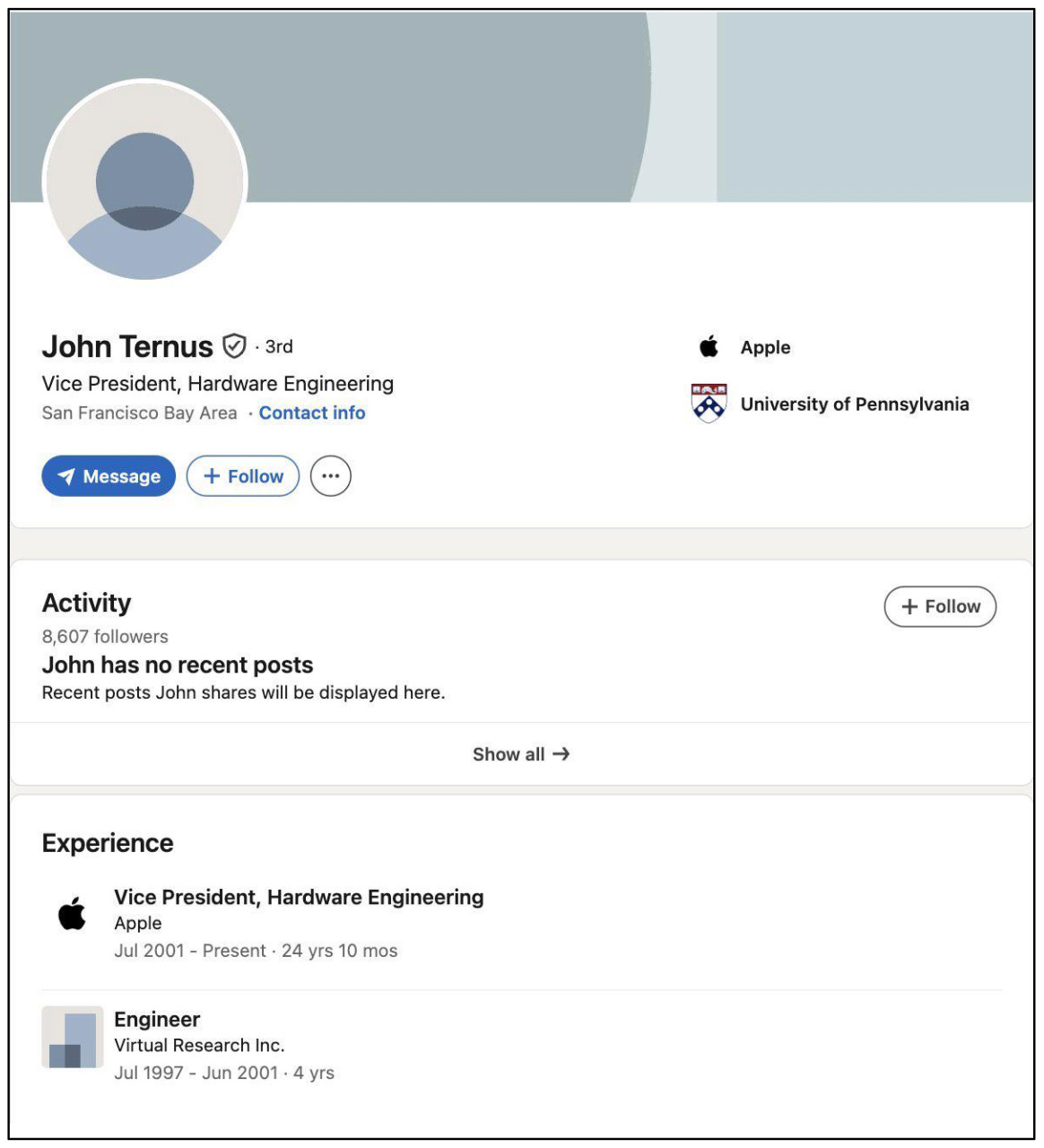
No banner image. His profile photo is blank when LinkedIn users are logged out, which is a huge red flag for recruiters. He doesn’t break down the various positions he held at Apple. Nor does he itemize the role-by-role achievements. Most glaringly, he’s never done a social post to celebrate his wins or show thought leadership.
My second thought was that Cook had a pretty INSANE run as CEO.
He is 65 years old and will have served as Apple’s CEO for just over 15 years when the switch happens. Since Cook took over for Steve Jobs on August 24, 2011 — he was 50 years old at the time (same age as Ternus is now) — Apple has put up some video game numbers:
Market cap increased by more than 10x from $350B to $4T ($700m a day during his tenure).
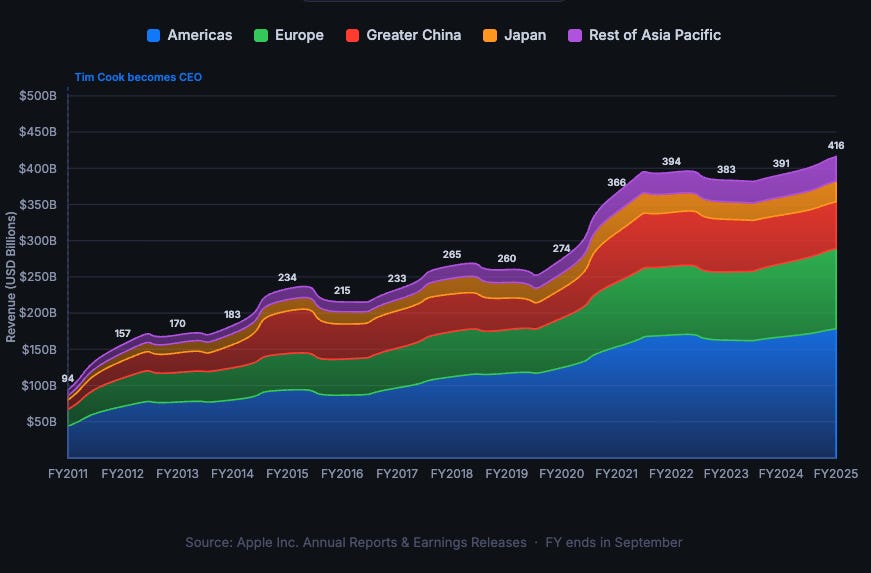
Annual revenue went from $108B (2011) to $416B (2025).
Net profit went from $26B (2011) to $112B (2025)
Installed devices is now at over 2.5 billion.
Services revenue — aka squeezing Google to be the default search on Safari and milking mobile game ads — is up 11x from $10B (2011) to $109B (2025).
Wearables (Watch, AirPods) revenue reached $36B in 2025, more than AMD ($35B), Essilor Luxottica ($33B), PayPal ($33B), McDonald’s ($26B) or Adobe ($24B).
The left bud of an AirPods set I bought got lost a record 3x in 2025.
Overall, Cook added $3.65T in market cap. Just silly. Granted, this took place during the ZIRP era. But we’re talking a only a handful of other CEOs that have added over $1T market cap.
Jensen and Nvidia. Satya and Microsoft. Sundar and Google. Zuck and Meta. Elon and Tesla/SpaceX. Bezos and Amazon. Hock Tan and Broadcom.
To be sure, Steve Jobs going HAM from 1997 to 2011 laid the foundation for Cook’s run by rebuilding the entire company and releasing the greatest sequence of consumer products in corporate history: iMac, iPod, iPhone and iPad.
Jobs also started Apple’s lucrative search partnership with Google, kicked off the services engine with the App Store and acquired PA Semi, which is the foundation for the crucial Apple Silicon.
Cook is the operations and supply chain savant, though.
As many noted, Jobs (together with Jony Ive) repeatedly took Apple products from 0 to 1. Cook took those products from 1 to 2.5 billion.
“Tim Cook couldn’t have done what Steve did,” Warren Buffett told CNBC in March. “But Steve handed him a hand Steve would not have done as well.”
Less in dispute is the fact that Cook is literally leaving at Peak Apple.
The last earnings report was in January and Apple announced a record $144B in quarterly revenue (Nvidia’s revenue for all of 2025 was $131B; like I said, video game numbers). Services hit a quarterly record of $31B. EPS hit a record. iPhone had record sales in every geography segment with the Hermes-like Cosmic Orange colorway leading to blockbuster iPhone 17 Pro Max sales in China…proving once again I know nothing.

Then, Cook got Paul McCartney to perform at Apple’s 50th anniversary on April 1st, 2026. Just winning.
While Cook is indeed leaving at the top — and by all accounts has chosen the right successor — there are two huge issues hanging over Apple: its dependence on China and its AI strategy.
We will talk through it all while enjoying some incredible memes by covering these topics:
Steve Jobs Hires Cook
Cook’s CEO Run
The China Question
The AI Question
John Ternus & Apple’s Future
Steve Jobs Hires Cook
Man, if you thought John Ternus had a lazy LinkedIn page…Cook doesn’t even have a profile at all. Either something is wrong with LinkedIn or something is wrong with Apple. I can’t decide which one.
Anyway, someone on LinkedIn mocked up a fake Cook bio:
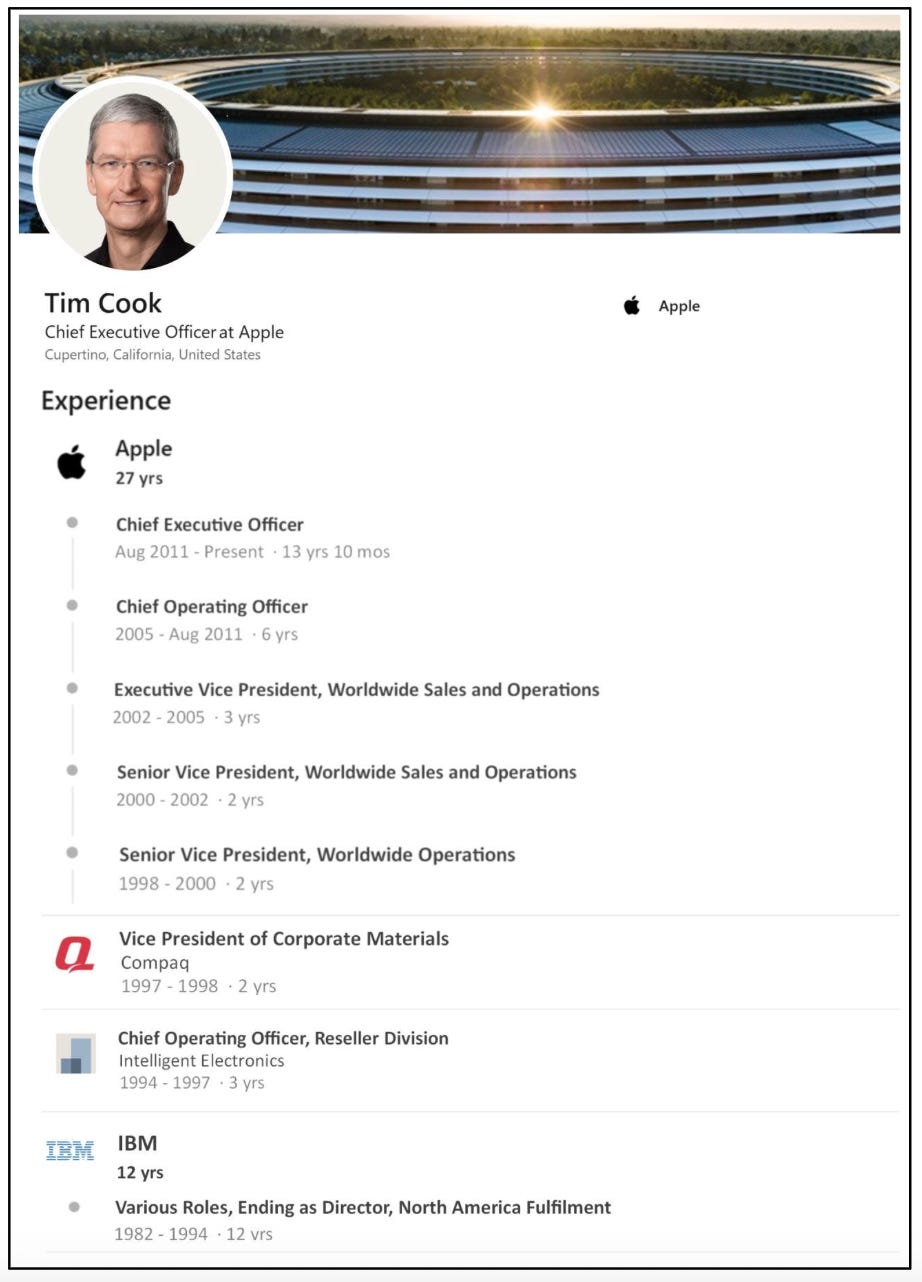
Before Apple, Cook — born in Mobile, Alabama — was the first person in his family to go to college and graduated from Auburn University with a Bachelor’s degree in Industrial Engineering (then later got a Duke MBA).
“Industrial engineering is essentially the study of people and machines,” Cook told the WSJ in 2025. “[It’s about] how the two working together can create things that they couldn’t create on their own. I’ve always viewed the supply chain to be a bit of a piece of art when it was done correctly. Because it’s a symphony of…1000s of different components and parts coming together to create something.”
Cook started his career making supply chain art at IBM, where he spent 12 years working on just-in-time manufacturing and distribution for the computing giant’s personal PC business.
Then, came senior roles at Intelligent Electronics and Compaq.
When Jobs returned to near-bankrupt Apple in 1997, he wanted to clean up the company’s bloated product line and bring back the Apple magic of vertical integration with as much control as possible of software, marketing, distribution, hardware and logistics.
Cook was one of the PC industry’s top minds on the latter two topics. Apple recruiters repeatedly reached out to Cook and he repeatedly turned them down. Fair enough. In the mid-1990s, most tech industry observers would have predicted a much more fruitful future for Compaq than Apple.
Cook said as much during his 2010 commencement speech at the University of Auburn:
Only a few months before I’d accepted the job at Apple, Michael Dell was publicly asked what he would do to fix Apple.
He responded, “I’d shut it down and give the money back to the shareholders.”
In making this statement, what distinguished Michael Dell was only that he had the courage to say what so many others believed. So, Apple was in a very different place than it is today.
My employer at the time — Compaq Computer — was the largest personal computer company in the world. Not only was Compaq performing much better than Apple, it was headquartered in Texas and therefore closer to Auburn football.
Any purely rational consideration of cost and benefits lined up in Compaq’s favor, and the people who knew me best advised me to stay at Compaq. One CEO I consulted felt so strongly about it. He told me I would be a fool to leave Compaq for Apple.
Indeed, when Cook joined Apple in March 1998, Compaq’s market cap was ~10x more than Apple ($40B vs. $3B).
So, what changed?
In an interview with Charlie Rose in 2014, Cook said he finally agreed to meet Jobs and it sure sounds like he got hit with that reality distortion field because that single chat was enough to sway Cook:
I was at Compaq and I was happy — or thought I was — and [Apple was] persistent. So, I finally thought, “I’m gonna go out and take the meeting” [because] Steve created the whole industry.
I’m just thinking "I’m gonna meet him” but all of a sudden he’s talking about his strategy and his vision and what he was doing. [Apple was] going 100% into consumer when everybody else in the industry had decided you couldn’t make any money with consumers.
[These other companies] were headed to servers and storage in the enterprise.
I had always thought that following the herd was not a good thing.
He was doing something totally different and he told me a little about the design [for the upcoming iMac and I was really interested].
The way the chemistry was…I could tell I can work with him. I looked at the problems Apple had and I thought “you know, I can make a contribution here”.
Working with him…would be the privilege of a lifetime. All of a sudden, I thought “I’m doing it, I’m going for it.”
You hear this voice in your ear, “Go West, young man.”
As an engineer, you want to write down pros and cons. The financial part of you wants to look at it…and sort of validate the decision.
It didn’t make sense, yet my gut told me “go for it” and I listened to my gut.
There was no one around me advising me to do it.
Cook was hired as SVP of Worldwide Operations with a base salary of $400k (and a $500k signing bonus).
Jobs told his biographer Walter Isaacson that Cook wasn’t “a product person” but was still the right fit: “He had the same vision I did, and we could interact at a high strategic level. I could just forget about a lot of things unless he came and pinged me.”
The Cook work ethic is legend. Gets up at 3:45am every day. Goes through hundreds of customer and employee e-mails. Gets to gym by 5am. Office by 6am. Has a photographic memory and can pick out random numbers in a 120-sheet spreadsheet. Works for 12 hours and is bed at 8:45am. Rinse, repeat.
There’s a line in Isaacson’s Elon biography — Elon was beefing with Apple’s App Store after he bought Twitter and Larry Ellison suggested he go to Apple HQ in person to iron it out — that what Cook’s dedicated work life created:
“Musk had a deep appreciation for the difficulty of supply-chain management, and he considered, rightly, that Cook was the master.”
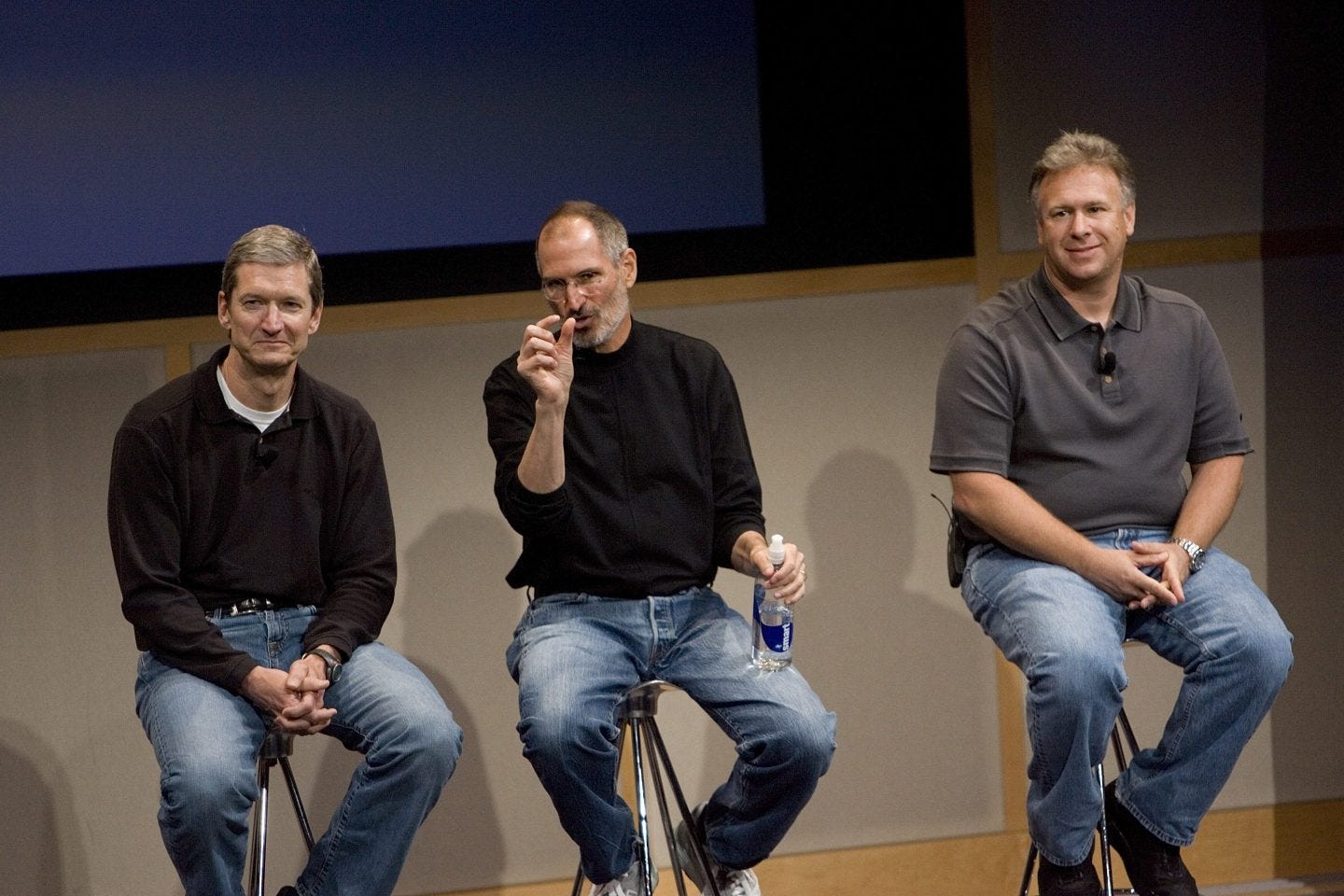
Truly a hall-of-fame “trust your gut” call by Cook…also hall-of-fame blue denim-maxxing by the Apple C-Suite in late-2000s.
Cook’s CEO Run
When Apple made the Cook-to-Ternus CEO announcement, there were broadly two camps of reactions on the X timeline:
Cook never innovated and just built on Jobs incredible comeback
Cook built either the #1 or #2 most valuable business in the world and every metric is off the charts
As Buffett said, Cook and Jobs just had different challenges and each did as well as they could with the hand they were dealt.
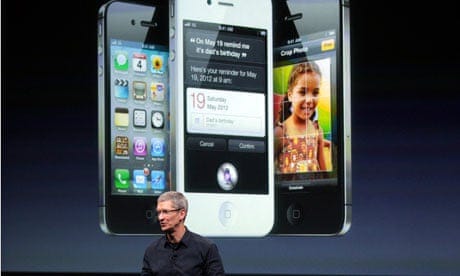
Cook’s hand was to milk the iPhone and the ecosystem around it. If you want to feel old, the first one under Cook’s leadership was the iPhone 4S. Apple sold 60m+ in the first year. It would be moving 200m+ iPhones in a few short years.
In the past 15 years, Cook has ~2 billion iPhones with over $1T in revenue. Then, he built a massive moat around the product by adding complementary hardware products (Apple also shipped 400m+ AirPods and 100m+ Watches…outselling the entire Swiss watch indusry) and services (now a $100B+ a year business aka a toll Apple charges everyone to reach those high ARPU Apple consumers).
For sure, these moats have certainly attracted antitrust attention, including multiple lawsuits in America and Europe. Apple’s intransigence around its 30% App Store fee has pissed off a lot of people in the development community. Notably, many of the biggest tech consumer tech firms declined to make Vision Pro native apps when the headset launched…in a quasi-protest (which probably didn’t help initial sales).
Let’s focus in on the products and features.
Here was my first take when the news dropped:
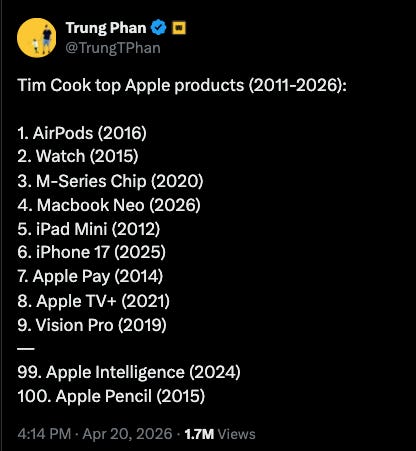
The most common reactions were that I forgot the Apple Cloth (2021) and the internally-rebuilt Apple Maps that might actually be better than Google Maps (2020).
I got yelled by a lot of people for hating on the Apple Pencil.
Also, don’t forget all the security features (Touch ID, Secure Enclave, Face ID, Find My iPhone, end-to-end encryption, stolen device protection and App Tracking Transparency…which was a massive show across Meta’s bow).
Or the health features in the Watch (blood oxygen monitoring, fall detection, heart stuff).
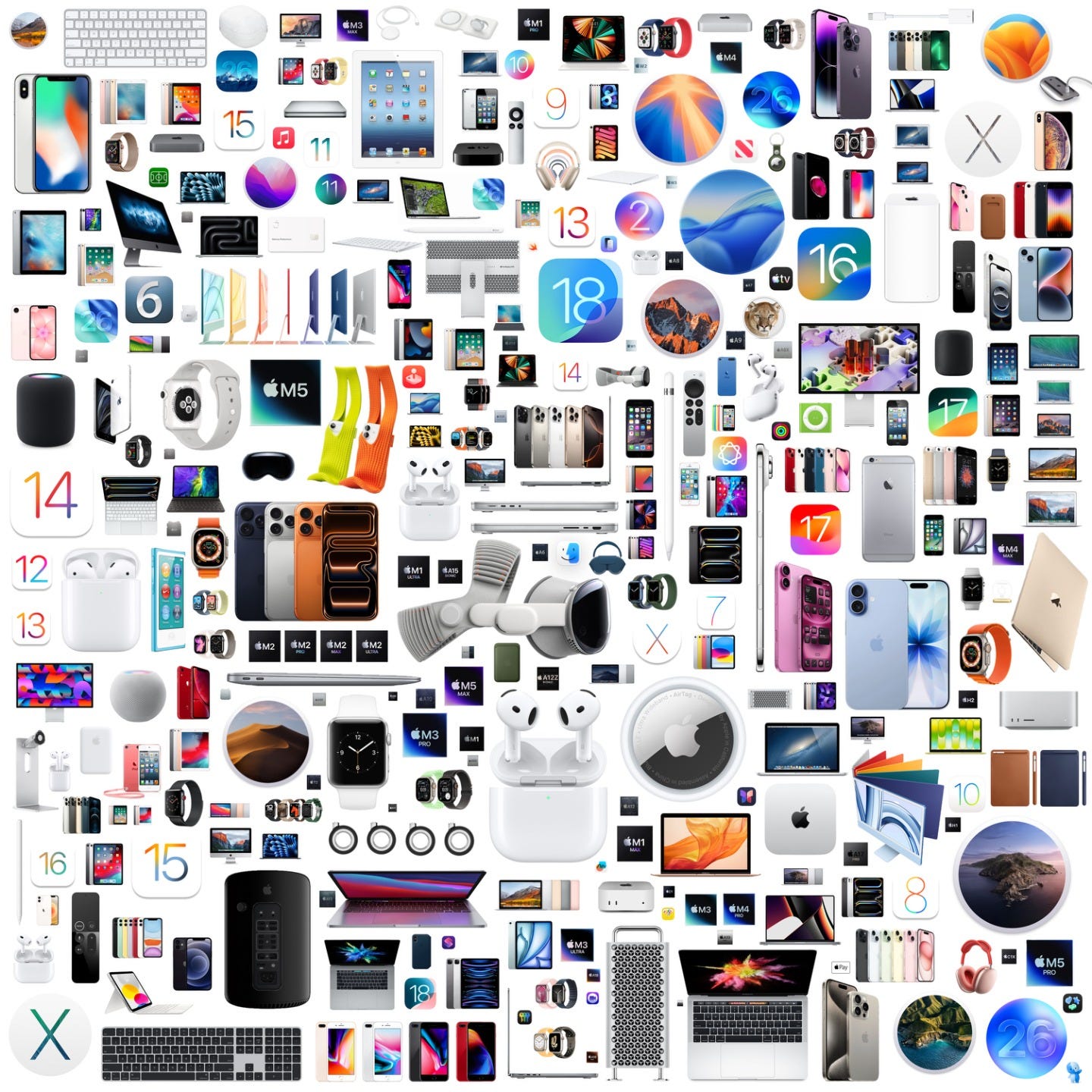
Asking Cook to introduce a new product that outdoes LITERALLY THE GREATEST CONSUMER PRODUCT IN HISTORY…is a bit unreasonable.
WhErE iS tHe InNoVaTiOn?!?!?!
Worth noting that supply chain innovation is still innovation and Cook kept the trains running on time even as the business exploded in size. At Compaq, he had formed a relationship with Foxconn’s founder Terry Gou. Their partnership boomed when Cook arrived at Apple and was the manufacturing equivalent of Jobs and Ive for product.

Sure, none of these products were a “0 to 1” invention like the iPhone. But that’s a lot of stuff and the Apple ecosystem just works. iCloud sync has gotten really good. The blue bubble still gives me dopamine.
Take something like Apple Pay.
I use it at least 5x a day and I’m clearly not the only one.
Marc Rubenstein writes that, “Apple Pay is used by 785 million people worldwide. It is accepted at over 90% of US retailers where it has a market share of 14.2% in online payments and 5.6% in in-store purchases. Cook said on his latest earnings call that last year alone, it eliminated $1 billion in fraud.”
In the aforementioned Charlie Rose interview, Cook’s origin story for Apple Pay ticks both the innovation and consumer-friendly boxes:
“[Apple is about] making the user’s life better. Making the experience better.
We saw all the mobile payment stuff that had been done and none of it was making anybody’s life better. It was more about creating a business model for someone else to make money.
We started with the user and said, “What do they really want?”
Well, nobody wants to carry a wallet. You don’t want another thing that you have to remember to put in your pants when you walk out the door. You don’t want another thing to lose. You don’t really want this card with exposed numbers on it that has a huge security risk. So, we fixed the security issue. Our system is much more secure than the traditional credit card system is. We kept the thing that people liked, which is they do love their card.
And we said, ‘We don’t want any of this data. So we’re not doing what other companies are doing. We don’t want to know what you’re buying. We don’t want to know where you’re buying it. We don’t want to collect all this stuff.” […]
So, we firewall all the stuff. We don’t keep it. It’s not on our servers. And so we kept what’s great and fixed what wasn’t.”
Now, this isn’t all charity.
Apple makes money from the device so it gets to play the hand-wavey “we don’t want your data” play (the similar play it does around social media apps…and that’s why it has a bloodfeud with Zuck and Meta).
Back in 2024, Visa was involved in an antitrust trial. Apple is such a beast company that the iPhone maker caught a straty. Visa — making the case that it faces competition — said Apple Pay was an “existential threat” and the credit card firm has been paying Apple “hundreds of millions of dollars” a year so the iPhone maker doesn’t deploy a competing functionality (although, Apple’s bank card
The iPhone and its moat just delivers.
I drank the Kool-Aid on a LOT of Apple stuff…you did too…don’t pretend like you don’t have a Watch and some AirPods…also, don’t pretend like you don’t enjoy this gem 2FA feature, which has collectively saved humanity >100 billion hours searching through our SMS:

Apple revenue breakdown really shows the story of Cook scaling the iPhone and building complementary hardware and services to near the same scale. There is a limit to how many iPhones Apple can sell. So, sell each iPhone owner more things and he did.
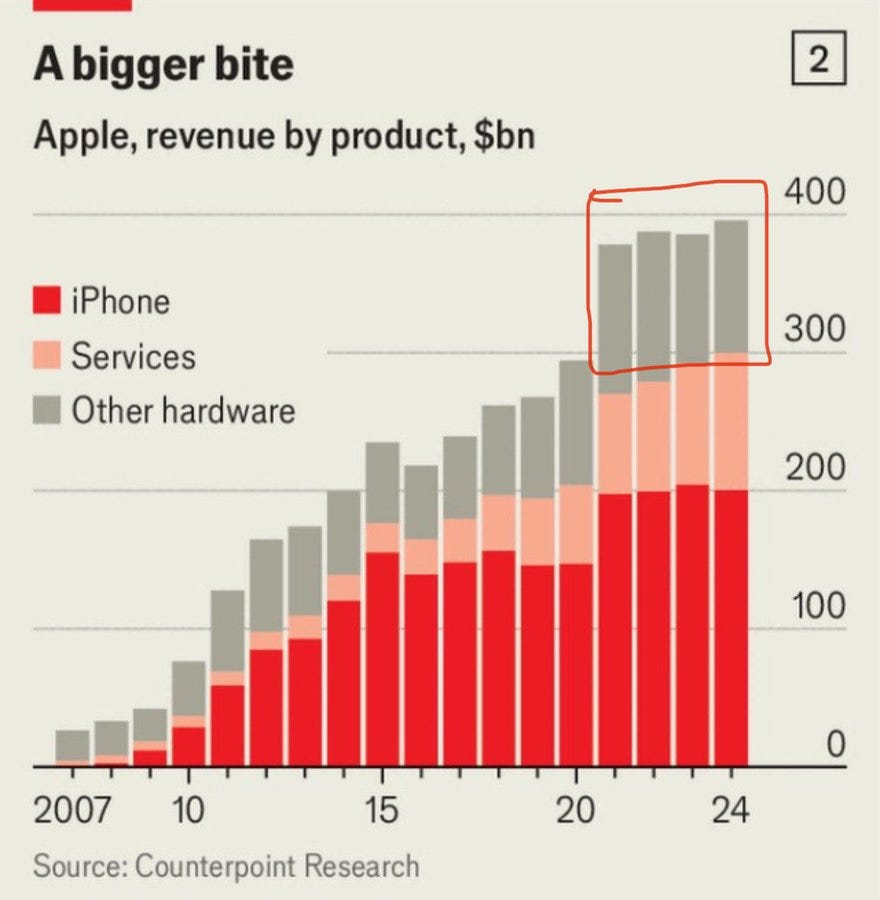
Ben Thompson puts it much more eloquently in a piece titled “Tim Cook’s Impeccable Timing”:
The challenge for CEOs following iconic founders is that the person who took the company from 0 to 1 usually sticks around for 2, 3, 4, etc.; by the time they step down the only way forward is often down. Jobs, however, by virtue of leaving the world too soon, left Apple only a few years after its most important 0 to 1 product ever, meaning it was Cook who was in charge of growing and expanding Apple’s most revolutionary device yet.
Cook, to be clear, managed this brilliantly. Under his watch the iPhone not only got better every year, but expanded its market to every carrier in basically every country, and expanded the line from one model in two colors to five models in a plethora of colors sold at the scale of hundreds of millions of units a year.
Cook was, without question, an operational genius. Moreover, this was clearly the case even before he scaled the iPhone to unimaginable scale. When Cook joined Apple in 1998 the company’s operations — centered on Apple’s own factories and warehouses — were a massive drag on the company; Cook methodically shut them down and shifted Apple’s manufacturing base to China, creating a just-in-time supply chain that year-after-year coordinated a worldwide network of suppliers to deliver Apple’s ever-expanding product line to customers’ doorsteps and a fleet of beautiful and brand-expanding stores. There was not, under Cook’s leadership, a single significant product issue or recall.
Cook also oversaw the introduction of major new products, most notably AirPods and Apple Watch; the “Wearables, Home, and Accessories” category delivered $35.4 billion in revenue last year, which would rank 128 on the Fortune 500. Still, both products are derivative of the iPhone; Cook’s signature 0 to 1 product, the Apple Vision Pro, is more of a 0.5.
Cook’s more momentous contribution to Apple’s top line was the elevation of Services. The Google search deal actually originated in 2002 with an agreement to make Google the default search service for Safari on the Mac, and was extended to the iPhone in 2007; Google’s motivation was to ensure that Apple never competed for their core business, and Cook was happy to take an ever increasing amount of pure profit.
Yes, Tim Cook received a great hand and other Big Tech firms also did very well in the past 15 years: Microsoft is up 15x, Alphabet is up 21x, Amazon is up 30x and Meta is up 34x (from post-2012 IPO lows).
But there were a million ways to f it up. He mostly didn’t and Apple never dealt with the controversies that hit other Big Tech firms (its business model that lends itself to privacy-first helps).
The counterfactual of what Jobs and Ive would have done isn’t super helpful. Jobs was actually worried that Apple would become paralyzed after him the same way Disney was paralyzed after Walt Disney. So, he told Cook to not worry about “what would Jobs do?”.
Obviously, there were some fumbles.
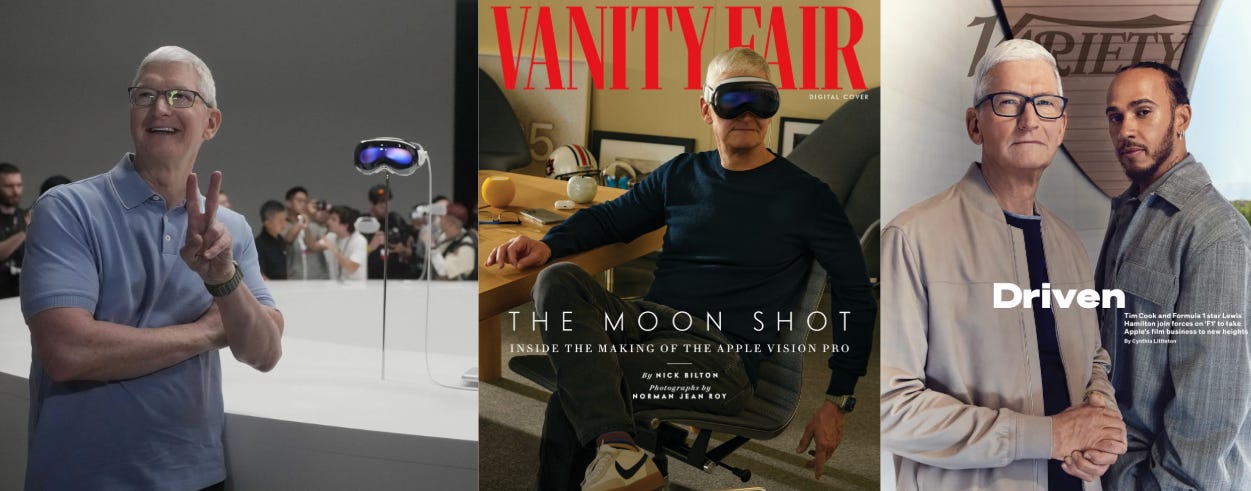
Spending $50B on Apple Vision Pro looks like a major whiff. Although, it has clear industry use cases that justify the $3,500 price tag (a San Diego ophthalmologist recently did the first cataract surgery with a pair) a lot of that technology will probably be repurposed for the upcoming smart glasses (Apple is looking to differentiate against Meta by going more luxury and — shocker — tighter iPhone integration).
Former senior Apple exec Tony Fadell — who worked with Steve Jobs to create the iPod — said that Apple’s biggest recent fumble was a potential self-driving car. Cook spent 10s of billions on the project but shuttered it in 2024.
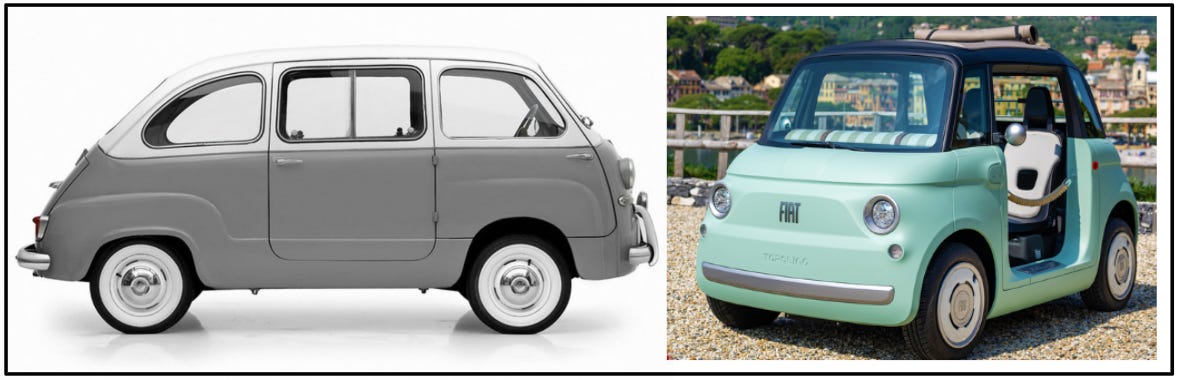
At one point, Elon says that during Model 3 “production hell” in 2018, he reached out to see if Apple would acquire Tesla ($50-60B range). Cook apparently wouldn’t take the meeting. Internally, Jony Ive designed a mini-van type product looked like the Fiat Multipla and just didn’t have the juice.

Fadell says the major mistake was trying to create a 4-wheel vehicle, instead of lightweight 2 or 3-wheeler. Apple had “redefined” categories (eg. desktop publishing with Mac, music with iPod)…so it should have redefined mobility.
When Steve Jobs and I would walk around the Apple campus back in 2008-9, we talked about the Apple Car. What would it be and he was really like ‘we need to do [something as] revolutionary as the Volkswagen (the people’s car).’ What’s the next-generation people’s car? What’s going to be used in the cities? […]
Now you’re seeing the [two-seater] Fiat Topolino. You see the [two-seat quadricycle] Twizy. You see all these different things [in cities]. I live in Europe, right? So, you see all this stuff running around and they’re selling out like crazy.” […]
Don’t make a four-wheel car that competes with everybody else and the Chinese. How would you change mobility in two, in three, and lightweight four-wheel vehicles? How do you do that? [Vehicles that 14-year-old kids] can use.
Jobs actually looked at buying GM during the 2008 financial crisis when the carmaker neared bankruptcy. Another what if. But obviously nothing materialized…and this is why Ive’s partnership with Ferrari is as close as we’ll get to an Apple Car.
In China, Xiaomi started with smartphones and home electronics. Then, its CEO Lei Jun (who is obsessed with Steve Jobs) decided he wanted to make an EV, which are basically smartphones on wheels. Well, he did and Marque Brownlee says the Xiaomi SUV7 is a luxury-calibre EV selling for only $42k.
Why not Apple?
Transportation is a massive TAM and you know Apple fanbois would happily spend 5-figures on a dorky Apple micro-mobile (hell, they spent $700 on Mac Pro wheels).
All things considered, Cook’s run looks incredible in 2026 but there are a few reasons why it may not as great in 2036.
Such a re-assessment of Cook’s career could echo what happened to Jack Welch.
In 2001, Welch retired from General Electric and people treated it like Michael Jordan leaving the Chicago Bulls in 1998. For decades, Welch was seen as America’s greatest CEO, mastering capitalism to briefly make GE the most valuable company in the world. But it turned out Welch was stripping away GE’s resilience and totally financializing the company to the point it blew up during the Great Financial Crisis.
There are two issues that could do the same to Cook’s legacy. One concerns a bet Cook made decades ago (China) and a bet he declined to make in the past few years (AI).
Let’s start with China.
The China Question
Last year, Patrick McGee wrote a book titled “Apple in China: The Capture of the World’s Greatest Company”.
It details how Apple was able to build the world’s most impressive electronics supply chain by investing untold sums into China:
By 2014, Apple was so frequently sending America’s best engineers to China — what one Apple veteran calls “an influx of the smartest of the smart people” — that the company convinced United Airlines to fly 6,857 miles from San Francisco to Chengdu three times a week, pledging to buy enough first-class seats to make it profitable.
Guthrie quickly realised this wasn’t the industry norm. Although suppliers resented the intense pressure and the soul-crushingly low margins offered by Apple, they put up with it because they derived something far more valuable than profits. The deal — let’s call it the Apple Squeeze — was that Apple would exert enormous power over its suppliers multiple hours a day, for weeks and months leading up to a product launch, and in return, the suppliers would absorb cutting-edge techniques. [...]
As one former industrial designer put it: “I don’t remember, ever, a strategic withholding of information. All we cared about was making the most immaculate thing Every day you’d invent your way through a problem. It was absolutely wonderful as an experience. But I guess we were unwittingly tooling [China] up with incredible knowledge — incredible know-how and experience.”
As Apple came under political pressure to “give back” to China, Guthrie advocated that the company change tack. “China wants the constant learning,” he told colleagues. “The fact that Apple helps bring up 1,600 suppliers for China — it’s an incredible benefit.”
When staffers added up Apple’s investments in China — mainly the salaries and training costs of three million workers in the supply chain, as well as sophisticated equipment for hundreds of production lines — they realised the company was contributing $55 billion a year to China by 2015: a nation-building sum.
Honestly, kind of disturbing. Why? When I’m on a United Airlines flight and want an extra bag of pretzels or one of those shitty airline headphones that last for 1/4 a film before breaking, they tell me it’s $7.50. When Apple is flying United Airlines to Asia and doesn’t want to make a connecting flight, they ask for a special route between two unprofitable cities and United Airlines bends over backwards to make it happen. Ugh.
Anyway, McGee calculates that the $55B a year investment Apple made in China was 2x the annual spend that America made in Europe during the post-WWII Marshall Plan reconstruction (on an inflation-adjusted basis).
Here’s a crazy stat: since the iPhone was launched, Apple has trained over 28 million Chinese workers on high-tech manufacturing. That’s more workers than the entire state of California and a key reason why China leads in so many next-gen industries (EVs, solar, drones, robotics).
A key point that McGee makes is that there was no real alternative to China for the type of scale that Apple required. In 2007, Apple sold 1m+ iPhones. By 2012, they were moving 100m+ iPhones. China was the only country that could scale with Apple’s requirements on precision, speed and a flexible workforce.
In an interview with The Free Press , McGee makes an analogy: imagine 500,000 people were dropped into Boston to work on the iPhone, then the next week that group of 500,000 people went to work on another electronic project in Milwaukee. That’s basically the type of labour flexibility that China brought to the table.
Steve Jobs had tried to make automated plants in America but the iPhone requires a ton of human labor.
As Jobs’ supply chain guru, Tim Cook started moving production to China when the iPod took off. The portable music player was initially manufactured in Taiwan but Cook soon realized only China could hit Apple’s ambitious goals. In 1999, China manufactured 0% of Apple goods but it was 90%+ a decade later.
In a 2017 interview with Fortune, Cook explained the Chinese manufacturing edge in an interview:
There’s a confusion about China…the popular conception is that companies come to China because of low labor cost. I’m not sure what part of China they go to. But the truth is China stopped being the low labor cost country many years ago.
That is not the reason to come to China from a supply point of view. The reason is because of the skill and the quantity of skill in one location. And the type of skill.
The products we do require really advanced tooling and the precision that you have to have in tooling and working with the materials that we do are state-of-the-art. The tooling skill is very deep [in China].
In the US, you could have a meeting of tooling engineers and I’m not sure we could fill this room. In China, you could fill multiple football fields [with tooling engineers].
The vocational expertise is very very deep here. I give [China’s] education system credit for continuing to push on that even when [other countries] were deemphasizing vocational.
In McGee’s estimation, it was fully logical for Apple to bet on China…up until 2013. Within a week of President Xi taking power, there was an aggressive anti-Apple campaign. The Chinese government and media went on a “blitz” saying that Apple was taking advantage of the country and taking all the margin from the manufacturers.
In hindsight, Apple’s leadership should have realized how beholden they were to the Chinese government. Instead of building resiliency in its business Cook and Apple double-down on the country with those Marshall Plan scale investments, creating a true geopolitical adversary for America.
McGee expanded on this idea for an NYT opinion piece last week titled “Tim Cook Was Great for Apple Investors. He Was Not as Great for America.”
One counterpoint to this take is from Steven Sinofsky, an investor at a16z who previously ran the Windows division at Microsoft (and briefly lived in China).
Commenting on McGee’s book, Sinofsky said that Apple could not have gone to any other country by the second or third iPhone…and the dependence on China was really baked in by the late-1990s:
…to say Apple — either because of its scale or visibility — is somehow a culprit in whatever is going on, ignores the trillions of dollars that flow to China from the rest of the world every year.
It downplays the foundations of the tech industry that were in China/Taiwan already when Tim shifted Apple to China from the US, not to mention the “low tech” manufacturing that was outsourced to China already. […]
My sense and experience don’t really support so much “evil” on either side. I think both sides were doing what they believed genuinely right and still didn’t have a clear multistep plan. The book mentions the change is cars including the early success of VW, then Tesla, and rise of BYD. Many industries were like that. Many others were not.
Chinese consumer electronics for example have not really achieved global status (though some due to trade barriers) for example TCL TV or Haier home appliances or software in general. This is one of the most important business and geopolitical issues of our time. Reading this book should not make you angry or partisan but should point out just how insanely complex what Apple did was and how wrong all the US experts were about China (I would out myself in there with regards to software).
There is a world in which Apple could have taken those bonkers profits and — instead of spending $700B on buybacks in the past decade — started building out a back-up supply chain.
But the investing community has needs (and those needs in the 2010s were a lot less concerned about geopolitics).

Apple’s buyback plan was planted by Warren Buffett — who probably won more on Apple than anyone else — and the company’s shareholder-friendly approach is one reason its multiple expanded so much under Cook. In the past 15 years, Apple’s market cap went up 10x while its net profit was up 4x.
More on Apple’s buyback plan, per Cook:
“I’d been in the CEO spot maybe a year or so, we had a growing amount of cash, we had crossed the $100B mark, if my memory is correct. When I don’t have experience with something, I make a list of the people that I think that are the smartest people that I can contact to get advice.
Warren was on the top of the list. As you can imagine, I hadn’t met Warren before. I get his number, I call out in Omaha, and I wasn’t sure that he’d take the call. Call out of the blue, he doesn’t know me from Adam. But he took the call, and I had a great conversation with him, and that was the first time that I met Warren.
He was very clear to me, he said ‘let me just cut through it, if you believe that your stock is undervalued, you should buy your stock. I thought that was just the simplest way to look at it.”
It wasn’t a total cold call. Steve Jobs had previously spoken to Buffett about buybacks but never went forward with the plan.
Under Cook, Apple started repurchasing shares in 2012 and billionaire investor Carl Icahn agitated for even more buybacks. Apple did that $700B in buybacks and extinguished the shares (reduced share count by over 40%).
Apple was still spending $20B+ a year on R&D too. They just had so much cash flowing through the business and have never done large M&A deals (their biggest acquisition to date is still Beats at $3B).
That cash had to go somewhere.
The buyback program was massively beneficial for Berkshire as Buffett wrote in his 2020 annual report:
“Berkshire’s investment in Apple vividly illustrates the power of repurchases. Berkshire now owns 5.4% of Apple. That increase [from a previous lower stake] was costless to us, coming about because Apple has continuously repurchased its shares, thereby substantially shrinking the number it now has outstanding. But that’s far from all of the good news. Because we also repurchased Berkshire shares during the 2 1⁄2 years, you now indirectly own a full 10% more of Apple’s assets and future earnings than you did in July 2018.”
Berkshire initially made a $32B investment in 2016 and the position peaked at $160B+ in 2024 before Buffett started trimming it. It recorded a profit of $100B+ on the trade and still owns $60B (still Berkshire’s largest position).
Knowing what we know now, should Apple have started diversifying its supply chain in 2013. Yes.
Let’s be honest, though: is there a single high-level tech executive in the world at that time that had the geopolitical foresight and could have legitimately told Apple shareholders it was taking $10-20B in cash a year to rebuild a supply chain in lieu of the one it had just spent $100B+ building?
Hindsight is 20-20 yada yada.
That is why Apple is now the most exposed company in the world to the US-China trade war other than TSMC.
I don’t want to be a total hypocrite. Me and hundreds of millions of other people happily bought $1000 iPhones that would have cost $5000 otherwise. Without the Chinese manufacturing machine, we could put a 5x-10x multiplier on every other high-end consumer electronic we love. Also cars. Or solar panels. Or heavy machinery. Or robotics. Or 1000s of random manufacturing parts we have no idea about. A lot of industries (and people) benefitted from Apple’s investment into China.
In recent years, Apple has moved more manufacturing outside of China, including to India and Vietnam. In fact, Apple is aiming for 25% of its iPhones to be made in India within a few years. But the reality is that Apple is mostly “assembling” its products in those countries. Most of the manufacturing of key components and related supply chains are very much still in China.
India clearly has the manpower potential but infrastructure is lagging and its government is not nearly as centralized as the CCP (which make it much easier to run a national industrial policy). Further, the risk Apple faces is that if it moves too much manufacturing away from China too fast, the Chinese government could seriously hamper its existing manufacturing business.
And lets not forget about the Chinese retail operations. The iPhone is much less stick in the country because the most important operating system isn’t iOS…it is WeChat and other Chinese apps. But when Apple hits the right fashion/status symbol the numbers are massive. Apple sales hit a record $26B last quarter in China (18% of total sales) driven by the Cosmic Orange version of iPhone 17 Pro Max.
Even if Apple somehow resolves the China question, the more existential one may be what happens with AI.
Sent from Trung’s iPhone
The AI Question
Cook launched Apple Maps in 2012 and it was a total dud.
He apologized and Apple spent the next decade building a legit Google Maps competitor:
iPhone started with Google Maps
the Big Tech frenmies broke up after Google withheld voice-guided navigation (competitive advantage for Android)
in 2012, started using TomTom data but sucked so bad Tim Cook apologized
now spent billions mapping >4 million miles of proprietary street level maps data with specialized vans and people wearing goofy Apple backpack cameras walking around town
Apple Maps will start running ads— Google probably makes $15B-20B on advertising in Maps — which would dampen the product but still a W.
That means the most embarrassing Cook launch has to be Apple Intelligence. They legit announced vapourware at the developer conference and had to pull an ad showing non-existent products. The ads that survived treated the customers like dumbasses.
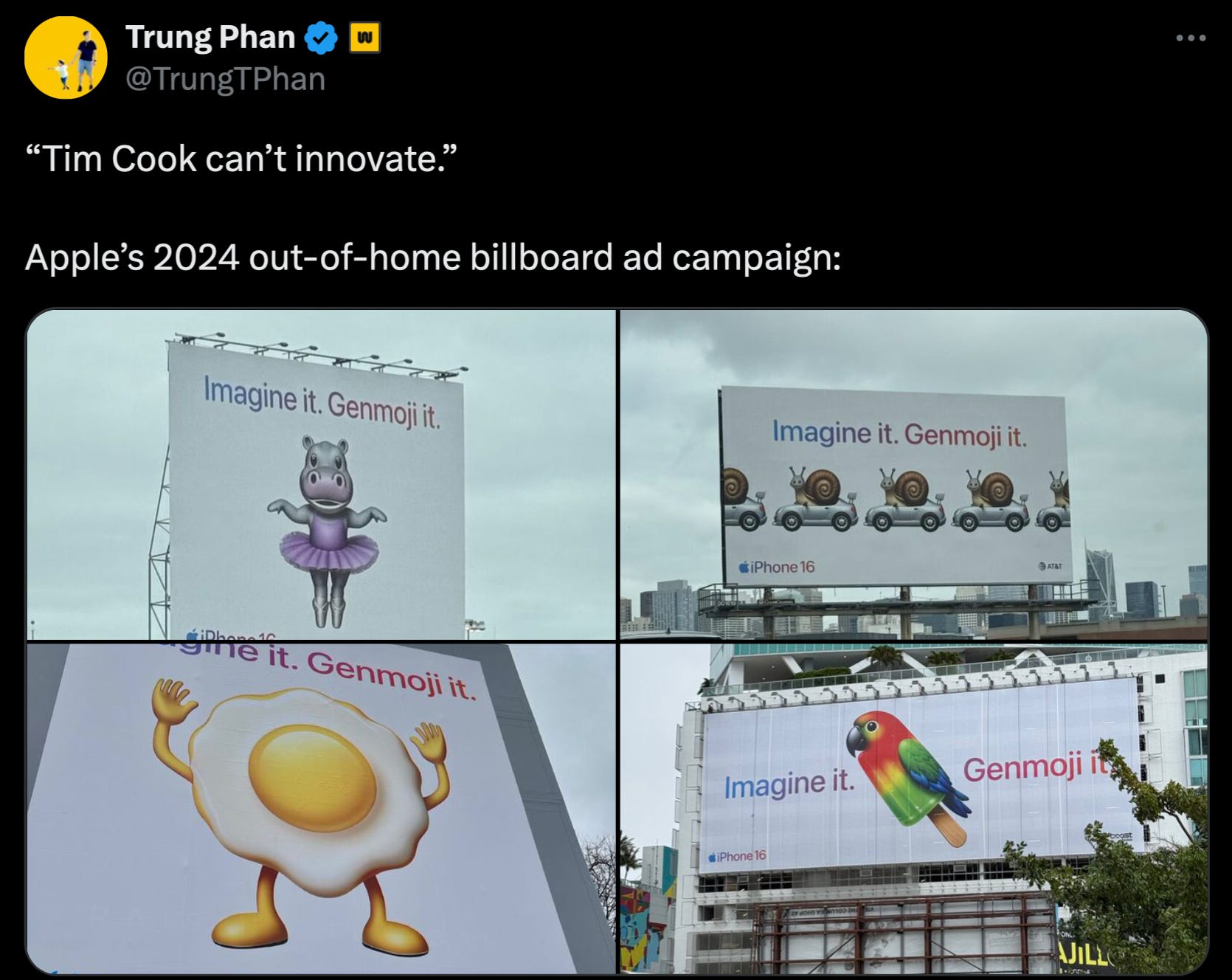
The most memorable part of Apple Intelligence was the demented Genmoji campaign:
Last year, Apple’s SVP of Services Eddy Cue took the stand in a Google antitrust case and said that AI is moving so fast that “you may not need an iPhone in 10 years from now as crazy as that sounds…AI is a new technology shift, and it’s creating new opportunities for new entrants.”
Apple has been fumbling AI and it might be existential if there is a new form factor (eg. Jony Ive partnering with OpenAI on hardware).
Against this backdrop, Big Tech has gone HAM on AI-related Capex spending for chips and foundation models. An estimated $700B in 2026 across the Mag 7…except for Apple:
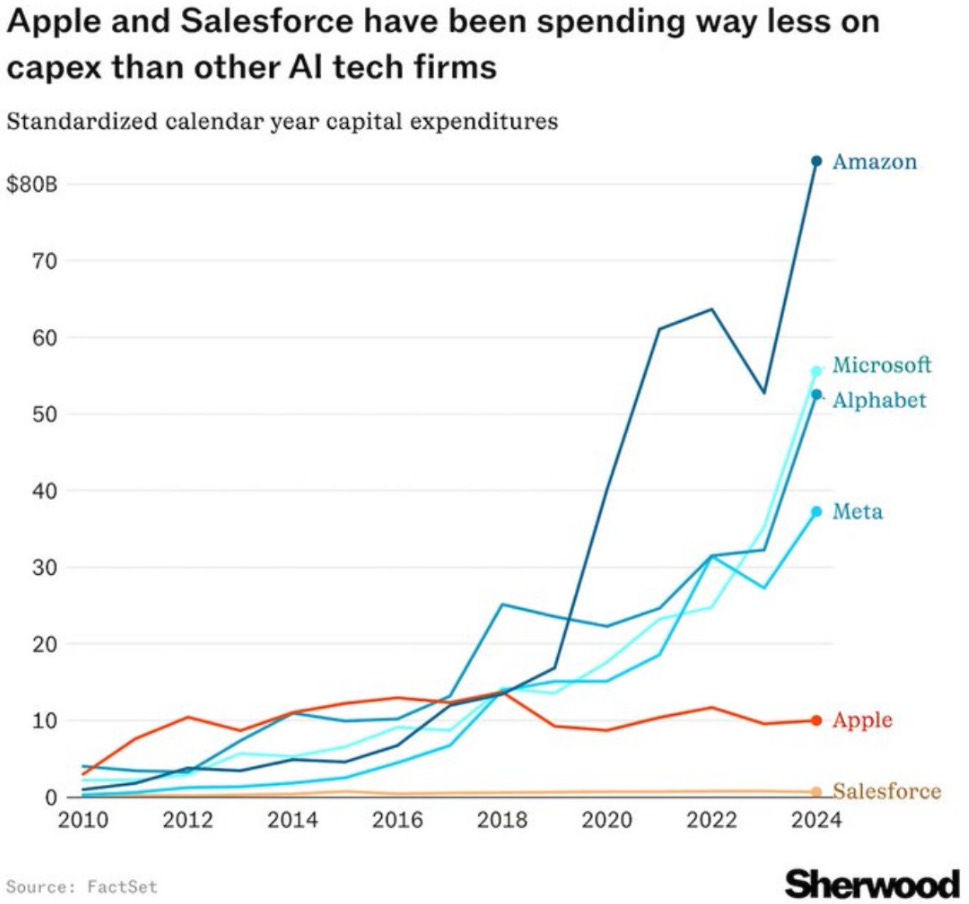
…and that explains this table:
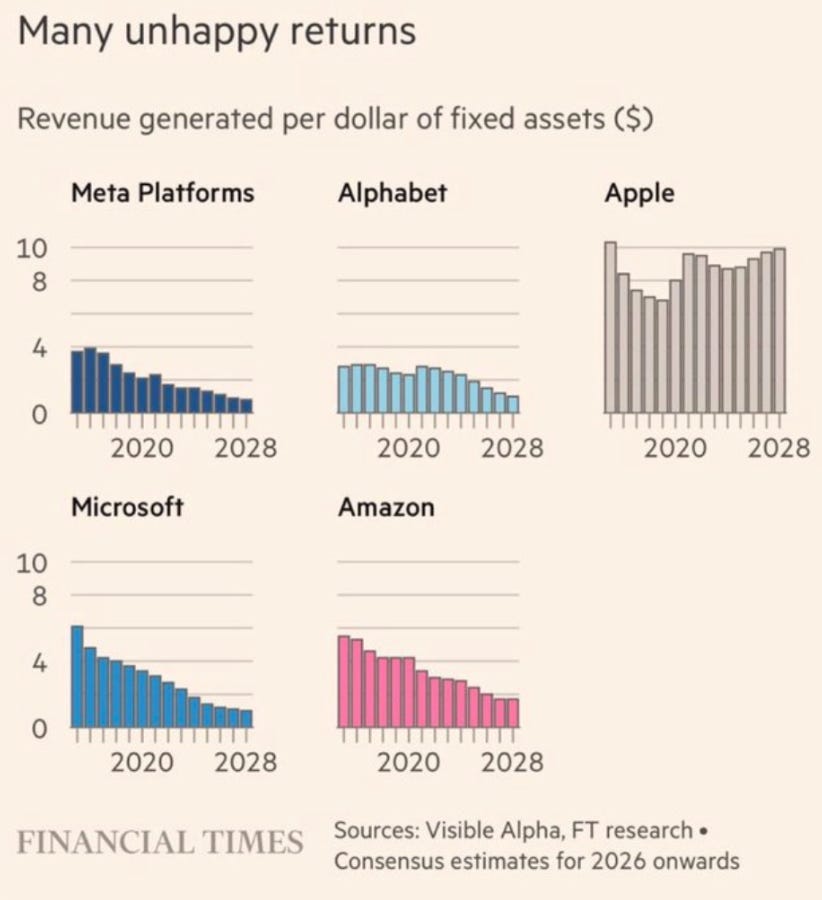
So, what exactly is the Apple AI bet? And how will that look after 2030?
A few months after the launch of ChatGPT, I read this interesting exchange on Hacker News in 2023, which looks pretty prophetic 3 years later:
Apple has a ridiculous, almost unfathomably deep moat for training and running personalized, customised LLMs and other AI models on the ‘edge’ with these Apple Silicon chips in all their devices.
Apple expects the LLM models to commoditize while it owns all the customers through various hardware devices.
While Apple Intelligence was a disaster, the recent craze over people buying Mac Minis and installing personal AI agents is a concrete expression of Apple’s strategy.

Meanwhile, Apple has agreed to pay $1B to Google for its Gemini model to power Apple’s revamped Siri…so, hopefully, that gets fixed.
Let me give you two takes on Apple’s approach.
First, here is a bearish one from Polimath:
Apple had the most compelling pre-AI experience in Siri [acquired in 2010]. They had everything! They had mountains of user data, audio and transcription training data, the biggest and most sophisticated user data network in the world *by far*.
And they blew it. They should be so far ahead of the competition on AI that it makes their competitors fall into despair. Instead, they are a non-player in the biggest tech revolution since mobile, maybe even since the internet.
They could have leveraged their data advantage to create astonishingly powerful models. They make their own silicon, they could have beat Nvidia to the punch on hardware if Cook had any foresight.
Instead they still just make high-end devices and now also they make TV shows and won an Oscar for a movie no one saw. I’m sorry, but that’s underwhelming.
Here is a bullish take via Bubble Boi:
[People] will..be like oh but [Apple is] falling behind in the AI race. The problem with that line of thinking is that people think “AI strategy” means setting $100B on fire to rent H100s and become a low-margin neocloud. They want Apple to just blow all of their money instead of building a real differentiated product. Apple probably looked at the inference market early on and correctly decided not to play a game where the winner gets 20% gross margins and a terrible balance sheet and let everybody else fight it out. Nvidia did the same thing. Neoclouds look more like industrials why the fuck would you destroy your 75% margins for that?
The actual Apple AI strategy is a lot smarter than haters give credit to. They own the silicon, own the OS, and can run inference on the device better than anyone.
M5 ships with neural accelerators in every GPU core, 153 GB/s unified memory bandwidth and if you believe flash has room to run… much more. Your data never leaves the phone, your AI never goes down because AWS had a bad day, and you don’t get billed by the token. No competitor has the silicon plus OS plus distribution to replicate that and I truly believe on device inference for trillion parameter models is coming in next 5 years.
And this is why the John Ternus decision matters.

John Ternus & The Future of Apple
Ternus is 50 years old and will have spent 1/2 his life at Apple when he becomes CEO in September.
He has a Mechanical Engineering degree from Penn and built a head-controlled feeding arm for quadriplegics as a graduation project. His first job was in VR and he joined Apple in 2001, the year Jobs released the iPod, and has played a part in every major Apple hardware product since: iPhone, iPad, AirPods, MacBook Air, Mac and Vision Pro.

All that is cool but, holy smokes, we need to talk about the pun potential with his last name here:
If he makes another run at a car: “Apple’s U-Tern”
When the iPhone Fold drops: “The iPhone Terns A Page”
If L’il Jon performs at Apple’s 51st Anniversary: “Tern Down For What”

Also cool was the commencement speech Ternus gave at Penn’s Engineering school in 2024. He did a version of Steve Job’s famous “paint both sides of the fence even if no one looks because you will know you did it” attention-to-detail story:
Here’s my first [advice]: the care that you put into your work really matters. My first project at Apple was the Cinema Display. It was a large desktop monitor. It had a beautiful clear plastic enclosure that was held together with some screws coming in from the back. These screws were made of stainless steel, and the head of every screw was machined to have a pattern of concentric grooves that shimmered like a CD when light moved across it. I should probably say, if some of you have never seen a CD before, you can ask your parents afterward.
At some point in my first year, I found myself at a supplier facility. I was far away from home, it was well past midnight. I was using a magnifying glass to count the number of grooves on the head of this screw, which, remember, lives on the back of the display. And I was arguing with the supplier because these parts had 35 grooves, they were supposed to have 25.
I distinctly remember stepping back for a minute and thinking to myself, “What the hell am I doing? Is this normal?” And I thought about it, and I realized it might not be normal, but it’s right. It’s right because I’d already spent months working on that product, and if you’re going to spend that much time on something, you should put in your very best effort. Maybe a customer notices, maybe they don’t, but either way, whenever I saw one of those displays on someone’s desk, it mattered to me to know that my teammates and I had considered everything about it and done the very best job we could.
Steve Jobs and Jony Ive were product guys.
Tim Cook wasn’t a product guy — Ive left in 2019 and was apparently “dispirited” the Cook didn’t take more interest in products — but he scaled the shit out of them.
Ternus gets to take Cook’s “scale the shit out products” machine and make new products because Ternus is very much a product guy.
Just like Jobs didn’t pick a Jobs. Cook isn’t picking a Cook. Although, they both seem to be on the low-key and even-keeled side of the temperament spectrum.
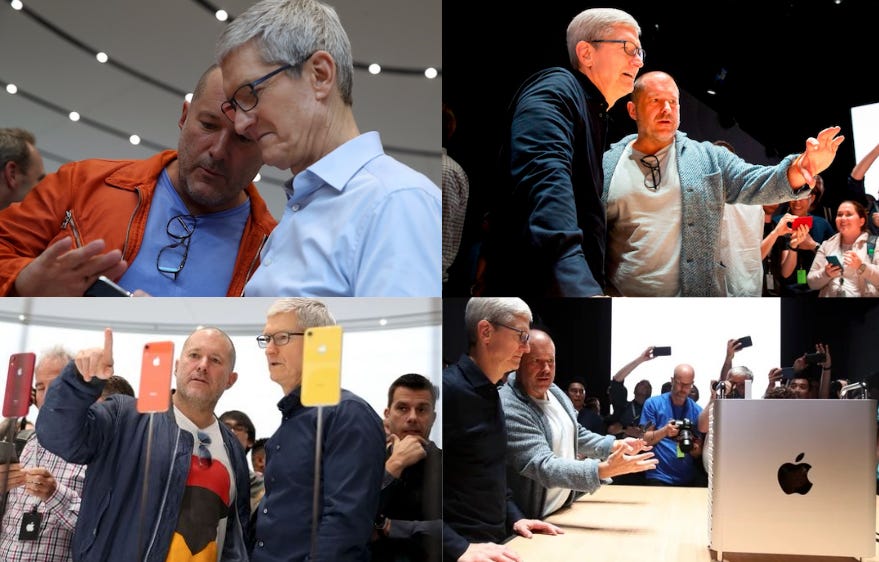
When Ternus rumors hit the newswire last year, long-time Apple observer John Gruber wrote this:
I absolutely love the idea of Cook’s successor being a product person like Ternus, and Ternus is young enough — 50, the same age Cook was in 2011 when he took the reins from Steve Jobs — to hold the job for a long stretch. Ternus took over iPhone hardware engineering in 2020, and was promoted to senior vice president of hardware engineering in January 2021, when Dan Riccio stepped aside. Apple’s hardware, across all product lines and including silicon, has been exemplary under Ternus’s leadership. And Ternus clearly loves and understands the Mac.
The most relevant part of Ternus’ career as related to AI is that he led the effort to port Apple’s products from Intel to Apple Silicon, as noted by another long-time Apple analyst Ming-Chi Kuo:
John Ternus’ most important move in recent years was leading the Mac transition from x86 (Intel) to ARM (Apple’s own Apple Silicon). Pulling off a full-stack shift across hardware, software, and the developer ecosystem in one go, and turning that into a commercial success, required a very high level of execution and tight cross-functional coordination. Without this, there wouldn’t be the success of today’s MacBook Neo and the advantage Apple now holds as it gears up for AI devices.
The iPhone has been the core driver of Apple’s hardware business for nearly two decades, yet the new CEO does not come out of the iPhone side of the business. That suggests the board is applying a broader set of criteria, not just picking the leader with the most visible wins.
Moving the Mac to Apple Silicon was a system-and-platform-level transition, essentially a brain transplant. Within Apple, no one has more experience managing a shift at this scale than John Ternus. That is exactly what Apple needs as it moves into the next phase of on-device AI.
Apple made two other notable announcements last week along with the Ternus news.
First, the driving force behind Apple Silicon — Johny Srouji, who joined Apple in 2008 from IBM — is now Apple’s Chief Hardware Officer.
Second, Tim Cook will become Apple’s executive chair and remain very involved in Apple, especially when it comes to “engaging with policymakers around the world”.
And “engaging with policymakers around the world” really means “dealing with President Trump and President Xi”.
Cook had to become a politician. Apple has 2.5B users, makes $410B in annual sales and its supply chain span the globe employing tens of millions of people.
He’s on par with leaders from large countries in terms of responsibilities.
“Tim may not be able to design a product like Steve but Tim understands the world to a degree that very, very few CEOs I’ve met over the past 60 years could match,” Warren Buffett told Bloomberg in 2021.
In this role, he’s had to apologize to Chinese consumers after intense pressure from the CCP around a flimsy warranty issue in 2013. Domestically, that means becoming a political heat shield for Apple and all that entails:
smiling when you get called Tim Apple (a top 10 tech moment in past decade)
bringing a 24-karat gift to the Oval Office
having the President fete your career by saying you kissed his ass
Apple recently waved its mandatory 75-year old age limit for the exec chair. Cook could be around for a while making sure Ternus has a smooth transition, especially by dealing with the heatiest heat that will heat in upcoming years.

Cook will do it because he LOVES Apple.
During his 2014 conversation with Charlie Rose, Cook reflected on the moment that Jobs asked him to become CEO. He had filled that role on an interim basis in 2009 but Jobs’ health took a quick turn for the worse in early August 2011:
[Jobs] told me, “I’ve been thinking a lot. Apple’s never had a professional transition at CEO and I’m determined that we will have one now. I want you to be the CEO.”
On that day, I thought he would be chairman for a long time and that I’d be CEO for a long time and that we would continue to work together.
He chose me because I wasn’t like him. I’m not a carbon copy of him. He obviously thought deeply about who he wanted to lead Apple.
So, I have always felt the responsibility of that and I’ve wanted desperately to continue his legacy at Apple. I deeply love [Apple] and I wanted to pour every ounce that I had of myself into the company.
Then, Cook talked about how he thought about building the Apple leadership team:
If you’re a CEO, the most important thing is to pick people around you that aren’t like you and that complement you.
Because you want to build a puzzle. You don’t want to stack Chiclets up and have everyone be the same…so, the people that surrounded me are not like me. They have skills that I don’t have. I may have some that they don’t have. […]
As a team collectively, we are able to do some incredible things and it’s because we collaborate and I see one of the key things in my life is to make sure that we collaborate at an incredible level.
It’s because we run the company functionally. We’re not like the typical big company that has a number of divisions. Everybody is a functional expert and, then, we work collectively to get things done. We work together as a team because the work really happens horizontally. Not vertically. Products are horizontal and it takes hardware plus software plus services to make a killer product.
For years, many thought Cook would elevate his long-time COO Jeff Williams, who has a tight relationship with their major manufacturing partners at Foxconn and TSMC (Cook was Jobs’ COO). Williams retired late last year. Others floated software head Craig Federighi but he gets some of the AI blame (also, would he even want to deal with hardware complexity?).

So, Ternus it is.
Profiles in the days after his CEO announcement noted that Ternus was:
“a super nice guy”
“a great collaborator”
“a levelheaded voice” who “inspires fierce loyalty”
Apple’s whisperer at Bloomberg (Mark Gurman) says, “Apple picked Ternus because of his age and belief that he could reinvent Apple’s product lineup and compete against AI-savvy competitors. Longtime colleagues describe Ternus as someone willing to make clear calls, in contrast to Cook’s more deliberative, consensus-based approach.”
Gurman notes that the Ternus pick was very much Cook’s to make (with the assistance of one of Apple’s longest service execs Eddy Cue — SVP of Services — who has been with Apple since 1989 and worked very closely with Steve Jobs).
The reporting out of Apple — which may be strategic leaks — has given Ternus credit for the MacBook Neo success while dropping nuggets that he was against the Vision Pro. In the next few years, we’ll get to judge him on the iPhone Fold, a Homepod and a suite of more AI-powered wearables (eg. smartglasses as well as camera-enabled AirPods, Watches and a new pendant product).
Ternus has the tools and was given a decent hand to win in AI.
Can he?
The most interesting take I saw on the news was from Horace Dediu, who mocked up a press release from the year 2040 that “looks back” on Ternus’ 15-year run as Apple CEO:
John grew Apple devices to 4.5 billion from 2.5 billion when he took over in 2026. Many have pointed out that he has been building on Tim Cook’s success and that John has only added 2 billion devices in 15 years, averaging 110 million per year. The reality is that most of those have been switchers from Android rather than first-time users. Because of this, Android’s 5 billion active devices means Android users still outnumber Apple users. Apple’s users do have attach rates of over 2.5 devices per user including passive AI wearables but the competition is not standing still. The new CEO will face the challenge of trying to wrest majority market share in a saturated 12 billion active device market.
With over 2 billion customers, Apple is capturing over 40% of all AI revenues. Critics point out that the company has not grown beyond its core: high net worth and high income households. Much of that foundation was laid by his predecessor and arguably all that John has done is maintain a base that grew organically as global income has risen. Over a billion middle/high income individuals have joined the world economy as Apple users but that is hardly attributable to Ternus. His engineering acumen did not give him the insight into marketing to low income countries where most of the users are shunning Apple products.
If some version of this future plays out, Cook made the right choice and those accomplishments sure would be impressive updates on John Apple Ternus’ LinkedIn profile.
Them Apple CEO Memes


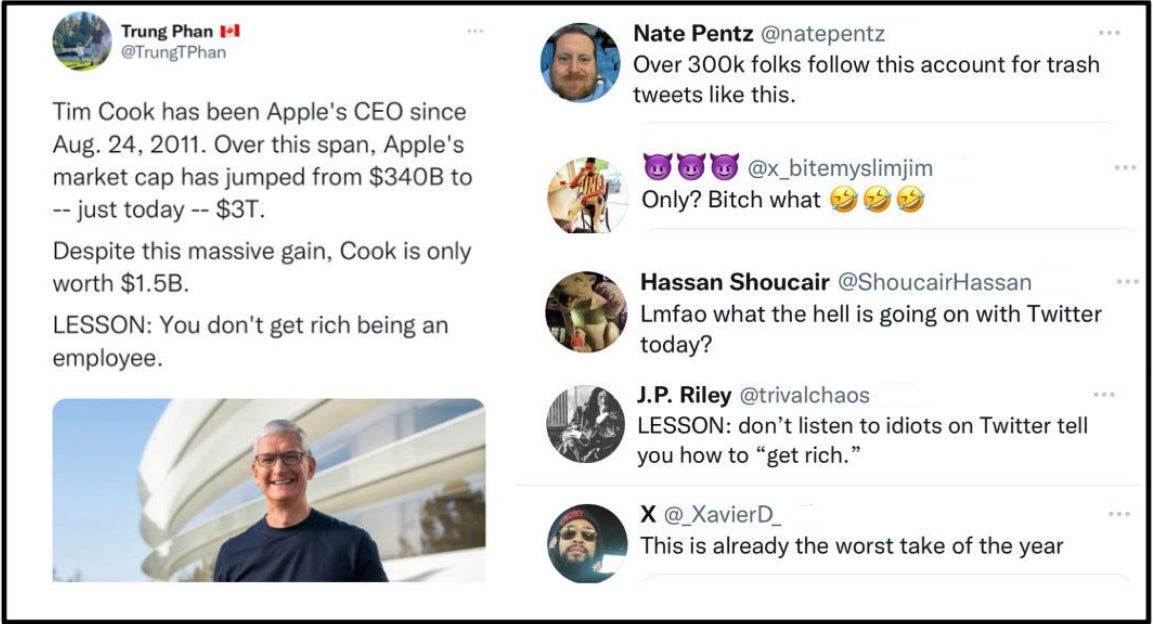
Finally, my personal favourite Tim Cook post ever. It’s from 2022 and a reminder for me about “context collapse”, the concept that a user will post something on social intended for their audience (in my case: tech/business folk) but the post will travel into other communities and lead to original poster getting absolutely cooked because it’s out of context (the pièce de résistance were various publications picking it up with the headline: “Writer roasted for saying Tim Cook proves you can’t get rich as an employee”).
Links & Memes
Some links for your weekend consumption:
Fencing at LA 2028 Olympics will be lit…because the audience will be able to watch AI-powered visualizations of the sword movements.
Meta is taking training to the next level…first, is is offering a free program to train fiber technicians to help build data centres. Then, it went full dystopian and will now track mouse movements for all Meta employees to train the AI models (there is no opt out). Beginning to think Meta is behind that “Data Centre” game on Steam where you buy racks, set up servers and install cables.
The cast of Friends…but totally juiced up and looks-maxxing isn’t the worst idea ever.
Two insane Polymarket prediction market trades…someone rigged a bet and made $30k+ on the temperature in Paris by applying a hair dryer to the thermostat that resolved the bet and the memes have been incredible. Elsewhere, a person involved in the US military’s Venezuela was arrested for using confidential information to make $400k+ betting that Maduro would be removed from office (and the President’s response to the news was…watch it).
SpaceX has a $60B option to buy AI coding startup Cursor…and Kevin Kwok has a good breakdown on why the deal makes a lot of sense.
Sony AI built a ping pong playing robot (ACE)…and it became “the first robot to attain expert-level performance in a competitive physical sport” and beat top-tier human players, per Reuters.
Someone built an Anti-Grammarly…the app makes mistakes in your email to make it look more human and less AI slop. Reminds me of the saying, the opposite of a good idea is also a good idea.
Why Rome never industrialized…good 11-minute video explainer!
…and them wild posts:


Thank you for the article. It’s the best “after Jobs” piece out there
i'm on the fence on the comment from Patrick McGee that Apple basically is responsible for the China growth. true, Apple trained millions upon millions of people in China, helped their national industry get trained, but those $55B meant an increase of how many trillions on US companies. a lot of the modern behemoths (and a great part of Google and Meta's value) come directly from what Apple has created. it's very easy to point fingers at Apple (and Tesla and other companies are guilty of this) for educating and increasing the productivity, quality and expertise of a country everyone is using as their manufacturing facility. of course there are problematic parts of his legacy, but pretty much every company that has a smartphone can trace where they are to Apple