

Thanks for subscribing to SatPost.
Today, we will talk about Kirkland Signature…the private-label beast doing $90B a year for Costco.
Also this week:
Boston Dynamics’s Most Practical Robot
Wild IMAX Tech In Christopher Nolan’s The Odyssey
…and them wild posts (including World Cup of course)
Costco’s Kirkland Signature hit an absurd $90B in 2025.
Launched in 1995, the retailer’s private label brand now has higher annual sales than:
Boeing ($89B)
FedEx ($88B)
T-Mobile ($88B)
P&G ($84B)
Wells Fargo ($80B)
My Facebook Marketplace Page for Used Air Jordan (only $118, mostly because I take awful photos)
Wow, cool airplane or global logistics network you have there…how many golf balls or scented Flextech™ garbage bags do you sell?
Costco’s latest Kirkland hit has been its canned Sparkline Energy Drink™…which looks A LOT LIKE CELSIUS!!!
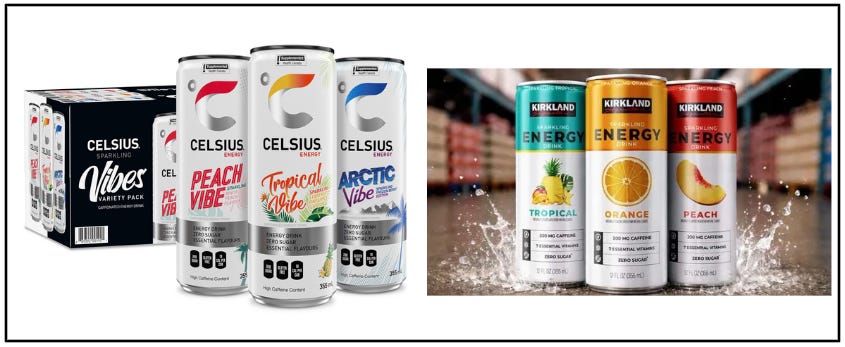
Costco now sells both products…and, obviously, it did under-price-maxxing with its Kirkland option.
A 24-pack of Kirkland’s caffeine bomb (200mg!!) is $16.99 while the comparable Celsius product is priced at $37.99.
Almost assuredly while gritting their teeth, Celsius responded to the Kirkland news by saying that Costco remained a “valued customer” and its “value-priced private-label launch can get trial, but it is too early to conclude that the trial becomes durable switching in a highly brand-led energy category.”
The stock market wasn’t so sure. in March, Celsius declined by over 13% in the week after Costco dropped Sparkline Energy Drink™.
For decades, Costco has been pitting its in-house Kirkland option with a leading national brand. Costco is so damn big — and its customers so damn loyal — that the national brands will still bend over backwards to get into the warehouse.
Kirkland Signature keeps increasing products under its umbrella and has grown to 1/3rd of the wholesaler’s $275B total revenue. But as with everything in life, there are limits to growth and we will find out if Kirkland Signature is nearing its ceiling.
Let’s discuss:
Kirkland Signature’s Origin Story
Jim Sinegal and One Forbes Article
The 1% Better Rule
Kirkland Signature Wins & Losses
How Big Can Kirkland Signature Get?
Kirkland Signature’s Origin Story
The first Costco Wholesale warehouse opened in Seattle in 1983.
Co-founder Jim Sinegal had spent the previous 25+ years working with the legend Sol Price. For the uninitiated, Price is the absolute OG in the retailing industry. Sam Walton, Jeff Bezos, Arthur Blank and Sinegal have all paid respect to Price like today’s young hip-hop producers shoutout Dr. Dre.
Price was a pioneer of the membership warehouse model. He ran one called FedMart before starting Price Club in 1976.
Sinegal worked at both companies and took those learnings to co-found Costco and it was an instant success: Costco became the first American company to grow from $0 to $3 billion in sales in less than 6 years.
In 1993, Costco merged with Price Club and the combined entity did $16B that year with over 200 locations. Then, in 1995, Sinegal launched the Kirkland Signature private label. Costco’s HQ was in Kirkland, Washington. It kept the name even after Costco moved HQ to the Seattle suburb of Issaquah (it’s estimated that only 0.6% of global English speakers can properly pronounce that word).
Last year, Sinegal marked the 30th anniversary of Kirkland Signature by speaking about the brand with the Wall Street Journal (happy belated 31st birthday, Kirkland, king).
Sinegal explained that he had experience with private labels back to his time at FedMart, which had an in-house product called FM Brand. But Costco’s major focus during its first decade was on B2B sales (Sinegal said, “[our] biggest customers in those days…were other businesses.”).
However, individual consumers started shopping more at Costco at the same time that major national consumer brands (think Gillette, Campbell’s, Heinz, Kellogg’s, P&G, Colgate, Minute Maid etc.) were making poor strategic decisions to turn off said consumers.
Let me hit you with some quick background.
After World War II, these national consumer brands went on a multi-decade heater as baby boomers were booming.
A convergence of three macro trends led to their rise. First, TV blew up and a handful of powerful networks (ABC, NBC, CBS) leveraged the new media technology to aggregate eyeballs across the country. Second, car ownership spiked. Third, the construction of highway and suburbs led to supermarkets with massive parking lots for the cars.
The supermarkets charged slotting fees for brands to place products at premium eye-level spots in the store. Large national brands paid the slotting fees and justified massive TV ad spend because it created the necessary sales volume to still make a healthy profit.
Speaking of TV ad spend, the 1950s and 1960s were the Golden Age for jingles and corporate characters that would make a pretty bad-ass cinematic universe: Tony the Tiger, Betty Crocker, Cap’n Crunch, Mr. Clean, the Jolly Green Giant, Ronald McDonald and The Pillsbury Doughboy (these mascots did rep some pretty low-nutrient foods; although, The Marlboro Man could probably be a Zyn IG influencer now).
The name of the game was scale.
Spend on TV adds —> drive more supermarket sales —> become bigger —> drive out smaller competitors —> buy even more TV ads —> drive even more supermarket sales —> convince kids to smoke cigarettes —> rinse and repeat.
However, the national consumer brands eventually overplayed their hand.
A long bout of inflation in the 1970s led to higher product prices as the cost of inputs went up. However, when prices started to subside in the mid-1980s — after Fed Chair Paul Volcker went biblical on inflation by hiking interest rate to 20% — these same brands were in no rush to lower their prices.
In 1991, business journalist Gretchen Morgensen wrote in Forbes about this pricing dynamic ("The Trend is Not Their Friend”). Sinegal read it and spotted the private label opportunity. So, he photocopied the article and told his executives to read it, making them initial the photocopied version as proof of work.
The Forbes article laid out how the national brands were completely donging consumers in the 1980s…just because they could (kind of like FIFA in 2026):
Consumers, conditioned by heavy promotion and by habit, did not bolt even as prices of some of their favorite soaps and cereals increased by 5% or 8% a year. And so profits increased much faster than that. Heinz’s earnings climbed by an average of 13% a year during the past decade, Clorox’s by 15%.
Their shareholders and owners reaped a treasure. Heinz, Hershey, Kellogg, Clorox, Kimberly-Clark and a host of other similar companies showed market gains of 600% or more in a decade when the market rose by only about 200%. […]
A long list of consumer goods companies greatly widened their operating margins in the past decade. Operating margins are the proportions of sales that represent profits before depreciation, interest and tax. Since 1981, for example, H. J. Heinz's margin has increased from 11.4% to 18.5%, Ralston Purina's from 9.4% to 15.7%, Sara Lee's from 7.4% to 10.4%, and Clorox's from 11.2% to 18%. […]
Quaker Oats provides an illustration of what has been happening. It has a lucrative near-monopoly on the retail distribution of an old commodity, oatmeal. In 1980, its namesake product retailed for an average $0.73 for a 500-gram box. [In 1991], the box goes for $1.73. Yet during that period the wholesale price of oats fell by one-third.
Today’s retail price is 3000% higher than the price of the raw, unprocessed ingredient, a much wider spread than before.
A short recession began 1990, by which time consumers had already sniffed out the BS and private labels were gaining share (lesson: don’t dong me, bro).
Sinegal decided that Costco could undercut the brands while offering a better product.
The Costco team started studying private-label winners in the UK (Sainsbury was doing 50% of sales from its in-house brands) and Canada (Loblaw’s private-label brand President’s Choice was responsible for 20% of the grocer’s sales; hell, it was even able to gain share against Coca-Cola and Pepsi with knock-off colas).
Costco had dabbled with private label for years but Sinegal decided to bring it all under a single brand after one incident at an LA warehouse, per Costco Connection (the retailer’s in-house magazine that, incredibly, has the 3rd largest monthly magazine subscriber base in America behind two retired senior citizen AARP magazines):
Costco had been calling on its suppliers to produce first-rate merchandise almost from its inception, but prior to the launch of Kirkland Signature in 1995, those items were easy to miss.
Each private-label product was sold under a different name: Chelsea toilet paper, Meridian coffee, [Simply Soda] and about two dozen others.
The choice to bring everything under a single banner came when…CEO Jim Sinegal visited a Costco warehouse in Los Angeles. The warehouse manager was unaware that Pinnacle brand tablets were a [Costco] private-label….so, Sinegal decided that one name for everything would be easier for both employees and members.
Sinegal didn’t want to name the in-house brand “Costco” because the company was already “doing so much business” with other companies and small businesses. If the project was a flop, that would be no bueno for brand association.
Even with a different name, Costco had to move methodically since its bulk warehouse model stocks only ~4,000 SKUS (whereas Target, Walmart or Kroger have 50,000+ SKUs).
Its scarce warehouse space is so so valuable.
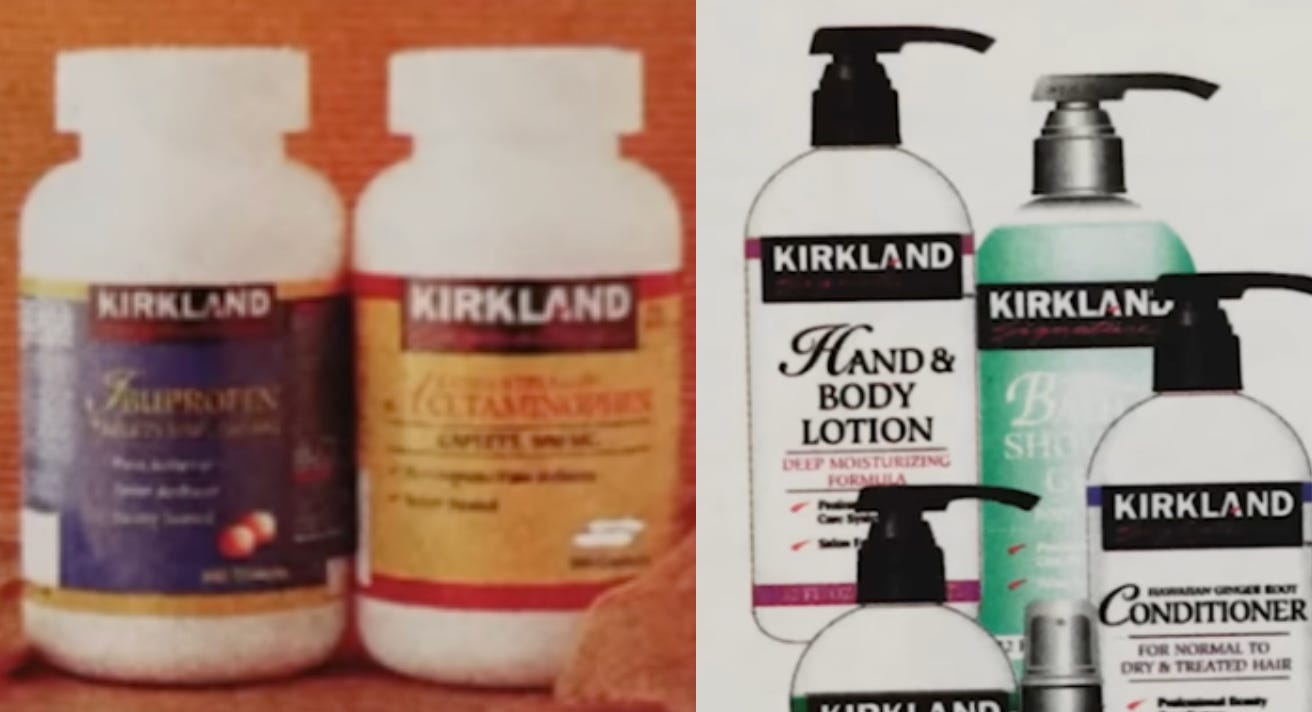
The first two Kirkland Signature products were shampoo and vitamins.
Costco has since filed 1,000+ Kirkland Signature trademarks.
How did Costco pick which Kirkland Signature products to make?
We’ll talk about that in the next section.
The 1% Better Rule
Unsurprisingly, Sinegal set a high bar for Kirkland Signature.
In 2018, Sinegal gave a talk at Georgetown’s McDonough business school and described the Kirkland Signature approach:
Expectations from Wall Street made [national brands] raise their prices on an ongoing basis.
So, you find crazy things like maybe a commodity prices went down 5% but the price of the finished product went up 6% in order to meet [Wall Street estimates].
Well, that created an opportunity for private label products. We found that in London many retailers [eg. Sainsbury] were very successful and so we thought that we had to get involved.
We set some criteria that products we would develop would be as good — or better — than the leading national brands.
Also, it had to be able to save our customers at least 15-20% off of the national brand. [I’m not talking about what the] national brand would sell for in a department store or supermarket. But what the national brand would sell for at Costco.
So, the savings had to be significant for the customers, to be a meaningful.
Nailing the combo of higher quality and lower price on every product is really important because one crappy product can ruin perception for everything else (honestly, still can’t believe Apple survived the Apple Cloth).
Sinegal explained more about going with one brand for Costco’s private label:
Conventional wisdom said that you had to have a different name for every class of product. Sears…had Kenmore appliances, DieHard batteries and Craftsman tools.
We looked at it and said, “You know, we're in so many countries and we have such a wide array of products [that] we'll have a room full of attorneys that are doing nothing but trying to clear these names for every product.”
Starting with Sinegal, every CEO has been responsible for the final sign-off for a new Kirkland Signature product. Meanwhile, the people responsible for cooking up new ideas at Costco are known as “buyers” (the same role is found at Trader Joe’s, too).
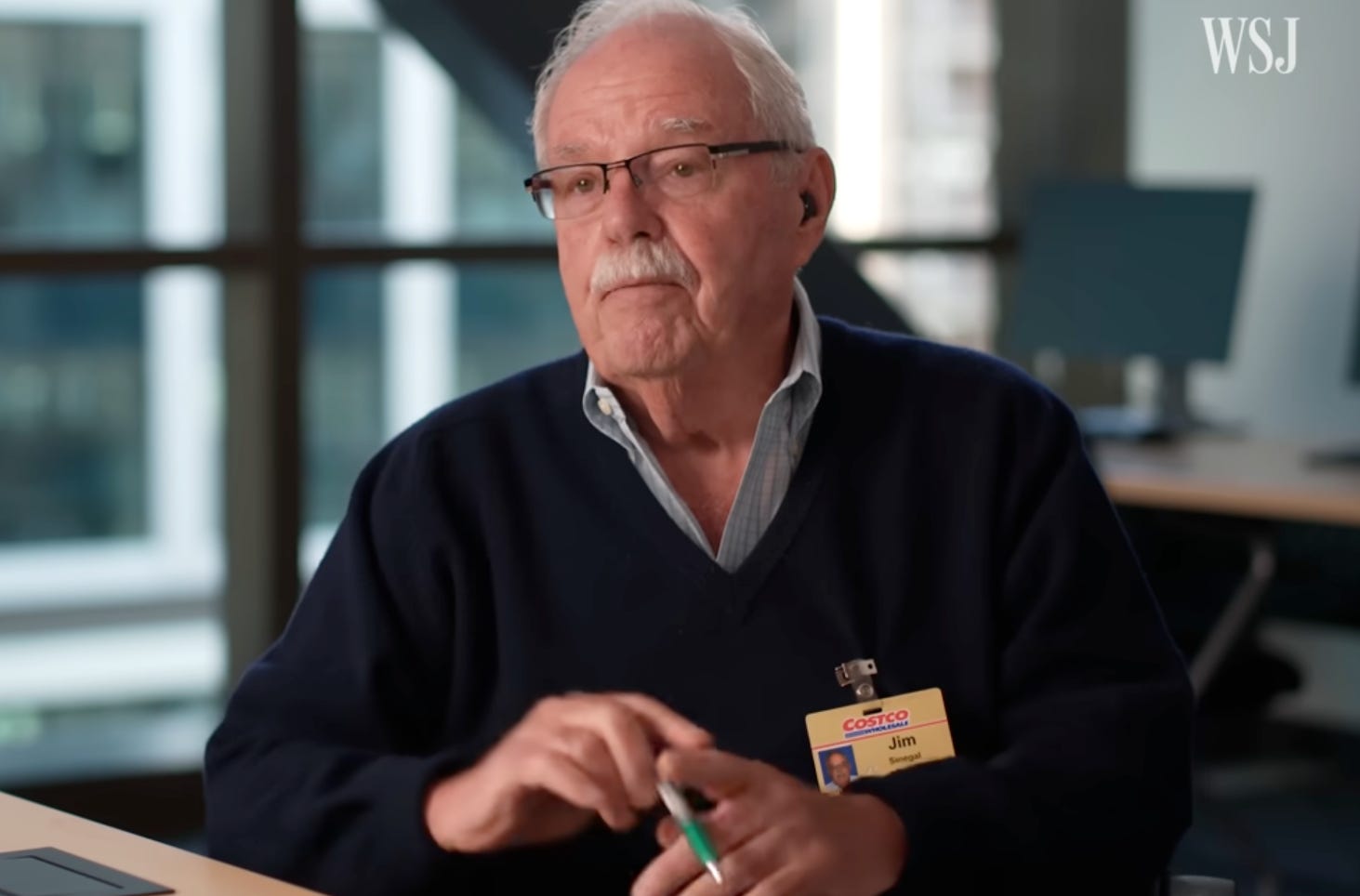
Sinegal says he “always had a green ink pen” on him and would use it to give final approval on product pitches by writing his initials. These fateful moments became known as “green ink meetings” and were never sure things (that green pen color was retired when Sinegal retired in 2012).
Costco typically spends years developing Kirkland Signature products and will drop anything that doesn’t check all the boxes.
One example: it took 8 pitches for Costco to greenlight the Kirkland Signature gasoline station. Sinegal was very worried about trying to deliver a high-quality and low-price alternative to vertically-integrated O&G giants but eventually gave that sweet green ink.
Costco now has 747 Kirkland Signature gas stations. On average, it sells gas at $0.30 cheaper per gallon and Costco’s CFO says that “just under half of its gas station visitors end up going inside the warehouse” and “tend to visit more frequently, spend more overall, and renew their memberships at a higher rate.”
Kirkland Gas is up there with the $1.50 hot dog combo, $4.99 rotisserie chicken and 7L tub of Nutella as the best bait to bring in Costco shoppers.
In 2024, the WSJ — doing absolute yeoman’s work on the Costco beat — had a fascinating article on how a Ghanaian entrepreneur tried to sell a new corn snack into the warehouse. This is obviously a different challenge than launching something under the Kirkland Signature umbrella, but her experience paints a picture of how Costco rolls out new products:
Typically, Costco will trial a new product for 8-12 weeks.
Costco tells potential vendors that new products have “five seconds at 5 feet to get the member’s attention”.
Since packaging is so important, Costco spends most of its time with the vendor making sure the packaging slaps (the corn snack maker created 30 different box designs).
The vendor’s manufacturing facility have to meet Costco’s exact quality requirements and the supplier is responsible for delivering the goods. Pallets have to exactly meet Costco’s requirements and they will send back an entire truckload if anything is damaged or the inventory is messy (I would fail this test so badly).
Costco doesn’t provide vendor financing and has strict payment terms (it pays the supplier 15 days after delivery; Costco gets that juicy negative working capital, which is comparable to an interest-free loan).
Costco buyers know within a few weeks if the product will be a keeper.
Kirkland Signature goodies probably have less stress on packaging (it has the Kirkland name) and logistics (the retailer is already pro). So, the most comparable part is that Costco’s buyers know within weeks whether a new Kirkland product works or not.
In the WSJ’s aforementioned coverage of Kirkland’s 30th anniversary, the outlet also spoke with current Costco CEO Ron Vachris (in an all-time corporate ladder climb, he started at Costco as a forklift driver in 1982).
Vachris shared a ton of deets on Kirkland Signature’s playbook:
Max margin of 15%: Costco typically caps the margin for 3rd-party vendors at 14%, with most products in the single-digit %. In comparison, typical supermarket retail margins can hit 24-30%. Kirkland products are allowed a 15% margin and it is all about volume.
Vachris: “Our buyers are really rewarded based on volume of items, not how much we can make off every item. So, if a buyer can come out with an item that’s doing $4,000 per warehouse per week, that’s what they’re really excited about, as opposed to making a higher margin % on the item. When you really reward a buyer based on sales, not so much margin percentage, that changes the behavior.”
Focus on commodity prices: The main opportunity highlighted in that 1991 Forbes article is the disconnect between input and retail prices. Costco buyers are always on the lookup for a national brand squeezing consumers. To paraphrase Bezos, their margin is Costco’s opportunity:
Vachris: “Our buyers are very aware of the commodity inputs, the raw ingredients that go into something. So, they may see that [prices in a] commodity market such as coffee is declining…while the national brands are increasing in price. That creates a delta where they know there’s an opportunity for us.”
Find the right manufacturing partner (and make a slightly unique product): Costco will spend years finding the correct manufacturer and wants the Kirkland Signature product to stand out.
Vachris: “I want to get that little bit of extra differentiation from the national brand, and that’s normally my review point.”
On the differentiation, Costco is able to get one variable better because it is often tapping the exact same manufacturers as the competition.
“I’m not going to tell you who they are,” Sinegal told the Georgetown crowd. “But [the suppliers for Kirkland Signature] are often the leading manufacturers of the national brand products.”
A few years back, there was a viral thread on Reddit among people that worked in the Costco ecosystem. They mention a very specific Kirkland Signature metric: apparently, each private-label product had to be at least 1% better on some dimension vs. a comparable national brand.
Here is the exchange (obviously, unverified but — like Mulder in X-Files — I choose to believe):
u/min2themax: I work in marketing and did a ton of research on Costco as part of a pitch. The Kirkland brand is known for their quality. They won’t put their name on a product unless independent market and product research shows it meets or exceeds whatever the industry leader is. Toothbrushes, chocolate covered almonds, paper plates. Everything has to be better than the top-rated brand or it isn’t good enough for the Kirkland label.
u/reasonableliberty: It goes even deeper than that. I used to work for a large company that supplied for Costco. If you have what they deem to be the premium product on the market, they will actually ask you to make the Kirkland brand. They catch is that it has to be at least 1% better than your product. That’s not a joke. They’ll identify a metric in which their Kirkland branded product has to be slightly better than your market leading product. As a supplier, you jump on it, because the data is clear that it jacks your sales. Usually your product sits right next to theirs on the shelf. So the consumer has 2 choices. Yours, or yours (at slightly worse margin).
Here’s a Quora comment attesting to Costco’s quality bar:
A few years back I shared a warehouse with a company that makes a private label product for Costco with the Kirkland Signature brand. The owner of this business had been the president of a very well known apparel brand for 30+ years and had a great relationship with Costco. As an expert in his field, Costco invited his company to bid on a private label product.
Costco provided the general requirements and a target price for the garment but then left the detail work to him and his team. Once the samples were produced, Costco then made some tweaks and put the garment through some amazingly thorough tests to make sure the final product would be long lasting and a premium quality. The garment was made in a factory that produces some of the world’s top clothing brands and the equivalent garment was 5X the cost of their new private label item. Slim margins all around but high volume and a great value to Costco customers.
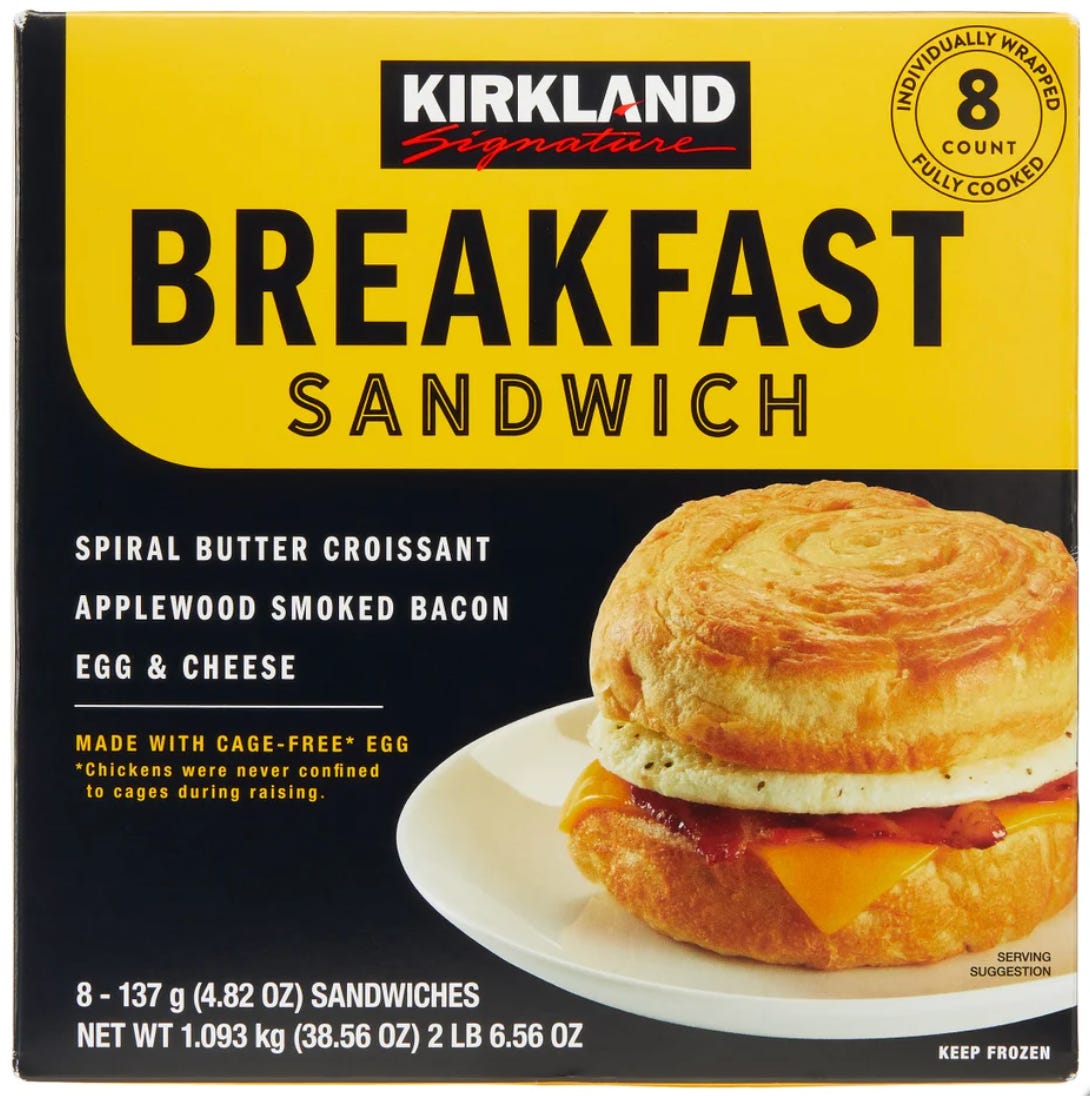
Vachris tells the WSJ an example of Kirkland getting an edge on a product. A few years back, Costco was working on a Kirkland Signature breakfast sandwich…and they negotiated some tasty differentiation:
There was a bacon, egg, and cheese breakfast sandwich that we [were developing].
[The first version] came out with an equivalent amount of protein to what the national brand had. Our challenge back to the buyer was: how can we exceed the national brand on the bacon involved?
Because that’s perceived as the highest-value attribute of this item.
Lo and behold: the buyer was able to go back, partner with the supplier and we were able to put 40% more protein in the item, maintain our price, and now the item is doing great.
Lo and behold, indeed.
Y’all manufacturers ain’t pulling a fast one on Vachris.
Kirkland Signature Wins & Losses
If I were to do a Mt. Rushmore of Jim Sinegal stories, we all know the unanimous inclusion: when he retired in 2012 and incoming CEO Craig Jelinek asked him about the long-term viability of the $1.50 hot dog combo…Sinegal replied, “If you raise the price of the hot dog, I'll fucking kill you.”
Since I consider myself a learned student of all things Costco hot dog, that’s actually Sinegal’s second best hot dog-related post.
The best is this exchange Sinegal had with the Seattle Times in 2011:
Seattle Times: “If [the hot dog combo] price ever goes up, what will it mean?”
Sinegal: “That I’m dead. People look at that hot dog and say $1.50, this is unbelievable. It’s the same thing you’d spend $7 or $8 at the ballpark for and not get the same quality dog. It is one of the things that we’re known for. We’re known for that hot dog. That is something you don’t mess with.”
The third best story is a pricing lesson Sinegal learned from bulk buying men’s jeans.
Costco negotiated a big discount on volume with one vendor. Then, instead of keeping the extra margin for itself, the retailer passed it to the consumer.
When asked why Costco didn’t take more profit…Sinegal dropped this bar:
“We pass the savings on to the customer, every time. Do you know how tempting it is to make another $7 on a pair? But once you do it, it’s like taking heroin. You can’t stop.”
Jeans! Heroin! Sinegal is just a quote machine.
Anyway, Costco expects the same customer-first approach from its vendors, which takes me to my 4th favourite Sinegal story and the one most relevant to Kirkland Signature.
Starbucks — also from the Seattle region — started roasting Kirkland Signature’s coffee in the early 2000s and its packaging flaunted the partnership with Costco…which led to this tale:
Tim Rose, Costco’s senior vice president for food merchandising, recalled a time when Starbucks did not pass along savings from a drop in coffee bean prices.
Though he is a friend of the Starbucks chairman, Howard Schultz, Mr. Sinegal warned he would remove Starbucks coffee from his stores unless it cut its prices.
Starbucks relented.
“Howard said, ‘Who do you think you are? The price police?’” Mr. Rose recalled, adding that Mr. Sinegal replied emphatically that he was.
Based on that anecdote, the dimension that Kirkland’s coffee outcompeted Starbucks on is clearly price. Maybe they slightly adjusted the roasting process but “more for the same spend” is the easiest variable that Kirkland can tweak to win on its warehouse shelves (pour one out for the Celsius team).
Costco mostly keeps its private-label partnerships under wraps and you know their NDAs are tighter than my Kirkland joggers after a $19.99 all-you-can eat sushi promotion at 10pm as the store tries to unload all that fish before it goes bad.
Some brands (eg. Starbucks) are happy to advertise the relationship (otherwise, the information usually comes from lawsuits, food safety recalls or union actions).
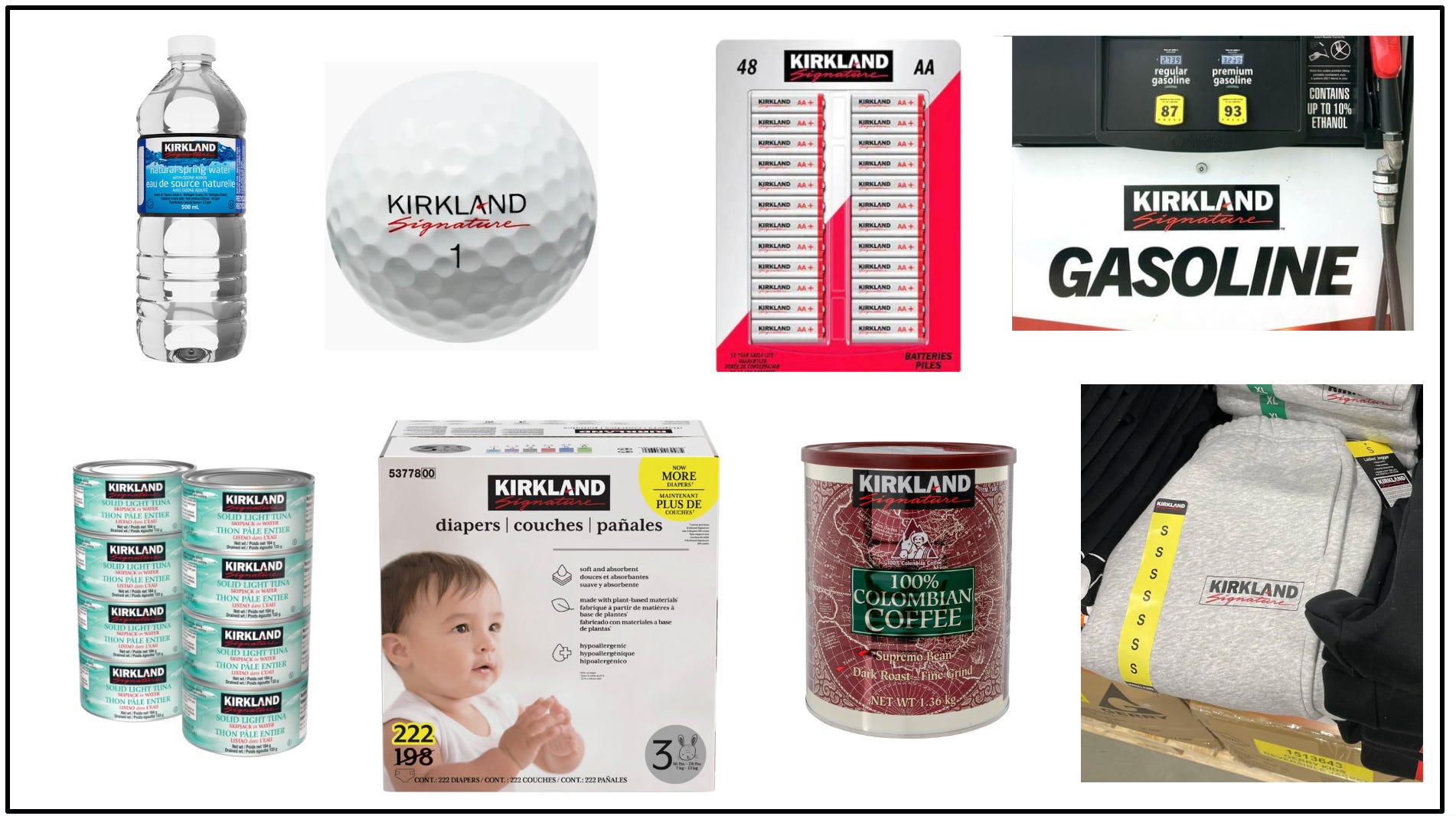
Here are some other confirmed big name manufacturers of Kirkland Signature products and how Costco made their product “1% better”:
Batteries (manufactured by Duracell): Duracell only manufactures AA and AAA batteries for Kirkland Signature. These are the most common (and, thus, commoditized) battery categories. Even though Duracell gets underpriced in the warehouse, there are only two battery brand choices (and the battery-maker gets to sell the higher margin C, D and 9V batteries to Costco members).
How is Kirkland 1% better: In addition to better pricing, Kirkland apparently has higher power output, with “Duracell batteries deliver an average of 1.28 volts while Kirkland gives an average of 1.62 volts” according some user testing.
Diapers (manufactured by First Quality, used to be Kimberly-Clark): This is a bit of a wild story. Kimberly-Clark manufactures Huggies. All the way back to 2000, Costco made Kimberly-Clark pay for and monitor an inventory dashboard that tracked the retailer’s warehouses and automatically sent new stocks when diapers sold out. The investment was worth it for Kimberly-Clark because, in 2005, it became the manufacturer of Kirkland Signature diapers while Costco booted P&G’s Pampers brand from its shelves. This was a $100m+ hit to P&G. In 2025, First Quality — maker of the Cutie diapers — started manufacturing Kirkland Signature’s diapers.
How is Kirkland 1% better: For most of 2000s, Kirkland diapers were odorless and had more plant-based materials. The difference with Huggies was mostly a value play. Kirkland had a slightly stripped down product at half the cost. BUT, apparently, parents are really not happy with First Quality diapers. The new Kirkland option may just be pure price advantage now. I have no opinion since my wife does literally 98.7% of our family home purchases…and, also, my kid doesn’t need them anymore.
White Albacore Tuna (packed by Bumble Bee): Since 2002, the folks at Bumble Bee have been doing the 8-count, 7oz Kirkland tuna cans for ~$20. A comparable volume of Bumble is over $30.
How is Kirkland 1% better: This is probably my favourite example. A Costco exec told CNN Money that Kirkland wanted a “tuna reminiscent of the old days, with thick chunks of substantial product.” So, Kirkland literally got thicker tuna chunks than Bumble Bee.
Other name brand manufacturers behind Kirkland product include the makers of its aluminium foil (Reynolds) and bourbon (Barton 1792 Distillery / Sazerac Company).
We’ve talked about how Costco squeezes suppliers in exchange for guaranteed volume.
But there is another point to emphasize: Costco warehouse space is such a valuable and scarce commodity, that brands will doubly bend over backwards for a chance to win it.

In industry parlance, Costco is a “low-SKU” environment. It stocks 4,000 SKUs or only 5-10% as compared to other big box retailers. If Kirkland Signature enters a category, there is only one spot left for anyone else.
Product-by-product, Costco is going to the world’s largest brands and basically telling them:
“Listen up. We got two slots. Kirkland is gonna take one of them. If you want the other slot — with guaranteed stupid volume (even if it’s low margins) — you’ll manufacture our Kirkland product nearly identical to yours. But ours will be cheaper and better by 1% on at least one dimension. Otherwise, kick rocks.”
This Kirkland model also has the benefit of conditioning shoppers to assume Costco is always getting the highest quality product for a certain price point. Figuring out which national brand manufactures Kirkland Signature is a popular parlour game among members.
A cult example is the Costco golf ball. In 2016, the retailer sold two dozens balls for $29.99 and the product tested as well as balls from Titleist, Callaway and Bridgestone…but at half the price.
According to WSJ (who else), Costco had purchased excess inventory from a South Korean manufacturer called Nassau Golf, which also made balls for Taylor Made and would later be acquired by the golf company (in a separate noteworthy incident, Taylor Made sued Costco for patent infringement on a Kirkland golf club).
Kirkland has apparently moved on to a Chinese manufacturer but the myth of the Costco golf ball persists.
One more popular Kirkland Signature myth is vodka.
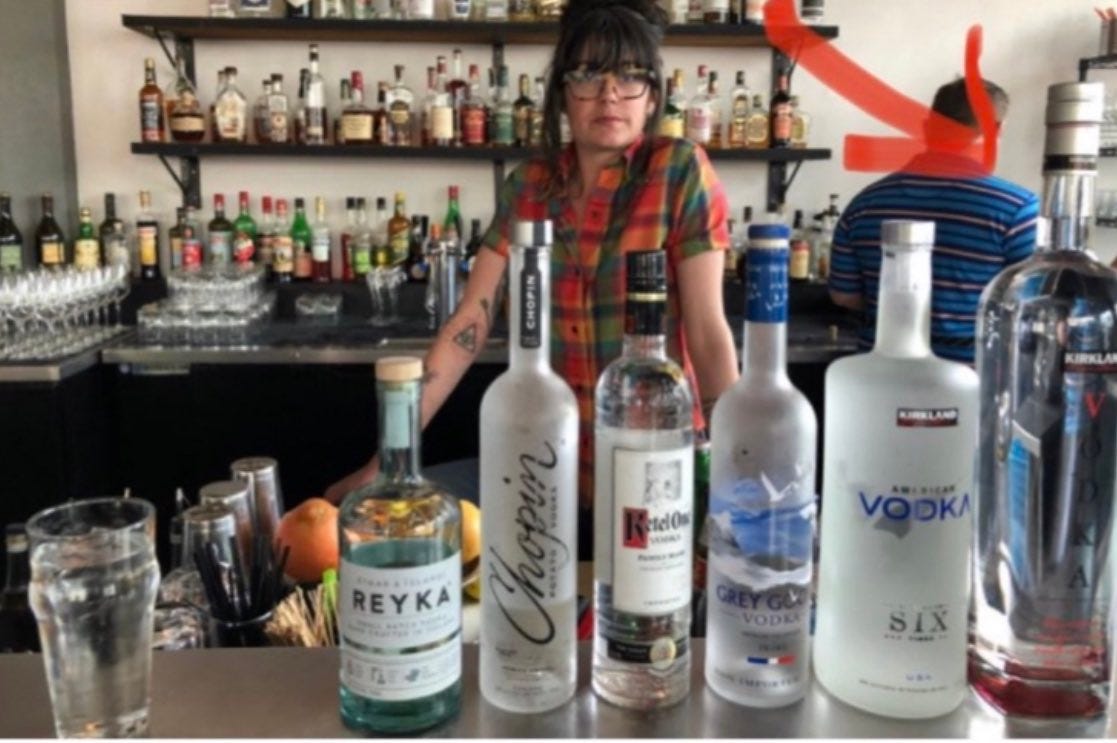
For years, word on the internet streets was that Grey Goose manufactured Kirkland Signature.
A French spirits company does make Kirkland Signature vodka. But it’s not Grey Goose. It is LeVecke Corporation. Honestly, it doesn’t even matter. Last year, Wirecutter reviewed a bunch of vodkas and said that Kirkland Signature was the top pick:
[Kirkland Signature] vodka has aromas and flavors of citrus and rose that are soft and subtle, not overpowering, and it blends well in just about any cocktail you can mix. It has the silkiest texture of all the vodkas we tried, and it doesn’t lose this exceptional creaminess when diluted. This bottle also lacks the harsh alcohol burn on the nose or palate that makes many vodkas off-putting.
There is one caveat: It comes only in a Costco-size bottle. This vodka is sold in a 1.75-liter bottle, which is more than double the size of a standard, 750-milliliter bottle of liquor. While we believe that this vodka belongs in every home bar, you may have trouble fitting it into your liquor cabinet. The bottle is 14 inches tall, and the only place I can hide it in my house is underneath the kitchen sink
Wait, the only downside is that Kirkland’s bottle is too tall?
Allow me to regale you with a classic business case study to rebut this point.
In the 1990s, Sidney Frank designed the Grey Goose bottle to be extra tall so that bars and restaurants would have to put it on the top shelf. The bottle looks extra premium up there and is easy for the customer to find.
In 2004, Frank sold the brand to Bacardi for $2B.
What’s the lesson? Size matters. So, Kirkland stay winning.
As far as major Ls.
The Costco subreddit always has strong feelings and some shoppers think Kirkland is skimming a bit on quality as it has grown larger.
Officially, CEO Ron Vachris says Costco failed with razors.
“The technology in razors…we felt we could not match what the national brands were doing,” he explained.
As for a new category, Vachris really wants to find a way to break into consumer electronics. I hope they pull it off. Those giant flat screen TVs at the front of the Costco warehouse are already 90% cheaper than 15 years ago.
How low could Kirkland Signature push down prices? Sub $100?
Cracking consumer electronics would go a long way to helping Kirkland Signature take the brand to the next level, which takes us to a pressing question…
How big can Kirkland Signature get?
This is the concluding paragraph from the 1991 Forbes piece that inspired Jim Sinegal:
National brand names are not going to fade away. But they will no longer produce automatic profit growth. The trend is early, but smart business people do not wait until a trend is obvious before they decide to act on it.
Just prophetic on all counts.
In 2025, total sales of national brands in America hit $1.05 trillion (+1.2% YoY) while private label brands did $283B (and grew faster at +3.3% YoY).
If 75% of Costco’s sales are in America, the domestic US sales of Kirkland Signature pencils out to $68B. That is 25% of all private label sales in America.
Sinegal was perhaps the “smartest business person” to jump on the private-label trend identified by Forbes and it has worked out fabulously well. The Costco founder calls Kirkland Signature “one of the 3 or 4” most significant reasons for the retailer’s success.
“The customer appreciates the value that you have on Kirkland products,” Sinegal said at the Georgetown talk. “They see the price of the national brand and they see the price of the private label. With a lot of work and a lot of time, we’ve been able to build a lot of confidence in the consumer. They [have adjusted their minds and] know if they see the Kirkland brand, they’re going to get a good quality.”
The long road to building this loyalty also lines up well with Costco’s lack of advertising. With so much brand affinity, Kirkland REALLY doesn’t need to spend money on TV, print and digital ads.
Costco currently has 130m+ members worldwide and the renewal rate on the annual membership is pretty crazy at ~90%.
As Kirkland Signature has climbed to 1/3rd of Costco’s sales, there is a whole army of people that need Kirkland products and only Costco offers it (sure, you can buy a frozen breakfast sandwich elsewhere, but you’re probably getting at least 40% less Applewood Smoked Bacon).
I know my Costco man-crush is getting a bit out of hand, but this company is single-handedly keeping the rest of the retail industry in check. If a national brand starts trying to squeeze a bit too much margin on a staple, Costco buyers will come in and body them to the benefit of our wallets.
“Some national brands would rather we aren’t [competing],” Vachris told the WSJ somewhat ominously.
During Costco’s Q4 2025 earnings call, Vachris provided color about the Kirkland Signature brand that shows where it might be headed:
“In times of consumer uncertainty, our Kirkland Signature brand is uniquely positioned to provide our members with great quality and great values.”
“Kirkland Signature items again outpaced our overall sales growth.”
“Our strategies include…consolidating buying efforts globally to lower the cost of goods, leaning in on Kirkland Signature where we have the most control of the supply chain.”
Costco recently flexed its control of its supply chain by lowering prices on a number of Kirkland hits (crispy wings, milk chocolate almonds, king size sheets and them golf balls) to lessen the sting of inflation.
If Kirkland Signature is growing faster than the rest of the business and Costco is getting better at driving down those costs, the trend line is for the private label to take more and more share of the entire business.
There’s still a lot of room to run.
Sinegal explained that of the 4,000 SKUs in a warehouse, he wants 3/4 to be staples while the remaining 1/4 are constantly-changing items that incentivize customers to keep coming back for the “treasure hunt” experience.
On a related note, Costco has a “racehorse track” design with a true treasure hunt product in the middle (clothes) and the “make them walk to the back of the store for dairy and meat standard grocery store” move. The middle area isn’t stacked very high so the eyes can wander around to the floor-to-ceiling shelves.
That’s also why there is such a dearth of decent signage in the warehouse; they want you walking around everywhere.
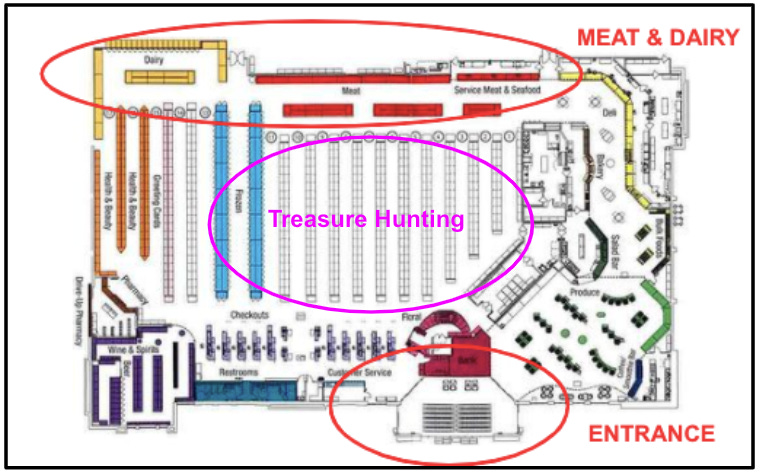
Costco currently has ~350 Kirkland Signature products for sale. So, it’s doing 1/3rd of revenue on only 9% of total SKUS.
The top-selling Kirkland items are staples such as toilet paper, diapers, bottled water and paper towels.
As long as Costco keeps at least 1,000 SKUs up for grabs — and the treasure hunt continues — I don’t see why it can’t grow Kirkland to 500+ products to be sold at the same time.
To be sure, shoppers still like national brands and Costco wants to maintain a decent (if still one-sided) relationships with its largest vendors.
With all that context, here is some napkin math on Kirkland’s future potential.
Costco grew its top line revenue +8% YoY in 2025.
Let’s say it averages annual revenue growth of +5% over the next decade.
By 2036 — when the last thing that AGI hasn’t solved is how to find parking at Costco on a Saturday afternoon in under 30 minutes — that would put Costco’s total sales at ~$450B.
If Kirkland grows its share to 40%-50% of the entire business, the private-label brand would generate $180B-$200B a year. That’s monster but also feels like the max that the brand can grow.
I’m probably overestimating how fast it can grow, too.
Vachris tells the WSJ that he expects Kirkland’s share of Costco sales to “go up” but they won’t rush into anything:
It’s not going to be a sprint. It’s going to be a marathon, because I don’t want to push our employees or our managers and our buyers to go out and hit quotas on the number of Kirkland items I want developed. I want them to do it naturally as they go through their categories, learn about their business, and look for those opportunities.
A meme that the Vachris admits to enjoying is when a Costco member says, “I came in for a rotisserie chicken and spent $300.”
That $300 is increasingly going to Kirkland Signature products and there’s a decent chance that someone at a Costco somewhere in America just hit that figure by going in to pump some gas, walking past the Celsius and picking up 20 boxes of Kirkland Signature Sparkling Energy Drink™.
This issue of SatPost is brought to you by OpenADE
Do you want to get the most out of Codex and Claude Code?
Then try OpenADE, a free open-source tool to maximize AI coding with better planning and collaboration features.
Most AI coding tools throw agents at your codebase and hope for the best. You end up babysitting, fixing hallucinations, and wondering if the “AI-assisted” code is actually worse than writing it yourself.
OpenADE takes a different approach: Plan → Collaborate → Revise → Execute.
The Bearly AI team built this tool internally and it is now 90% of our screen time, replacing our IDE and terminal.
By spending time upfront to craft and refine your implementation plan, you can run agents linearly with confidence. No more context-switching. No more “wait, what did it just do?” moments. Just saturated throughput and maximal work done.
Wild IMAX Tech In Christopher Nolan’s The Odyssey
When Dune 2 came out in February 2024, one of the most viral moments was the release of a Dune-themed popcorn bucket.
It was in the shape of the sand-worm but everyone quickly made another association…you definitely remember but if you don’t, here you go:
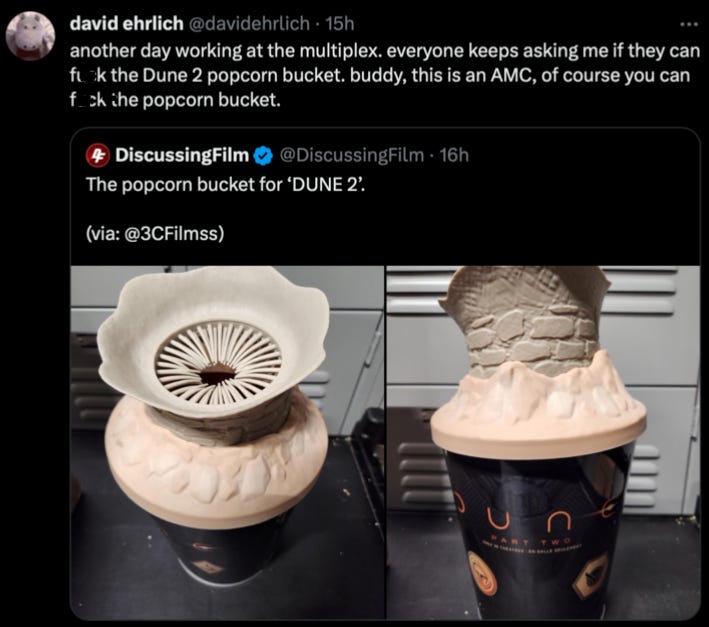
Every film has tried to top the viral potential of the Dune popcorn bucket.
Nothing has hit to the same funny degree.
Having said that, the first popcorn bucket released for Christopher Nolan’s The Odyssey is in the shape of the IMAX camera and the director — along with his cinematographer Hoyte van Hoytema — look at it the same way everyone else looked at that Dune bucket.
Like these guys LOVE them some IMAX.
The Odyssey will actually be the first project ever made entirely with IMAX film.
There is a great 8-minute segment on 60 Minutes with Nolan explaining all the technical hurdles they had to overcome to make it happen:
made 2 million feet of IMAX film in 3 months
each frame has resolution 3x higher than digital film
had to reload the camera every 2.5 minutes because film so large and that’s the most film the camera could hold
IMAX cameras are so loud that Nolan asked IMAX to invent a sound-proof “300lb coffin” to enclose the camera so dialogue can be heard during intimate scenes
every cut in the film (there are 1000s) was separated by hand with a splicing machine
while color correction typically done digitally, The Odyssey team did a much more manual photochemical process in a chemical bath (this “analog” approach matches how our eyes see)
At this point, wouldn’t be shocking to find out Nolan made this order at the theatre: “I’ll take the IMAX popcorn bucket. Give me 7 pumps of butter. Hold the popcorn.”
Also, Hollywood has now spent $600m “trying to bring Matt Damon home” (and another $500m if you include the Bourne films).

Boston Dynamics’s Most Practical Robot
Hyundai Motors owns over 90% of Boston Dynamics and is in talks with SoftBank to buy the remainder of the business.
Boston Dynamics was founded at MIT in 1992 and this would represent its 3rd full-on sale following a Google acquisition in 2013 and SoftBank’s acquisition in 2017.
Most of us know Boston Dynamics for its annual “Atlas humanoid dancing or doing new stuff” videos that always went viral before the Chinese humanoid robot industry went HAM and stole Boston Dynamics thunder.
Honestly, Boston Dynamics needs to hype up its non-humanoid robots more.
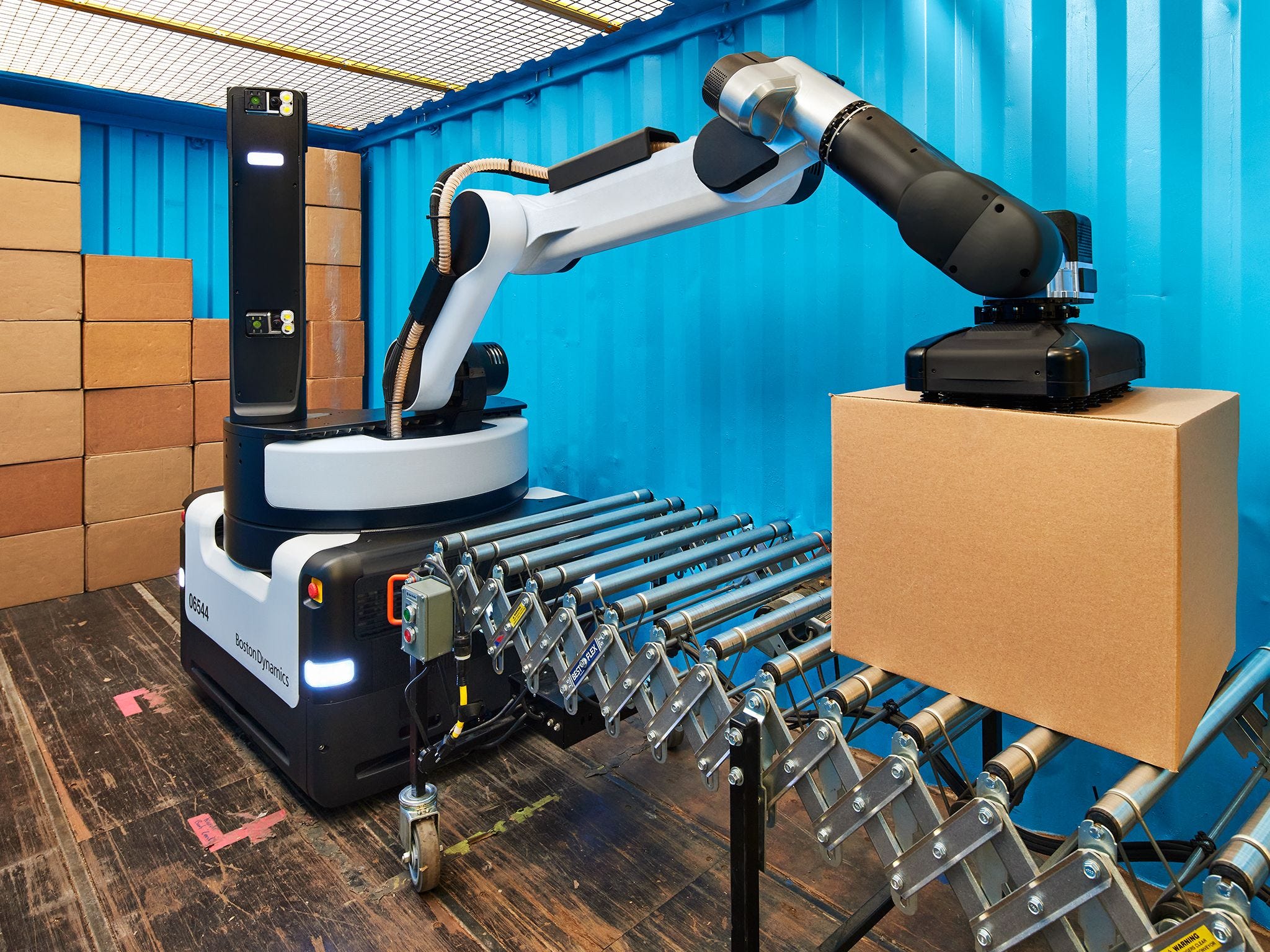
The most practical robot Boston Dynamics makes is probably Stretch: a machine designed to unload trucks.
It is already operational with logistics giant DHL, which has a deal in place for 1,000 units by 2030 (at about $120,000 a pop).
For DHL employees, moving 50lb boxes for hours on end in 100-degree trailers is a huge injury risk.
DHL has already trained 100 remote operators and working with more to learn how to operate Stretch, which is made up of three main pieces:
Base: Size of a pallet with wheels.
Arm: For manipulation with a vacuum gripper with suction cups that can carry up to 50lbs.
Perception mast: A visual system that recognizes different box sizes and shapes, which informs the AI algos what objects to grab and move.
Boston Dynamics recently released videos of humanoid robots automating Hyundai car factories and (for some reason) deadlifting mini-fridges and delivering a single soda to someone.
Stretch is unable to deadlift anything…but is 1000x more practical.
Links and Memes
Norwegian Superstar Erling Haaland…has been documenting World Cup trip on YouTube. It is gold. When a passerby asks if he’s a famous footballer, pretends to the footballer’s “social media guy”. Goes to Stanley Cup Finals game and spots a fan writing a text about him. Haaland is chill AF.
Also, he somehow got The Odyssey to sponsor these videos. Norway. Vikings. Homer. Odyssey. Different era and geographies but similar heroic epics. Sure, I see it.MidJourney Medical's Body Scanner: MidJourney — the leading AI image generation startup — caused a stir last week after announcing that it is building a cheaper and more accessible alternative to MRI machines.
Bryan Johnson makes the pro case for the product (accessible scanning and more health data is good). Scott Alexander presents a more skeptical take (risk of too many false positives and people getting unnecessary anxiety or worse). One medical doctor shoots down the idea (but then re-quotes himself to make the case for how it could work).A Korean dude on IG uses AI to create videos of products he thinks should exist…and this air cooling product is so dumb it might work.
“They Looked Like They Were Getting Rich on Polymarket—but None of It Was Real”. Wild investigation by WSJ showing how the prediction website created a fake website (URL is “poilymarket” because a capitalized “i” looks like an “l”) that influencers used to “prove” they were winning 6-figures on bets that didn’t actually exist…thus enticing other users to use the platform and try to escape the permanent underclass. NOT GREAT!
Haven’t watched Toy Story 5 yet…going soon. But I did watch this Tom Hanks interview explaining how Robin Williams is the reason the original Toy Story was made…because his improv work on Aladdin proved a name actor could sell an animated film. Hanks and Tim Allen actually tried improv like Williams but just weren’t on his level and Pixar threw out 80% of a film based on their improv.
The AI boom finally forced Apple to raise prices due to rising memory costs…including Macbook Neo ($599 to $699), Macbook Air ($1099 to $1299), Macbook Pro ($1699 to $1999), Mac Studio ($1999 to $2499), iPad Air ($599 to $749) and iPad Pro ($999 to $1199). Vision Pro too but literally no one cares.
John Gruber highlights how Apple is holding off on price hikes for its major consumer products (iPhone, Watch, AirPods) to limit the sticker shock. But it may have to by the next iPhone event in September. Apple fell 6% on the news as markets think this will clap demand…meanwhile, Micron Technology’s latest earnings show that its memory margins have hit 85% (the stock is up a ridiculous 8x to $1.2 trillion in the past year).“China’s CXMT Is Set to Challenge DRAM Incumbents”: On a related note, SemiAnalysis has a deep dive on CXMT, the Chinese memory firm that is projected to take share from the oligopoly of memory makers Micron, SK Hynix and Samsung.
Basically, these three firms have been slow to expand capacity (because memory is usually cyclical) but CXMT has major state support to create a Chinese alternative and is building massive capacity. Could be doing $50B a year with 15-20% of the DRAM market by 2030.Softbank has a new annual report…and nothing in the world can prepare you for how Masa Son uses the “Golden Goose” metaphor to layout his AI plans.
…and them wild posts:

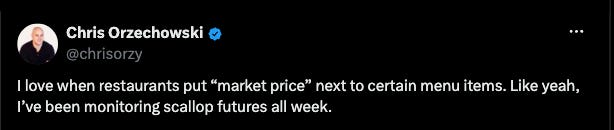


Finally, more of them incredible World Cup memes (including an incredible Fight Club callback):


My Saturday mornings are always better with your deep dives.
Such a great deep dive. Content plus.