

Thank you for subscribing to SatPost.
I was going to send this “Best of 2025” e-mail at the end of December. But I got on a bit of a writing roll after drinking 3 sugar-free Red Bulls and an Iced Coffee from McDonald’s (surprisingly good tbh).
So, this very very very subjective list is done ahead of schedule:
Best TV Show (Ken Burns, The American Revolution)
Best Live Event (Dave Chappelle)
Best Tweet (Justin Bieber)
Best SatPost Articles
Best Book (Every Day Is Sunday)
Best Podcast (Pablo Torre Finds Out)
Best Film (One Battle After Another)
Best Purchase (Lower Back Stuff)
Best Song (“Golden”)
Best YouTube Channel (Jared Owen)
Wildest Memes (Slop)
Have a great holiday season and Happy New Year…I’ll be back mid-January.
Hit that subscribe button and get SatPost’s FREE weekly round-up of the best in tech, media, business and memes straight to your inbox.
BEST TV SHOW: The American Revolution (Ken Burns)
My most widely read piece in 2025 was “The Case Against Streaming TV Shows”.
I laid out the reasons I refuse to watch new streaming TV shows:
I’ve been burnt way too many times in the past 5 years with people telling me I have to watch a new show:
“Dude, The Bear is sooooo good!”
“Bro, you seriously HAVE to watch Ted Lasso!”
“Trung, have you seen Bridgerton? YOU HAVE TO!!”
“Man, this GoT spin-off House of the Dragon is INSANE!!!”
“Trung, I’m telling you. Yellowstone will make you sh*t your pants.”
“Are you watching The Mandalorian? It’s unreal! You have to! I’m serious!”
“Dude, dude, dude. 3 Body Problem is amazing. You gotta watch it. Seriously!”
So, I did. I watched all of them and every single one had the same outcome: it started strong with some laughs, suspense and well-timed cliffhangers…but then storylines became circular or didn’t make a lot of narrative sense (either within a single season or between seasons).
In other words, these were massive time sucks with meh payoffs. I’m not some paragon of productivity. I just don’t want to needlessly throw hours away on TV shows when I already doomscroll and get sucked down random YouTube history rabbit holes.
Even if I’m hearing great things about Severance and Pluribus, I’m going to wait until they are wrapped up before diving in.
There is one exception.
I’ll watch single-season shows that can guarantee a narrative payoff. Up until November, the only one that fit the bill for me was the third season of The White Lotus (HBO’s anthology series that shows the exploits of rich people in exotic luxury hotel settings).
While I preferred the first two seasons (Hawaii, Sicily), the third season set in Thailand delivered one of the greatest TV memes in recent memory.
It’s based on a 5-minute conversation between sketchy characters played by Sam Rockwell and Walter Goggins (IYKYK).


The White Lotus was cruising to win this category for “Best TV Show” before the immortal Ken Burns dropped a new 6-episode documentary on November 16th, 2025: The American Revolution.
Based on previous Burns classics — The Civil War, Baseball, Prohibition and The Vietnam War — I had a strong feeling that his latest project would have a completed narrative arc.
Also, coming up on the 250th anniversary of the Declaration of Independence, this was an ideal piece of content to help dads pass the time on the couch over the holidays.
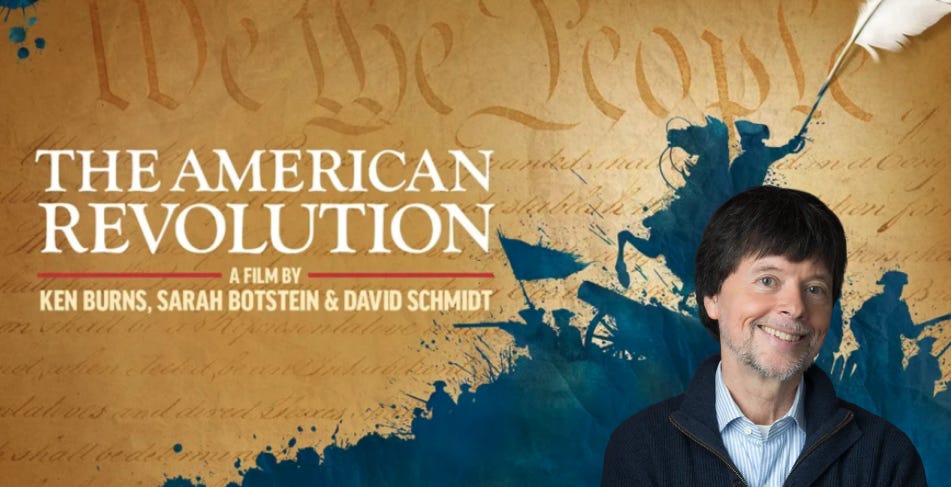
So, I dusted off the trusty credit card and made a donation to PBS to unlock 12 glorious hours of primary sources narrated by famous actors, interviews with historians, authentic re-enactments and the best panning or zooming of old 18th century paintings you will ever see.
In the typical Burns style, the documentary doesn’t pick sides and tries to dispassionately present many aspects of the story. In a podcast with Hasan Minhaj, Burns explains his approach:
We choose not to advocate for any particular point of view. We’re just saying here are the balls and strikes. This is how this went down. […]
We have been burdened by our lack of knowledge of the past, not by any kind of knowledge of it…Harry Truman is supposed to have said, “the only thing that’s really new is the history you don’t know.”
I agree with that.
The documentary covers dozens of major (and minor) characters and Burns tapped some serious hitters to do the voiceovers including Josh Brolin (George Washington), Meryl Streep (Mercy Otis Warren), Clare Danes (Abigail Adams), Michael Keaton (Benedict Arnold), Tom Hanks (Various), Jeff Daniels (Thomas Jefferson), Morgan Freeman (James Forten)…and Paul Giamatti (John Adams, who Giamatti also played in an incredible HBO series about the Founding Father and America’s second President).
This is The Avengers for historical doc narration.
Unsurprisingly, George Washington is the central figure in the story and Burns tells a 360-degree tale.
Washington led the expedition that fired the first shots of the French and Indian War (1754-1763), which then set off a sequence of events that led to 13 colonies in America breaking free from the British Empire and forming their own country: Treaty of Paris (1763), Proclamation Line (1763), Stamp Act (1765), Townshend Acts (1767), “No Taxation Without Representation”, Boston Massacre (1770), Boston Tea Party (1773), Intolerable Acts (1774), Continental Congress (1774), Lexington & Concord (1775), Bunker Hill (1775) and Thomas Paine’s “Common Sense” (1776).
When the Declaration of Independence was adopted on July 4th, 1776, Washington was the Commander-in-Chief of the Continental Army. At 6’3, he was unusually tall for the era…at a time when the average height was 5’7. Truly imposing. He wasn’t a military genius like Napoleon or Frederick The Great, though. While he led troops into battle, his most important job was recruiting, organizing, motivating and getting the ragtag army inoculated from smallpox (which ravaged the continent in the 1770s and 1780s).
Washington made many tactical battlefield mistakes and the British army could have snuffed out the revolution on a number of occasions if they put the pedal to the metal.
However, Washington quickly found the key insight for a rebellion: the Americans didn’t have to win, they just didn’t have to lose. It was the British who had to win. Throughout the conflict, the Continental Army made strategic retreats and always lived to fight another day.
Did I mention that we learn any of Washington’s noteworthy writings on these battles by hearing from JOSH BROLIN’S voice!
Washington’s war leadership made him the glue that held together all the varying interests of the different states. He did all this while being one of the richest people in America with large landholdings in Virginia and his wealth was tied to westward expansion, often displacing Native peoples. He initially wanted America to stay within the British Empire but led forces that created a nation based on the ideals of freedom, equality and the “unalienable Rights” of life, liberty and the pursuit of happiness.
By the latter half of the conflict, the British had given up on winning back the North and focused on slaveholding southern states that provided valuable crops (Georgia, the Carolinas, Virginia). Many slaves would fight with the British against their owners.
It was the southern battles that Nathanael Greene established himself as Washington’s most dependable officer and 2nd most important American general. Greene laid the groundwork for Washington to ultimately defeat British General Charles Cornwallis at the decisive Battle of Yorktown, Virginia in 1781. This effectively ended the Revolution with key contributions from Alexander Hamilton and Marquis de Lafayette for all you Hamilton fans.
Of course, Washington himself was also a slaveowner. But the end of his life in the 1790s, he believed the practice was immoral and should be abolished. His own will freed the slaves he owned at Mt. Vernon. While he wasn’t prepared to risk national unity over the issue, he believed slavery would eventually be legislated away…but it would take a Civil War.
In his conversation with Hasan Minhaj, Burns gives him take on how preamble in the Declaration of Independence (“We hold these truths to be self-evident, that all men are created equal”…) could co-exist with slavery:
There is a conservative scholar named Yuval Levin who said, “Once you say the word ‘all’, it’s done. It’s over.”
There is no way you can take back the word “all”.
When on July 4th, 1776 these white men ratify “we hold these truths to be self-evident that all men are created equal”, slavery is over.
Even though it may take four score and nine years to make it so. Women are going to vote even though it took 144 years before that’s happening.
At the Treaty of Paris of 1783, King George III and Great Britain recognized the United States as an independent nation. Shortly after, some Continental Army officers — angry over unpaid wages and pensions — wanted Washington to use the military to pressure Congress. Washington insisted on civilian control of the military and the principles of a republic. Famously, he quelled the crisis by saying, “Gentlemen, you will permit me to put on my spectacles, for I have grown not only gray, but almost blind in the service of my country.” Some soldiers were brought to tears and that was that. To further set the Republican example, Washington would willingly give up power again in 1797 after his second term as President (he was no Caesar…no Cromwell…no Napoleon, who would crown himself Emperor of France in 1804).
“By first surrendering his military, then political power,” King George III said in tribute to the first President of the United States. “George Washington had made himself the greatest character of his age.”
Another fairly prominent character in the documentary is Benedict Arnold. Before becoming history’s most famous traitor, dude was an absolute beast on the battlefield. A brave hero to many. Without Arnold, the American side would likely have lost the Battle of Saratoga in 1777. It was news of this victory and the capture of a British army that Benjamin Franklin used while abroad as a diplomat in Paris to convince the French to ally with America...and without the French navy and funds, it’s not clear America would have prevailed in the Revolution.
That’s what made Arnold’s betrayal so devastating and why his name is still synonymous with “treason”. On discovering Arnold’s plan to give West Point to the British, Washington said “Who can we trust now?”
There are countless other nuggets in the 12-hour series. In one scene, two American brothers — a patriot fighting for the Continental Army and a loyalist fighting for the British — see each other at a river crossing and run to hug, having no idea they’d been shooting at each other. In another scene, we find out how the traditional alliance system between native tribes influenced how the Founding Fathers organized the states in a federalist system with a loose union governing bodies (different tribes fought alongside the British and the Americans).
For you finance degens, there are segments on Washington trying to procure supplies amidst rapid inflation of the Continental Currency while the patriots try to tap debt markets to fund the war.
We should expect nothing less from a Burns production. Similar to The Vietnam War effort, Burns spent ~10 years to make The American Revolution documentary. The period’s lack of photography meant there were zero double-chin selfies and Burns got creative with the re-enactments, battlefield graphics and paintings.
Based on Glenn Beck’s recent “interview” with an AI-generated George Washington, let’s just say I’m happy Burns & Co. went with their old-school filmmaking approach.
Burns didn’t even start the project thinking he’d be done by the 250th anniversary of the Declaration of Independence. But, holy smokes, are we lucky he did.
Definitely make that PBS donation and find out why Burns believes the American Revolution — and the colonies’ transition from being subjects of a monarchy to citizens of a nation built on an idea — is the “most important event in world history since the birth of Christ.”
YOU HAVE TO WATCH IT! I AM SERIOUS! TRUST ME, BRO!
BEST LIVE EVENT: Dave Chappelle.
I saw Dave Chappelle live for the first time a few weeks ago at Rogers Arena in Vancouver (shoutout to MM for the tix).
It’s still mind-boggling that a single person sitting on a stool with a mic and a pack of cigarettes can fill a stadium of ~20,000 in 2025. The crowd seemed to hit every single demographic (age, race, religion, income bracket). For good measure, some dude showed up to the front row dressed as Tyrone Biggums lol.
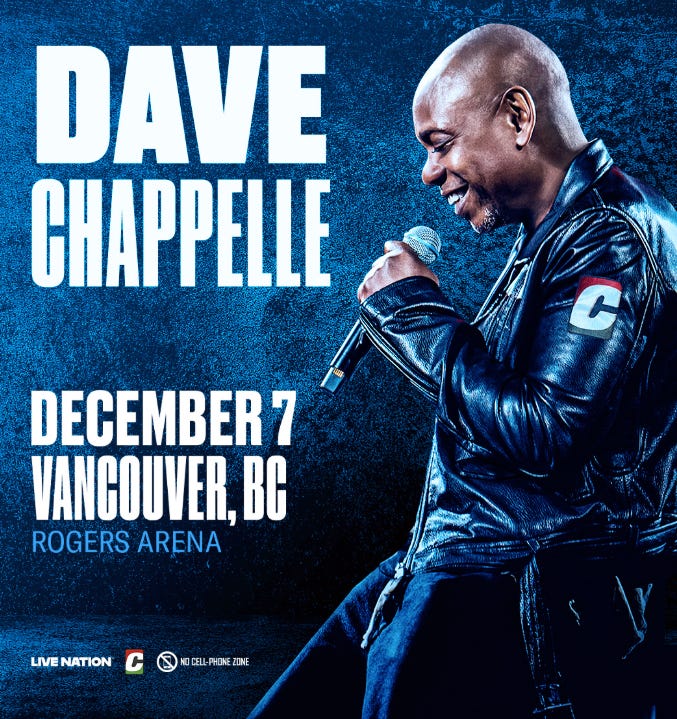
I laughed non-stop for two hours and it wasn’t just Chappelle.
There were some great opening acts including Cipha Sounds, Marshall Brandon and Adam Ray. Man, Ray is a beast. He crushes it on Kill Tony and created such an iconic Dr. Phil impersonation character…that Netflix gave him a show and the actual Dr. Phil made an appearance.
Between sets, DJ Trauma was playing them classic 90s hip-hop tracks from DMX, Biggie and Wu-Tang etc.
As for Chappelle, dude really is the GOAT.
I talked to a bunch of people in my section and everyone waxed lyrical about their favourite skit from Chappelle’s Show. I’m partial to “Prince”, “The Black White Supremacist”, “The Player Hater’s Ball” and any Paul Mooney appearance.
On his own podcast, Ray talks about performing with Chappelle and just nails the experience:
There’s no way around it. I could watch [Chappelle] read the phone book. He’s so funny. Even when he gets heavy and introspective, [it] always comes back to a joke. He’s just a showman. His voices. His performing. He checks every box of a perfect entertainer.
Introspective and jokes. That’s the way. The world’s so crazy…every single person is going through something heavy in their life…so, we gotta laugh. We just have to.
Like the South Park guys, Chappelle is an “equal-opportunity offender” and he went after literally everyone.
Due to my debilitating smartphone addiction high screen time usage, I love that Chappelle’s stand-up was a no-phone-zone. Everyone had to put their iPhone or Android device in a grey Yondr pouch. That meant 3 hours of no phone access from entry-to-exit.
Many live performers use Yondr but it was Chappelle who popularized the pouch in 2015. He didn’t want his comedy material leaking online with people recording it on their phones. Not only does this protect the surprise of the material, but it also ensures that the comedy environment is a place where people can say wild stuff without fear that it’ll get clipped and people will try to cancel them. A lot of the best comedy toes the line and what’s the point of paying for comedy tickets if you’re not getting actual comedy.
For the viewer, you are forced to be present and that’s amazing (on a related note, Yondr is now a $300m a year business and 70% of its sales are from schools in America that want their students to be a no-phone-zone).
Looking back at 2024, my most salient memories are travelling with my family and taking my son to the Taylor Swift concert (he didn’t actually want to go but I needed cover so I wouldn’t be an Asian dad watching the Eras Tour solo).
In a year from now, I’m guessing Chappelle with 20,000 other people will be a very very very salient memory.
BEST TWEET: Justin Bieber The PM.
Speaking of super famous live performers, I’m giving the tweet of the year to Justin Bieber. This is a massive case of recency bias because he posted this last week:

It was such a throwback post that I had to tip my hat: a super famous celebrity (90m followers) talking about random stuff on social media.
Over the past decade, super famous people have (understandably) realized that posting on social media about random topics is just not worth the hassle. Cancel mobs. People getting upset. Notifications full of the most insane replies.
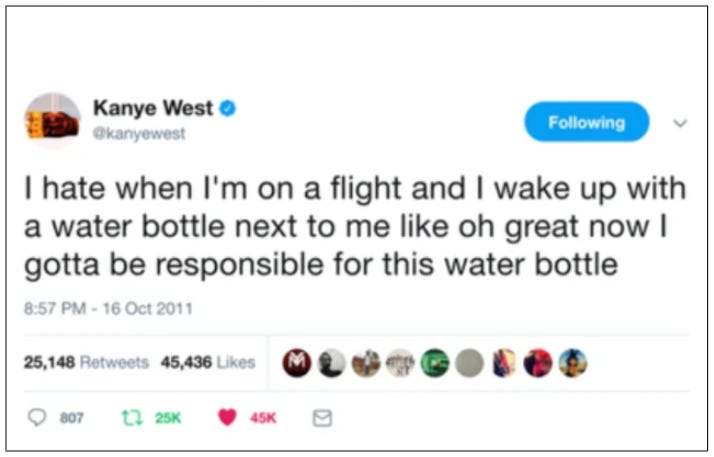
Look, I know Kanye probably isn’t the best person to be highlighting for random tweets…but this was the “super famous people posting random stuff on social media” we used to get in the early 2010s:
OK, let’s do someone a bit less heaty. How about Rihanna? She used to absolutely cook people on Twitter:
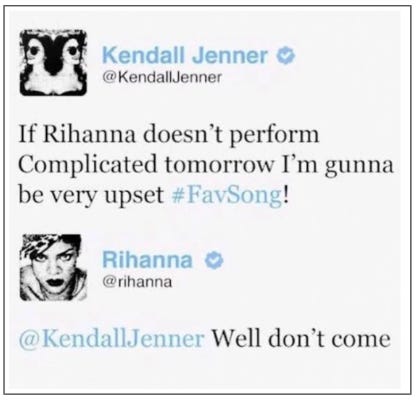
Rhianna once got into a beef with Teyana Taylor — who you’ll see again in the “Best Film of the Year” section — and clapped back by changing her Twitter bio background to compare their “Celebrity Net Worth Pages”. Unreal.
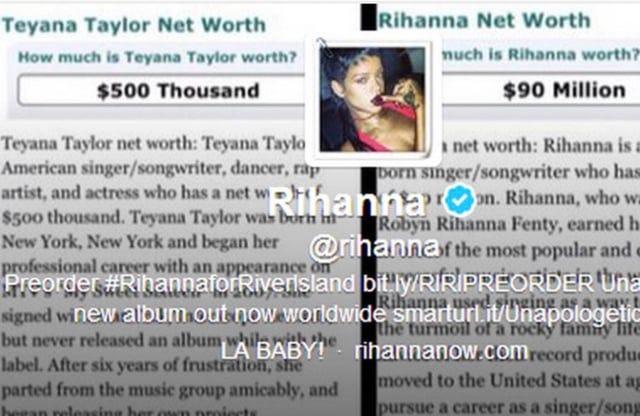
We now mostly get promotional posts for stuff they’re working on or shilling. That’s if we’re even getting them at all.
I’m admittedly a Biebs fan. I know he’s had some controversies but I will stan “Despacito”, “Beauty & The Beat” and “Mistletoe” (my official favourite Christmas song, sorry Mariah) forever.
The replies to Bieber’s post were hilarious including a number of tech CEOs offering him a product management job.
We ain’t going back to early social media but this one was some good nostalgia.
For real, though, the Apple dictation feature is annoying AF.
This issue of SatPost is brought to you by Bearly AI
Are you looking for a no-logging, encrypted and anonymized AI chat tool?
Then try the Bearly AI research app, which provides an easy-to-use UX for the newest models from OpenAI, Anthropic, xAI, DeepSeek, Gemini and more.
While some AI providers keep chat logs indefinitely even after a user deletes them...Bearly AI has a default no-logging policy and user chats are encrypted while requests to LLM providers are completely anonymized.
Try one month FREE of the Pro Plan using the code BEARLY1.
BEST SATPOST ARTICLES
I’m basing this list off of e-mail opens, site visits and the number of times someone replied with a comment that read “such a great read” or “unsub, this is awful”.
In addition to “The Case Against Streaming TV Shows”, top SatPost reads in 2025 include:
Garmin’s ~$40B Pivot (The GPS pioneer took direct hits from Apple’s iPhone/Watch and Google Maps. But huge R&D investment helped turn the company from an automotive GPS firm to a leader in fitness watches and trackers.)
The (Ludicrous) Psychology of Slot Machines (Slot Machines are the workhorse of Las Vegas casinos. After decades of design tweaks, the “crack cocaine of gambling” brings in more revenue than every other casino game combined.)
OnlyFans Sticky Business Model (The dark psychology and economics behind the subscription platform, which has become the go-to way to monetize sex online.)
J.R. Simplot Became A Billionaire Selling Potato Chips and then Semiconductor Chips (How J.R. Simplot went from the largest seller of french fries to McDonald’s in the 1960s to the largest shareholder of Micron Technology in the 1990s.)
South Park and The Greatest TV Contract Clause Ever (Matt Stone and Trey Parker became billionaires by making 27 seasons of the funniest shows ever…and signing a first TV deal with an improbable clause.)
Booking: The $170B+ A/B Testing Machine (How A/B testing turned two Priceline acquisitions — totalling $294m — into the world’s most valuable travel company at $170B market cap.)
Hayao Miyazaki: 9 Creative Lessons (Notes on the creative process for the legendary Japanese filmmaker and founder of Studio Ghibli.)
BEST BOOK: “Every Day Is Sunday” (Ken Belson)
My favourite sports league is the NBA.
My favourite athlete ever is Michael Jordan (Game 6!).
My favourite sport to play before I became terrified of a freak ACL/Achilles injury was pick-up basketball (if I do play, it’s only 3-point line to 3-point line…as in, I’ll jack up a ton of ill-advised 3s and limit any chance of driving or defending that might turn an ankle or bump a knee…this is probably why no one invites to pick-up basketball anymore).
Relatedly, my most confidently wrong business take of the 2010s was that the NBA would be more valuable than the NFL by 2030.
Oh god. So wrong. So, so wrong.
As of 2024, the NFL’s league revenue is almost 2x the NBA ($23B vs. $13B) while the value of an NFL team is also almost 2x that of an NBA franchise ($7B vs. $4B).
Rewind to 2015 and here was my analysis:
The NBA is way more global (particularly in the fast-growing China market)
The NBA stars are more famous (no helmets and way bigger social media followings)
The NBA understood new media (it allowed highlights to proliferate on YouTube, X, Reddit and Instagram)
The NFL was too violent (the projection was that kids would stop playing due to concussion/CTE concerns and, eventually, viewers would turn away)
I think I was directionally correct but obviously drew the wrong conclusions:
The NBA is way more global (but the NFL is the most popular game in America and this is the world’s most valuable media market by far).
The NBA stars are more famous (they are more famous but the Superstars all want to play with each other and in the same cities, which dilutes the value of the “team” and annoys the fandom).
The NBA understood new media (the NFL understood that to milk the value of their assets, they had to be scarce with media rights; conversely, there is too much bite-sized free NBA content floating around the internet).
The NFL was too violent (the league survived the concussion/CTE scandal and the sport’s violence did not turn people off).
When attention is the scarce commodity, the NFL’s shorter schedule raises the stakes and value of each game. Sunday is true appointment viewing in a world awash with infinite content on the internet. That’s why 90+ of the top 100 TV events are NFL games. The NFL’s scarcity advantage relative to the other major sports leagues (MLB, NBA, NHL, Premier League) is just not going away.
It’s the same reason super-duper live performers like Chappelle and Taylor Swift command top top dollar. Their events are scarce assets.
I tell you all this because my favourite book release of 2025 is Ken Belson’s “Every Day Is Sunday”, which tells the story of exactly how the NFL became such a business, media and cultural juggernaut.
This could have been a dry read but the narrative centres around the three most important figures, who all have interesting backgrounds: Jones (Dallas Cowboys owner), Kraft (New England Patriots owner) and Goodell (NFL Commissioner).
Belson spent over two decades at the New York Times, where he covered both the sports and business world. His reporting background gave a ton of access and the book has a lot of great NFL owner anecdotes.
As for the main characters, here is how Belson describes the difference between Jones and Kraft:
How they went about their business, though, was a study in contrasts. Jones had a million ideas that he was relentlessly selling. He tried to win over skeptics with a smile and boundless energy. He worked the phones day and night, loved a good time, but got right back to dealmaking the next morning. “Jerry could talk a dog off a meat truck,” Kraft told me, adding that Jones’s style of selling ideas sometimes got in the way of his objectives.
Kraft was less of a dreamer but expert at sifting through proposals and figuring out how to synthesize them into an actionable plan. He preferred to win people over by making them see the logic on their own, not wearing them down over bottles of Johnnie Walker Blue.
“Jerry’s the best salesman in the world,” one longtime NFL partner told me. “An incredible storyteller. He’s the best drinker in or out of the NFL. I think Jerry has done a great job with the business of the Cowboys. And he likes to have fun. He’s living every moment. “But I think what you see with Robert is, he’s always trying to get the right deals for the league because he wants to be the person who helps orchestrate what’s best for the league. Jerry is more focused on making his franchise the best franchise in the league.”
Who was the more important owner? Belson gives the edge to Kraft for his ability to wrangle competing interests:
Playing all sides was not new for Kraft. It was how he bought the Patriots in 1994, parlaying his ownership of the parking lots around the team’s stadium into the purchase of the stadium and then the team. It was how he used his experience as a part owner of the CBS affiliate in Boston to become the chairman of the league’s media committee, which has negotiated rights deals that supersized the NFL. And it was how he helped push through the approval of an unprecedented ten-year labor contract that ended a 136-day lockout, saved the 2011 season, and created a platform for the NFL to grow even larger.
The Goodell piece is one of pure ambition.
After college, this is what Roger wrote to his father Charles (a well-known Republican Congressman, then Senator): “The only thing I want to do in life, other than to be the commissioner of the NFL, is to make you proud”.
Imagine “NFL Commissioner” as what you want to be when you grow up. It’s like a young soccer player wanting to make it to the World Cup final…but as the referee.
Goodell called his shot, though.
It all started when he scored an internship with NFL Commissioner Pete Rozelle in 1982. He was 23 years old at the time. He did so after writing more than 50 letters begging for a job (his dad’s name probably helped).
Then, he climbed his way up the NFL ladder and became Commissioner in 2006, thus achieving every kindergarten child’s dream job. He’s become quite reviled by players and fans for various decisions around suspensions, dealmaking and hot button political issues. But that’s literally his job.
In the immortal words of Lukas Mattson, Goodell is a “pain sponge” for the NFL owners and gets paid very handsomely for the job ($60m+ a year).
Around the time Goodell was negotiating the 2011 Collective Bargaining Agreement between the team and players, the NFL was making $8B a year. He told the owners that he wanted to get that number to $25B by 2027. Many thought it was a stretch goal…but Goodell is right on track.
“Roger doesn’t view the other [sports] leagues as competition,” an NFL staffer tells Belson. “He wants to be mentioned with Disney and the Vatican, these massive institutions.”
While my NBA prediction was way off, I am 10000% positive the NFL will be the most valuable sports league in the world in a decade.
***
BONUS: “Breakneck” (Dan Wang).
The most relevant book in 2025 for tech and business circles was probably Dan Wang’s “Breakneck: China’s Quest to Engineer the Future”.
It was go-to read for anyone trying to understand the current USA vs. China AI Race and Trade War (eg. everyone).
Wang has a unique view into the competition. He was born in China but grew up in North America, working in Silicon Valley after University. Between 2017-2023, Wang worked in China as a tech analyst for a macroeconomic research shop that helped Western firms understand the market. For years, his “Annual Letter” was a must read for those following China’s development. He tied it all together for “Breakneck” and is now Research Fellow at Stanford’s Hoover History Lab.
The book’s overarching thesis is that China is an Engineering Society while America is a Lawyerly Society:
The starkest contrast between the two countries is the competition that will define the twenty-first century: an American elite, made up of mostly lawyers, excelling at obstruction, versus a Chinese technocratic class, made up of mostly engineers, that excels at construction. That’s the big idea behind this book. It’s time for a new lens to understand the two superpowers: China is an engineering state, building big at breakneck speed, in contrast to the United States’ lawyerly society, blocking everything it can, good and bad.
As Wang lays out in the books, China engineers massive infrastructure and construction projects…but it also tries to “engineer” society without much regard for individual rights (eg. the “One-Child Policy” was an attempt to engineer a solution to the “problem” of overpopulation).
As with any generalization, it’s possible to poke holes in the “Breakneck” thesis.
Example: the American government was full of lawyers during FDR’s massive infrastructure projects to create jobs during the Great Depression and also full of lawyers in the post-World War II building era that included the Interstate Highway System under Eisenhower.
It’s still a useful frame, though.
One comparison that stood out was how China emphasizes the value of “process knowledge” and how that helped the country become the world’s pre-eminent manufacturing power (overtaking America, Germany and Japan in recent decades):
We can see how China values process knowledge through its approach to architecture too. That reveals something deeper and more interesting about its culture. One of my favorite books about China is a collection of essays called The Hall of Uselessness by the Belgian sinologist Simon Leys. In one of these essays, “The Chinese Attitude Towards the Past,” Leys considers the construction techniques of Chinese builders.
Builders everywhere have attempted to overcome the erosion of time. Ancient Egypt and medieval Europe built great pyramids and cathedrals out of stone. The approach in China, as Leys points out, is for builders to yield to the onrush of time by using eminently perishable, and indeed fragile, materials. By building temples out of wood with paneling sometimes made of paper, Chinese architecture has built-in obsolescence, demanding frequent renewal. “Eternity should not inhabit the building,” Leys writes. “It should inhabit the builder.” Rather than using the strongest materials, Chinese builders have embraced transience to ensure the eternity of spiritual designs.
The shining exemplar of this idea is found not in China but at the Ise Grand Shrine (or Ise Jingu) in Japan. Ise Jingu is the holiest shrine in Japan’s Shinto faith. Since it was first erected in 690 AD, craftspeople have completely rebuilt its sacred temples—made of wood and hay—every twenty years. In 2033, the temple will be rebuilt for its sixty-third reconsecration. Ise Jingu’s halls are made of Japanese cypress timbers that support a raised floor and are covered by a thatched roof of dried silvergrass. These structures use techniques from the seventh century: no nails, only dowels and wood joints. Though wood joinery is a complex craft, the rest of the construction is simple.
Why does this ritual persist? In part, it has to do with the Shinto faith in spiritual renewal. And it is also because these shrines are built in the style of rice warehouses, dedicated as they are to the god of agriculture, which rot every few decades. It is also about the preservation of craft knowledge. Twenty years is the length of a generation, and the caretakers of the Ise Jingu have attempted to ensure that knowledge about how to rebuild this shrine can be passed on to descendants.
Junko Edahiro, an environmental writer who witnessed the sixty-second rebuilding, heard an elderly fellow say to younger folks, “I will leave these duties to you next time.”
Embracing process knowledge means looking to people to embody eternity rather than to grand monuments. Furthermore, instead of viewing “technology” as a series of cool objects, we should look at it as a living practice. That is closer to the approach used in China and Japan. […]
It’s not just Boeing and Intel that lost its way [in manufacturing]. In the time it took to do one rebuild of the Ise Jingu, the US government forgot something only as important as nuclear weapon material. The National Nuclear Security Administration found that it could no longer produce “Fogbank,” a classified material used to detonate the bomb, because it hadn’t kept good records of the production process and everyone who knew how to produce it had retired. The NNSA then spent $69 million to relearn how to produce this material.
The American imagination has been too focused on the creation of tooling and blueprints. Andy Grove, the legendary former CEO of Intel, said it best in 2010: that the United States needs to focus less on “the mythical moment of creation” and more on the “scaling up” of products. Grove saw Silicon Valley transition from doing both invention and production to specializing only in the former.
Hit that subscribe button and get SatPost’s FREE weekly round-up of the best in tech, media, business and memes straight to your inbox.
BEST PODCAST: Pablo Torre Finds Out (PTFO)
As mentioned, I love the NBA.
This is why my favourite podcast of 2025 has to go to Pablo Torre’s investigative report on how the LA Clippers (allegedly) went through wild financial machinations to circumvent the NBA’s salary cap.
It was from his show Pablo Torre Finds Out (PTFO) and went nuclear viral, leading to an investigation by the NBA. Torre did a number of follow-up episodes on the topic including debates with Dallas Mavericks co-owner Mark Cuban.
PTFO’s LA Clippers series just nailed the Venn diagram of my interests: financial tomfoolery + NBA + the tech world (the LA Clippers owner is former Microsoft CEO Steve Ballmer).
Torre’s approach is also just legit old school reporting. Interviewing sources. Digging through financials. Connecting the dots. It’s a podcast version of traditional investigative newspaper or magazine bombshells…with a lot of humor thrown in the mix.
The episodes I flagged may be a little dated now. So, if you’re looking for evergreen NBA content from PTFO, check out his interview with Haralabos Voulgaris (aka Haralabob). Haralabob is the most successful NBA bettor ever, with lifetime earnings in the 9-figure range. While Haralabob made a fortune betting on sports, he’s very critical of the current wave of sports betting apps, which throttle winning players and are way too addictive.
***
BONUS: Some podcasts about George Marshall.
Earlier this year, I went down a multi-week rabbit hole reading about George Marshall’s military career, leadership during WWII and the Marshall Plan.
I couldn’t find very many podcasts episodes on the topic but these two from a few years ago were pretty good:
How Gen. George Marshall and Henry Stimson Built America’s WW2 War Machine and Created the Postwar Global Order (History Unplugged)
The Immortals – General George Marshall (Newt’s World)
***
BONUS II: The Stephchange Show.
I’m sure many of you readers enjoy the incredible work by the Acquired team.
Their series on Alphabet this year was spectacular.
Shoutout to Ben and David for using their podcast to recommend another great long-form deep dive podcast. It’s called The Stepchange Show. Hosted by Ben Eidelson & Anay Shah — two investors at Stepchange Ventures (which invests in energy and infrastructure startups) — the podcast covers topics about human progress and their three episodes this year are all bangers:
Coal: Part I (The Black Rock That Built Our World)
Coal: Part II (The Invisible Giant, 1900-Present)
Data Centers (The Hidden Backbone of Our Modern World)
BEST FILM: One Battle After Another
Listen, I know I’m a broken record on this topic but 21 of the top 25 highest-grossing films in 2025 were either sequels or IP spin-offs (I’m counting “F1” as existing IP).
While the list looks grim for anyone that cares about originality, there are some silver linings.
Three of the original IP films that pulled people to the theatre were decently reviewed and caused quite a bit of buzz: Weapons, Sinners and One Battle After Another. Pixar’s Elio was unfortunately quite forgettable…although, I’ll never forget paying $55 for a Dasani, Popcorn, Diet Coke and Sour Patch Kids when I took my kid to see it (but it’ll be bumped off the list because of Avatar 3).
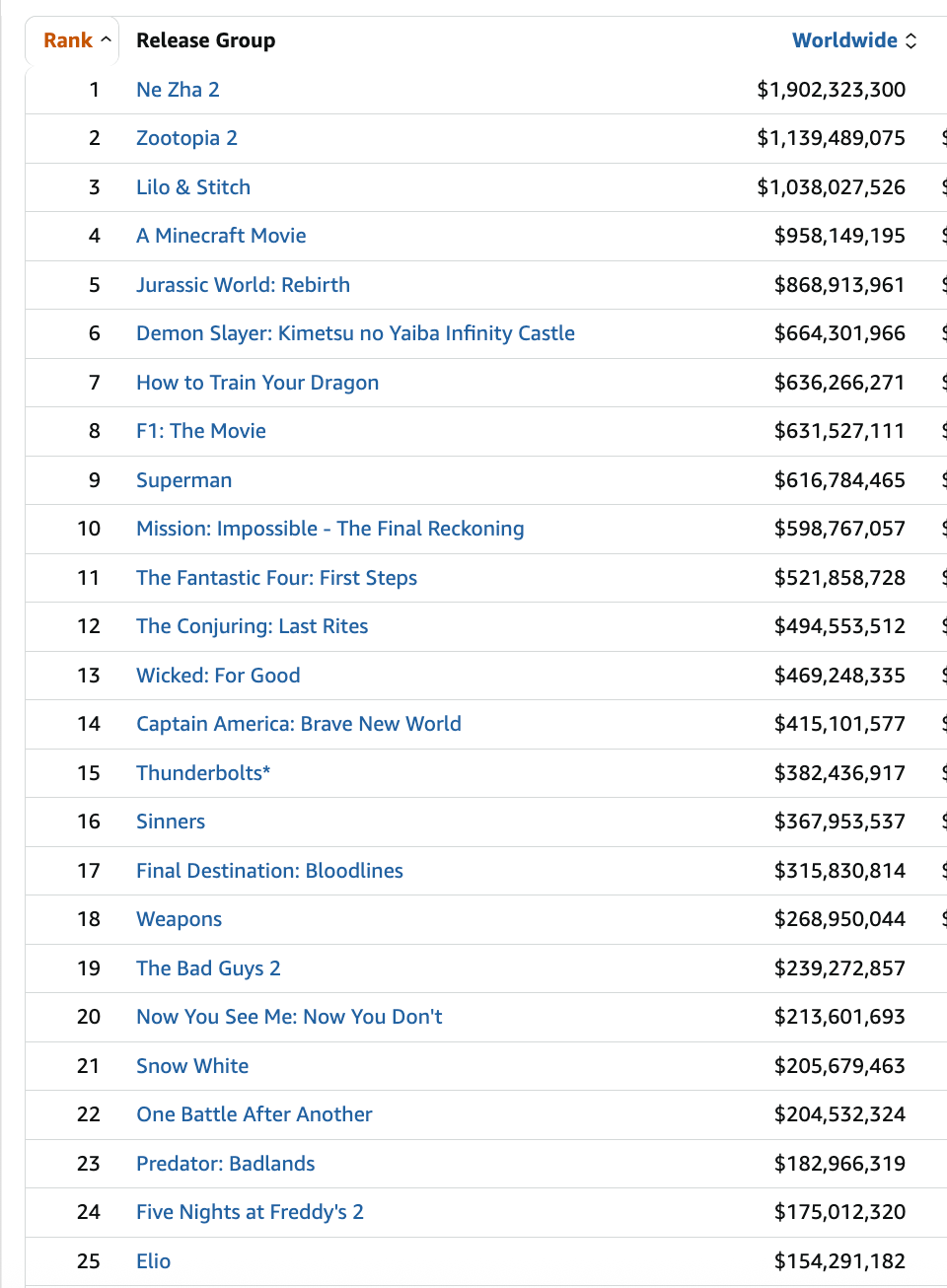
Weapons and Sinners also had very solid box office ROIs.
While One Battle After Another was a financial loss for the studio, I think it’ll sweep the Academy Awards giving Paul Thomas Anderson his much deserved first Oscar as well as a bunch of other statues for the film: 1) Best Picture (PTA); 2) Best Director (PTA); 3) Best Adapted Screenplay (PTA); 4) Best Actor (Leonardo DiCaprio); 5) Best Supporting Actor (Sean Penn); 5) Best Original Score (Jonny Greenwood); and 6) Best Supporting Actress (Chase Infiniti or Teyana Taylor…take that Rihanna).
I’m always happy to see new ideas and original IP get a shot and Warner Bros deserves credit for green-lighting Weapons, Sinners and One Battle After Another. Their 2025 slate — which included money makers in F1, Minecraft and Superman — partially makes up for the fact that Warner Bros put a bunch of films straight to streaming during COVID and pissed off Christopher Nolan to the point that Nolan left Warner Bros and made Oppenheimer with Universal.
Whether Netflix or Paramount buys Warner Bros…please let them keep cooking!
This is a long way of saying that One Battle After Another was my favourite film of the year and may even be the best film I’ve seen in the 2020s.
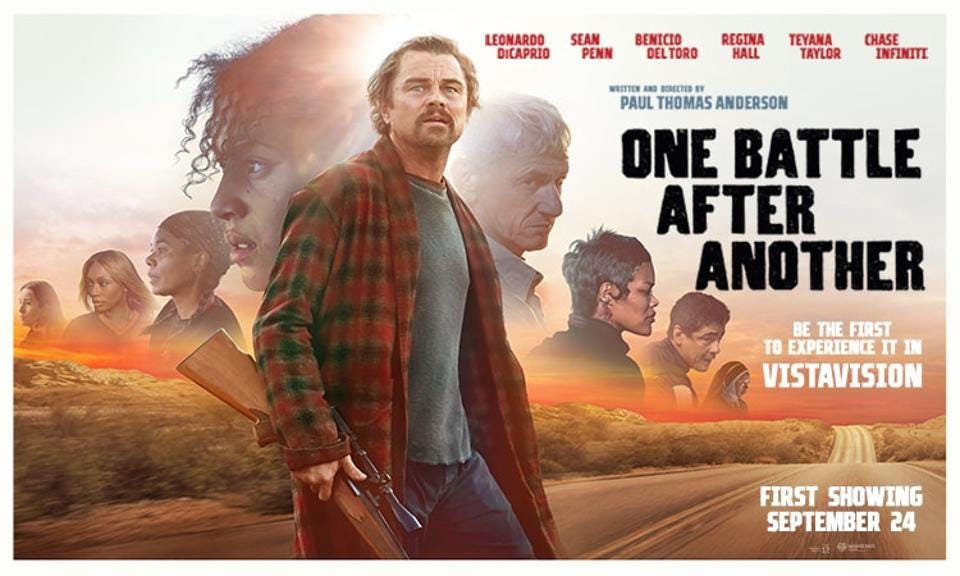
*COUGH* Recency Bias *COUGH*
The other main contenders for “Best Film of 2020s” are probably Everything Everywhere All At Once (2022) and Oppenheimer (2023). Then you have Nomadland (2020), Top Gun: Maverick (2022), Killers of the Flower Moon (2023), Sinners (2025), Tár (2022), Dune (2023), Dune: Part 2 (2024), The Wild Robot (2024), Happy Gilmore 2 (2025) and The Brutalist (2024).
One Battle did get caught up in a bit of culture war stuff. Leo and his crew have Antifa vibes while illegal immigration is a major plot point. PTA has been working on the film for nearly two decades, though. I think it’ll last the test of time, especially as an action film with incredible pacing for 2 hours and 45 minutes.
Anyway, read my review of the film here.
BEST PURCHASE: Lower Back Stuff.
Almost exactly three years ago, I blew out my back in the most pathetic way possible.
I was at the library with my son and sat down in one of those dinky red chairs. I felt a pop in my back and thought “huh, that’s weird.”
We left the library 10 minutes later and my back completely locked up and I couldn’t walk. An amazing elderly lady (with the assistance of her husband, who she called in) helped get me and my son to our car. I crawled. Honestly, we were lucky it happened where it happened. I hike with my son. If a random tweak from bending over to look at a stick took me out on a trail…that would be REAL bad.
When you become a parent, your body doesn’t belong to just you anymore. You have to keep it functioning for your kid. I don’t know who said that but it’s very correct and I’ve been pawning it off as my own revelation.
In my youthful days, I could sit on low red chairs on the streets of Saigon downing 333 Beer, pho and snails for hours. But Father Time is undefeated.
Honestly, I kind of deserved it. Why? I messed up my lower back in my 20s trying to be a hero at the gym after watching one too many Ronnie Coleman workout videos.
MAX DEADLIFT DAY!!! LIGHTWEIGHT BABY!!!!
It’s been a long time since I’ve tried to be a hero at the gym but the damage was done.
My routine in the past few years has been mostly running, calisthenics and kettlebells.
Went a solid two years without another back injury then came a Father’s Day event at my son’s school in the summer.
I roll up and it was tug-of-war time: 6 dads vs. 25 kids.
I reached into my bag of “Idiot Stuff” tricks and went straight for the rope, helping the dads prevail…at the cost of tweaking my back again. Totally laid out for the next month. Then re-tweaked it loading the dishwasher.
This was particularly foolish because we were about to fly to Asia and the worst thing that you can possibly do for your lower back — other than bumping into Bane in the sewer lair under Wayne Enterprises — is sit in a middle coach seat on a full 13-hour flight across the Pacific Ocean.
Thankfully, my back recovered to 87% before the flight, which was good enough (hot tip: roll a blanket and place it between your lumbar and the seat for long-haul back support).
My back’s been pretty solid since.
None of this is medical advice but here are three things I purchased to help prevent future lower back injuries:
$0: Core work and hanging from a pull-up bar a few minutes a day.
$50: An “Ergonomic Lumbar Support Cushion” from Amazon (actually, I got two of these cushions: one for my car and one for my office chair).
$300: Therabody’s ThermBack LED belt for the lower back. It vibrates and applies that sweet sweet heat to the muscles (shout to my wife for getting this thing).
Also $0: Don’t try to be a hero max deadlifting at the gym.
Long lumbar cushions. Short tug-of-wars.
***
BONUS: Mom and Dad Journals.
At this point, I’ve written hundreds of thousands of words about historical figure, entrepreneurs and artists. I enjoy the deep dives and love to share my findings. But I also had a realization a few years ago that I’d spent more time deep diving these randos than my own parents.
These Mom or Dad Journals helped to fill the gap. They are books full of questions about their lives. They can answer at their own pace. Just plop it on their desk and ask them to do a few a day and you’re good to go.
BEST SONG: “Golden”
The only thing you need to know about my musical taste in recent years is that my wife calls me “Top 40 Phan”.
On that note, my Spotify Wrapped 2025 says my most listened to song was “Golden” by K-Pop Demon Hunters.
I haven’t even seen the film! Neither has my son!
The song just found its way to us and I’m glad it did.
TBH, I’ve been a K-Pop fan for ages.
Pre-BTS and Pre-Gangnam Style.
I got into it around the second K-Pop wave of the mid-2000s. Solo acts like Rain and groups like Big Bang (before they did some really sketchy stuff).
When I moved to Vietnam in the late-aughts, K-Pop was massive in the country. In the 1990s, the South Korean government copied the Japan playbook and spent billions to create a cultural-exporting machine.
The fruits of that effort have been very apparent in North America in the past decade (Parasite, BTS, Squid Game), but I think the Asian neighbours got a much stronger dose of Korean entertainment earlier based on proximity.
Impressively, K-Pop singer EJAE wrote “Golden” on the way to the dentist.
Were there better songs this year on artistic merits? Of course. But I am in no position to judge (remember, “Top 40 Phan”).
I will say that “Golden” has a solid chance of being talked about in the 2040s when people say “what song popped off in 2025?”…and a lot of that has to do with its larger cultural impact.
K-Pop Demon Hunters is now the most-watched Netflix film of all time. The majority of those 540 million viewing hours were by people who will enter adulthood by 2043.
By then, they’ll want a kick of nostalgia and Netflix — after acquiring Warner Bros, Disney, Sony, Paramount and the NFL in the intervening years — will release K-Pop Demon Hunters 18: Return of the Hunted.
If you were somehow able to resist inception by “Golden”, then I challenge you to resist this mash-up by YouTube channel There I Ruined It: “Golden” as sung by Freddie Mercury.
Hit that subscribe button and get SatPost’s FREE weekly round-up of the best in tech, media, business and memes straight to your inbox.
Best YouTube Channel (Jared Owen 3D Animation)
We try to minimize my son’s screen time and one of us always co-watches with him.
I haven’t been able to convince him to watch any Ken Burns documentaries yet. Thankfully, he got into a pretty awesome educational YouTube channel: Jared Owen 3D Animations, which explains the engineering and mechanics behind structures, vehicles and machines.
This thing slaps so hard and here are some great ones from 2025:
But my all-time favourite is how the Krispy Kreme donut machine works. Just mind-boggling engineering and understanding of chemistry to make sure the dough is at the exact right temperature to be fried in oil at the exact right temperature to be covered by glaze that is piped out at the — you guessed it — exact right temperature:
Wildest Memes (Slop)
The Economist and Merriam-Webster both named “slop” the word of the year, nodding to the flood of AI-generated content.
I was hoping “clanker” would get more love — and my kid taught me the ways of “6-7” — but “slop” really was just the perfect word for 2025.
Here’s the Merriam-Webster entry:
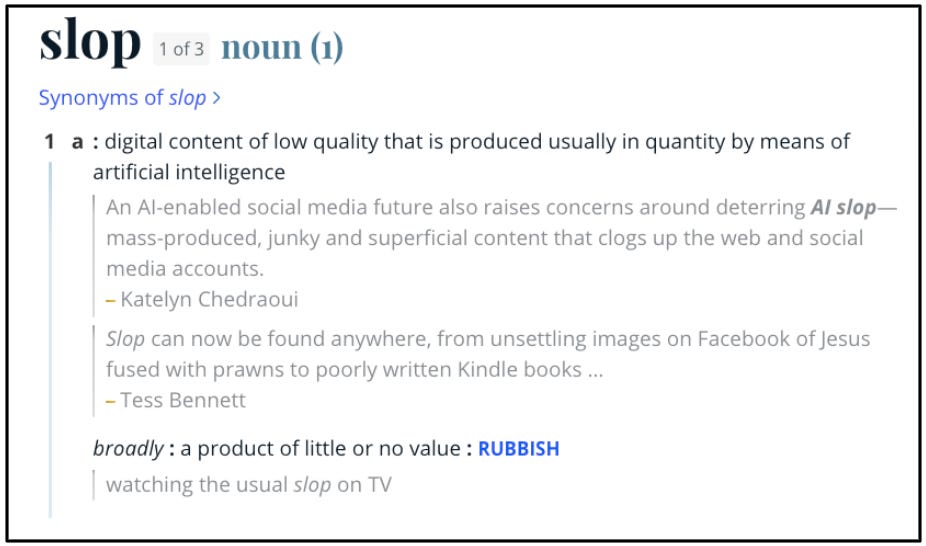
If that’s too vague, we can also go with the classic line from Supreme Court Justice Potter Stewart when he was talking about porn: “I know it when I see it.”
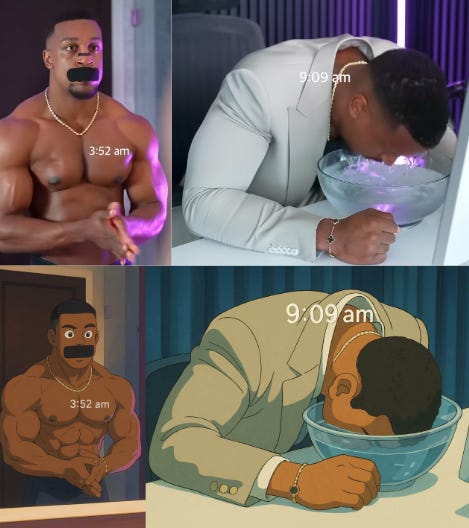
Two very notable slops that got me were: 1) ChatGPT doing the “Studio-Ghibli” effect for any image; and 2) a kangaroo trying to board a flight.
The Studio Ghibli memes popped off in late-March shortly after OpenAI released a new image generator. It happened a few days after the nuclear-viral Ashton Hall morning routine meme. Each of these memes had a solid 72-hour lifespan, which is very long on the internet in 2025. Another one that reached these heights of meme intensity was Astronomer’s CEO/Head of HR getting caught canoodling at the Coldplay concert.
Anyway, the combinations of Studio Ghibli and Ashton Hall almost made me pass out:
As for AI-generated video slop, I am not ashamed to admit: this kangaroo trying to board a flight had me convinced for a solid 49 minutes (I consider myself decently tech savvy, so if this had me confused, there must be millions of boomers right now still convinced that this kangaroo is sitting in a Centurion Lounge somewhere waiting to board a flight to Bangkok and get some Southeast Asian beach life ).
The image (ChatGPT, Grok, Nano Banana) and video (Sora, Veo) models are only going to get better…which means I’m probably going to fall for a clip of a kangaroo winning a mayoral election after completing a rigorous fitness morning routine in 2026.
Speaking of which, Happy New Year!
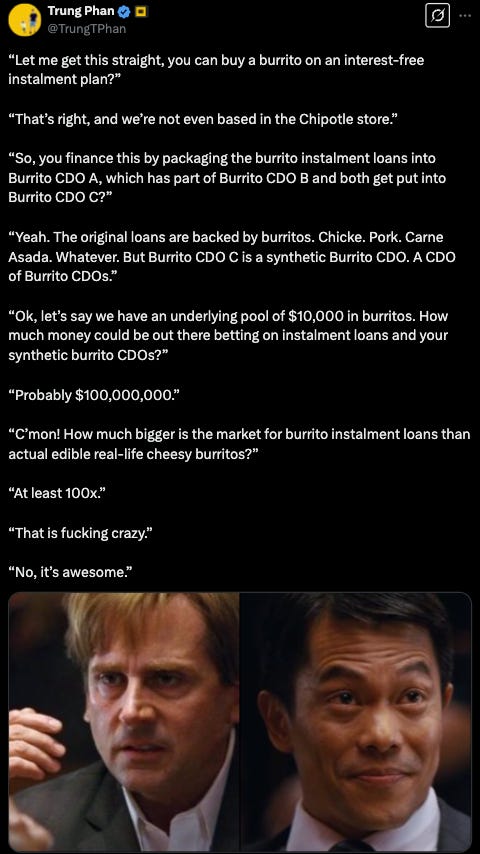
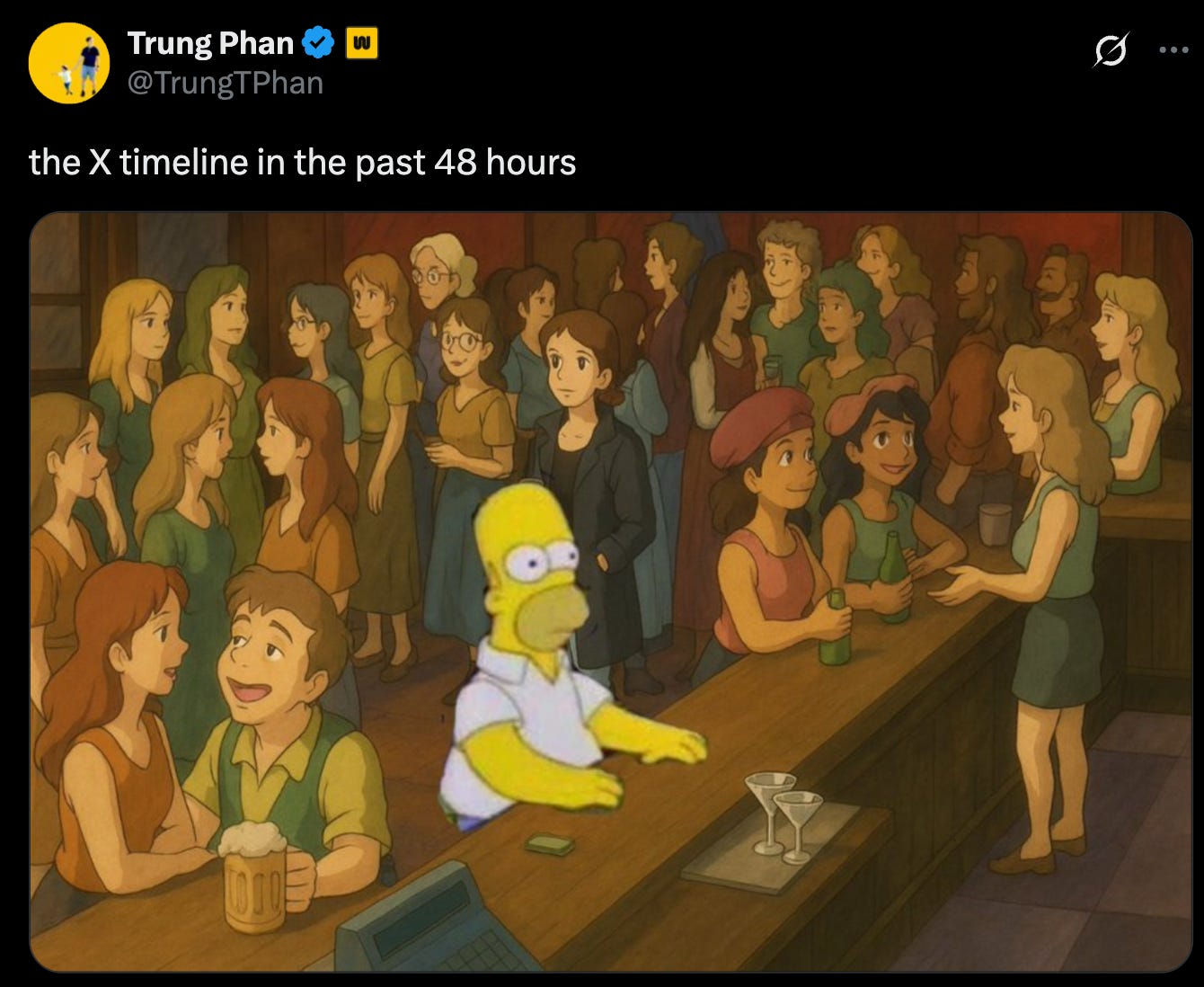
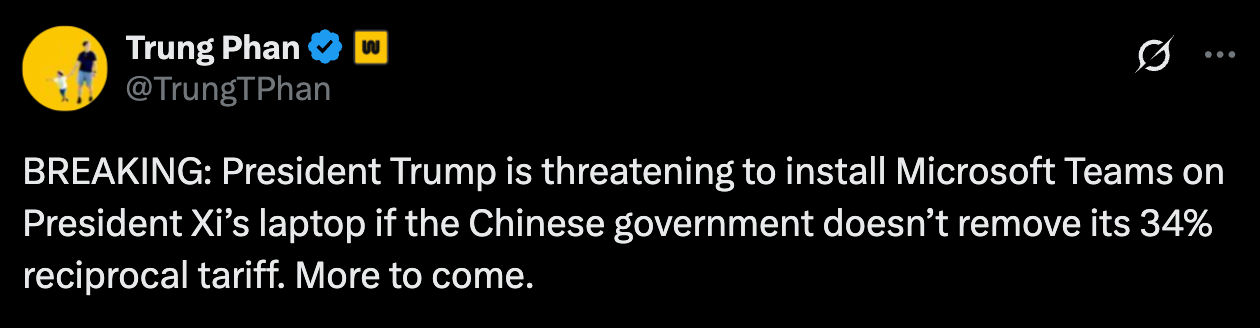
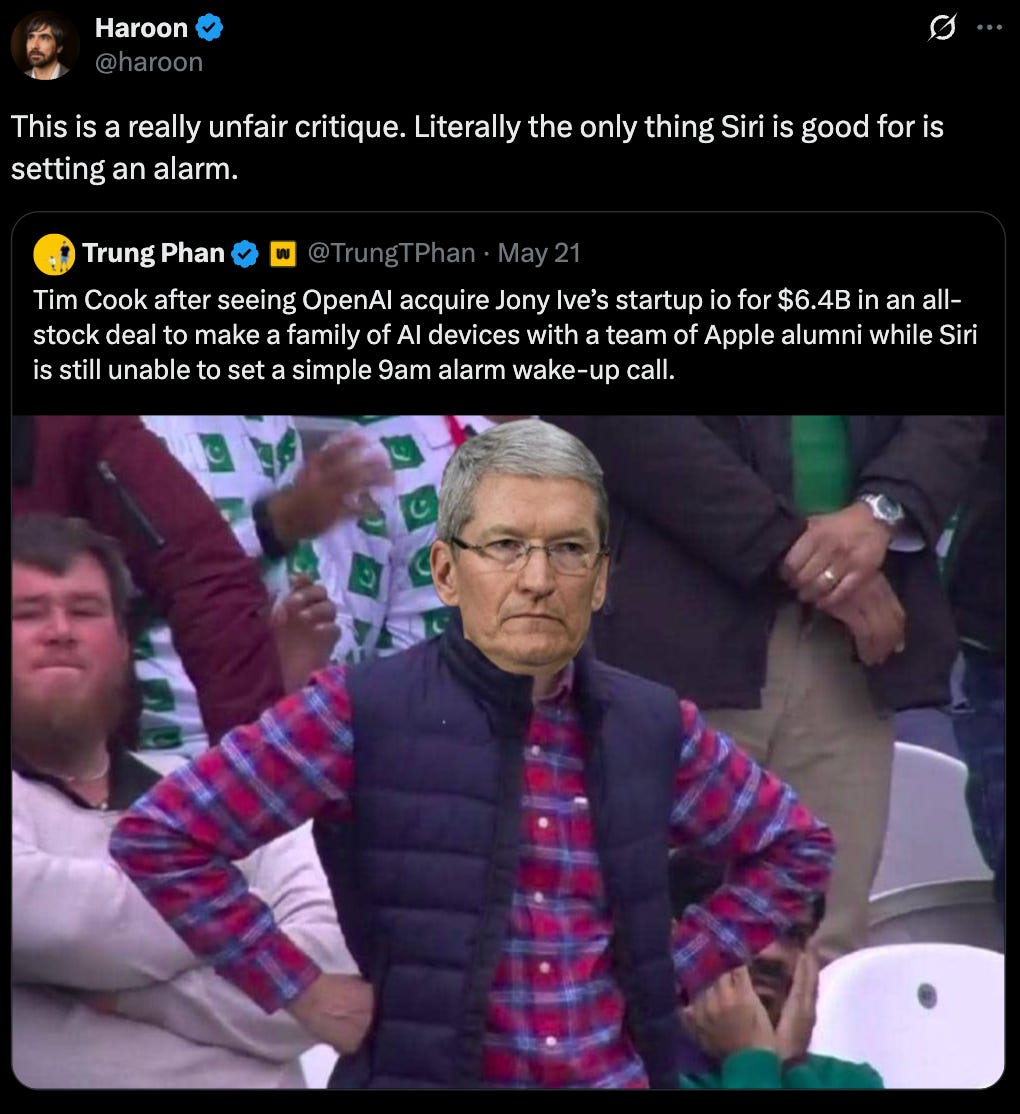
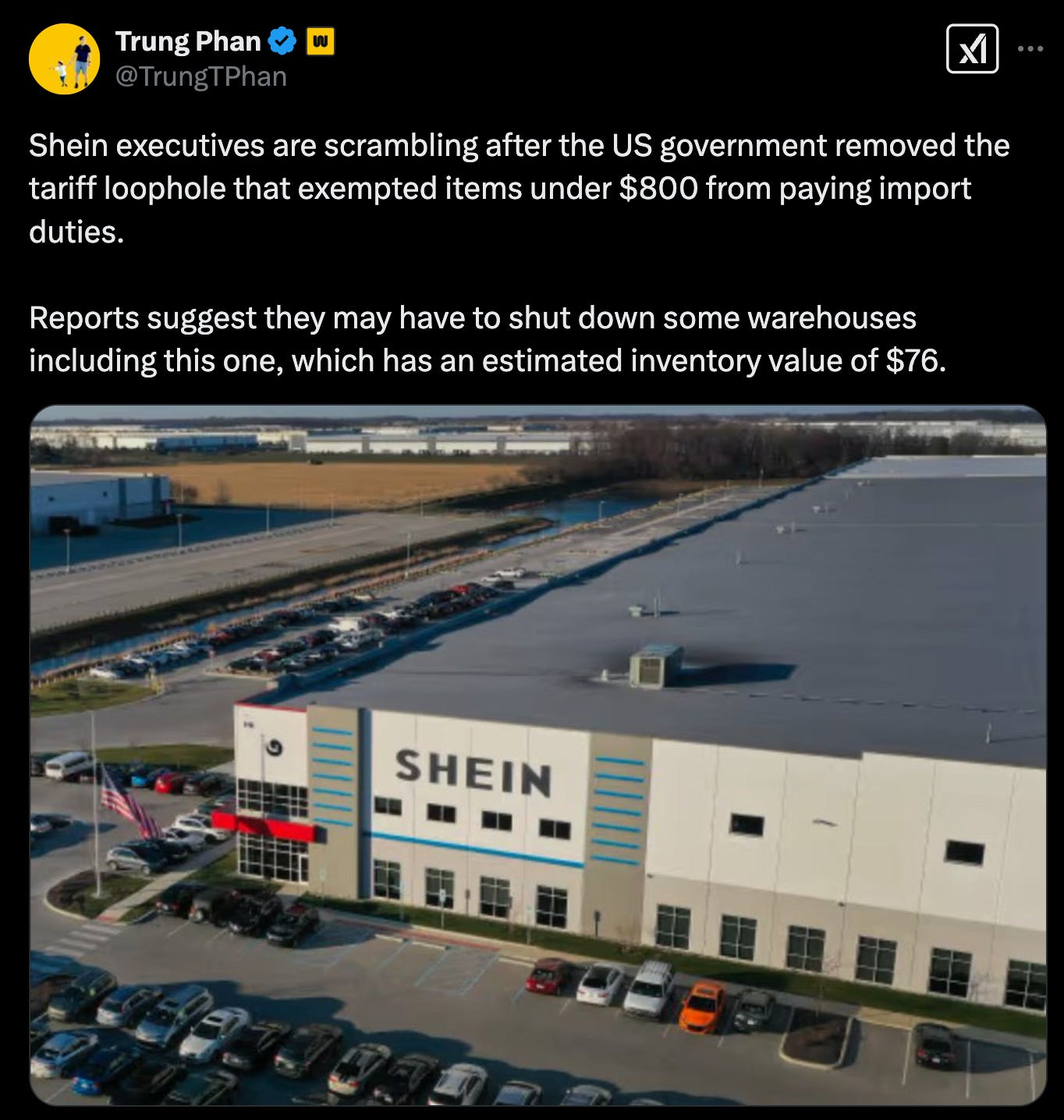
Let me wrap up with some of my memes that contributed absolutely nothing to the discourse in 2025.



Love the reflection and how you reviewed your (incorrect) prediction of NBA being bigger than NFL. Thanks for the book recommendation - will check it out!!
You didn't have to say you hadn't actually watched KPop Demon Hunters after also declaring One Battle After Another the best film of 2025 ;)